

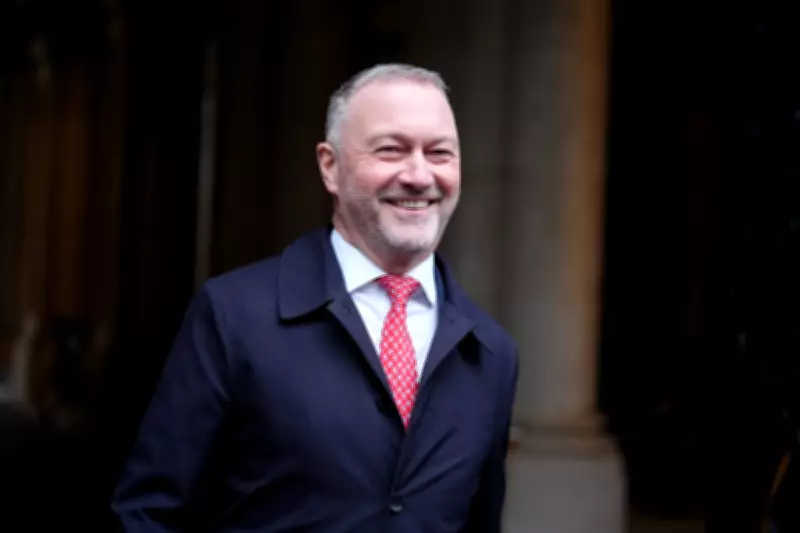
Government's Anti-Muslim Hate Definition Will Not Restrict Free Speech
Communities Secretary Steve Reed has firmly stated that the government's forthcoming definition of anti-Muslim hatred will not impinge upon freedom of speech. This announcement comes as the government prepares to unveil a comprehensive social cohesion strategy designed to foster integration and combat religious animosity across the United Kingdom.
Record High Religious Hate Crimes
The urgency behind this initiative is underscored by the latest government statistics, which reveal that religious hate crime recorded by police in England and Wales reached a record high in the year ending March 2025. Excluding the Metropolitan Police due to changes in recording systems, hate crimes targeted at Muslims increased by nearly a fifth, rising from 2,690 offences in the previous year to 3,199 offences.
During this period, Jewish people experienced the highest rate of religious hate crimes at 106 per 10,000 population, followed by Muslims at 12 per 10,000 population. These alarming figures highlight the pressing need for effective measures to address religious hostility and protect vulnerable communities.

Addressing Concerns About Free Speech
Critics of the new definition have expressed concerns that it could inadvertently create backdoor blasphemy laws or restrict discussions about Islamic extremism. However, Mr Reed has provided clear reassurances to the Press Association, emphasizing that the definition is "very robust" and specifically designed to tackle anti-Muslim hostility without infringing on fundamental rights.
"There will be no blasphemy laws by the back door, absolutely not," Mr Reed declared. "Freedom of speech and the right to criticise religion in general, or any religion in particular, is an absolute and we would not put forward a definition that in any way restricted that."
The Communities Secretary confirmed that a task force chaired by former Conservative minister Dominic Grieve has been meticulously focused on ensuring the definition does not operate in a manner that would limit free expression or open debate.
Comprehensive Social Cohesion Strategy
The government's broader social cohesion plan, which Mr Reed is scheduled to present in the Commons, encompasses multiple initiatives aimed at strengthening community bonds and countering extremist influences. Key elements include the potential appointment of an anti-Muslim hate tsar, modeled after the existing antisemitism tsar, to specifically address the high levels of abuse targeted at Muslim communities.
Additionally, the strategy will introduce a confidential whistleblowing route for university staff to raise concerns and a "campus cohesion charter" to enhance protection for students and staff. These measures aim to help universities meet their Prevent duty obligations while maintaining open spaces for free thinking and debate.
The Charity Commission will receive enhanced powers to shut down charities and swiftly remove trustees to tackle extremist abuse within the sector. Furthermore, an annual report on the state of extremism will be established to document the nature and scale of threats facing the UK.
Emphasis on Integration and Language
During his visit to a community centre in north London, Mr Reed emphasized the importance of integration, stating there should be a "greater expectation" for individuals arriving in the UK to learn English. Drawing from his personal experience teaching Vietnamese refugees as a student in Sheffield, he argued that shared language is essential for community cohesion.
"It's essential that everyone living together in a community speaks the same language. Otherwise they can't communicate. And if people can't communicate, you don't have a community," Mr Reed explained.
Political Context and Leadership Statements
Prime Minister Sir Keir Starmer, speaking during a separate visit in London, warned against politicians who attempt to "point fingers and divide" different groups. He expressed pride in the UK's diversity and tolerance while acknowledging concerns about those who seek to create grievances between communities.

Sir Keir noted that the current Iran conflict is being used to divide communities within the UK, but emphasized that the new strategy is "not just a reaction to this conflict, it is much broader, which is how we bring the country together."
In response, Shadow Communities Secretary Sir James Cleverly criticized the government's approach, stating that Labour "would rather pander to the extremes than confront the difficult causes of growing separatism in Britain." He echoed former minister Kemi Badenoch's position that newcomers should join Britain's shared national culture rather than live apart from it.
The government will also bolster the visa watchlist taskforce to prevent hate preachers and extremists from entering the country, further demonstrating its commitment to addressing the root causes of division while protecting fundamental freedoms.





