
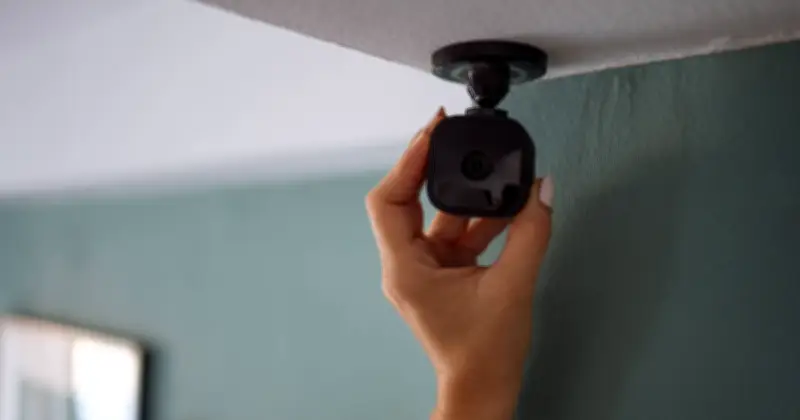
A camera on a neighbour's property can feel like an invasion of privacy, but there are steps you can take to address the issue. In most cases, the legal question isn't "are they allowed a camera?" but "what does it record and why?"
What the law says
The Information Commissioner's Office (ICO) says households can use CCTV or smart doorbells for home security, but data protection responsibilities are more likely to apply if footage extends beyond their property boundary. Tenement closes, common stairs, shared parking areas and communal paths mean that a camera installed for a front door may also capture fellow residents going about their daily lives.
The ICO's domestic CCTV guidance advises users to limit recording to what is strictly necessary and to consider less intrusive alternatives beforehand. It specifically highlights measures such as repositioning a camera, narrowing motion detection zones and applying privacy masking to obscure neighbours' doors, windows or gardens.
A camera is not automatically unlawful simply because part of your home appears in the frame. The ICO acknowledges that many systems cannot entirely avoid capturing small areas outside a property boundary, but the operator should be able to justify the intrusion and refrain from recording more than is genuinely required.
What you can do
If you're concerned, begin with a simple discussion, as many individuals are genuinely unaware of what their equipment is capturing. Citizens Advice advises that neighbourhood disagreements are often best addressed informally at first, and a straightforward solution such as adjusting the camera angle can settle matters swiftly.
If the equipment is recording identifiable images of you, you may have entitlements under UK data protection legislation in circumstances where the regulations are applicable. The ICO states you can enquire whether you're being filmed and you may be entitled to request footage of yourself by submitting a subject access request (sometimes referred to as a "SAR").
A SAR isn't a free-for-all and it doesn't mean a neighbour must hand over every clip they've ever recorded. The ICO says disclosure can be limited to protect other people's privacy, and footage may be edited, blurred or withheld where exemptions apply.
Audio and escalation
Audio can prove particularly contentious, as it may feel more invasive than video and can pick up private discussions. The ICO warns that recording sound beyond your boundary is harder to justify, and users ought to consider switching off audio or restricting it if it isn't required for security purposes.
If talking to your neighbour proves fruitless, you can escalate concerns to the ICO, which deals with data protection complaints. The regulator states it won't pursue formal action in every domestic CCTV matter, but it can examine whether someone is fulfilling their responsibilities where the law is applicable.
Not every dispute truly centres on data protection, particularly if relationships have already deteriorated. Citizens Advice highlights mediation as an alternative that can assist neighbours in reaching a practical agreement without the expense and duration of legal proceedings.
Keep perspective
It's equally crucial not to presume a camera signifies malicious intention. Police standard crime prevention guidance encourages reasonable home security measures, and many individuals fit doorbells and cameras following burglaries or anti-social behaviour in their vicinity.
The fundamental point is that your neighbour may not be obliged to remove their camera simply because your property features in the footage. However, if it's consistently recording more than necessary - especially in communal areas - the owner ought to implement the measures the ICO recommends to minimise intrusion and manage footage responsibly.




