Nazir Afzal: My Faith Refines Me, Not Defines Me, Amid Rising Anti-Muslim Sentiment
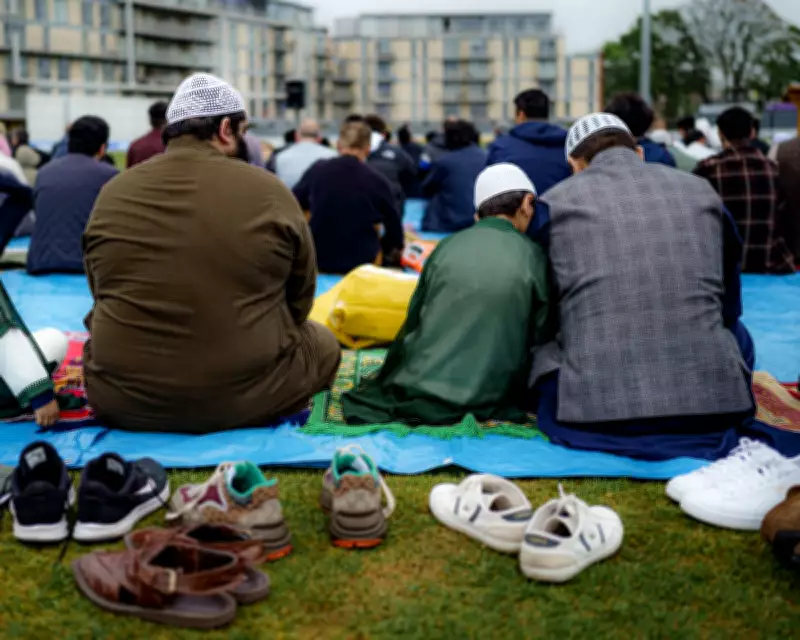
As Ramadan concludes, Muslims across Britain, including in Bristol, gather for Eid prayers, marking a period of fasting, reflection, and charity. For many, this holy month is a time of spiritual discipline and generosity, yet it also sees an increase in anti-Muslim hostility. Nazir Afzal, chancellor of the University of Manchester and a former chief prosecutor, shares his personal experiences and insights into the challenges faced by British Muslims today.
The Reality of Anti-Muslim Hatred
Afzal rejects the term "Islamophobia" as too abstract, instead calling it anti-Muslim hatred—a tangible issue of hostility, suspicion, discrimination, and abuse. He notes that daily expressions of this prejudice pervade national life, where crimes by individual Muslims are used to indict all, cultural practices are weaponised out of context, and theological concepts are distorted to imply threat. This often escalates to violence, intimidation, or exclusion against those perceived as Muslim.
He highlights a personal contradiction: his faith is overlooked in roles like university chancellor or chair of The Lowry, but becomes central when exercising authority, such as during his tenure as chief prosecutor for north-west England. Afzal recalls being introduced in New York as "the Muslim prosecutor that prosecutes Muslims," and facing targeting by far-right groups based solely on his religion, not his professional record.

Contributions and Stereotypes
British Muslims contribute significantly to the economy, public services, arts, and communities as doctors, teachers, entrepreneurs, soldiers, civil servants, and care workers. Despite this, there remains a reflex to view them as "other." Afzal acknowledges real challenges within Muslim communities, such as extremism, integration issues, and over-representation in prisons, but stresses that confronting these problems honestly is a responsibility, not a gift to bigots.
He criticises the absurdity of collective blame, pointing out that individual preferences or actions, like disliking dogs or demanding others not eat during fasting, do not represent all 3.9 million British Muslims. Similarly, debates over halal meat often ignore that most halal meat in Britain is pre-stunned, akin to non-halal practices.
Moral Panics and Legal Challenges
Afzal addresses moral panics around first-cousin marriage, honour-based abuse, and female genital mutilation (FGM), noting he has worked on these issues for decades. He clarifies that these abuses stem from misogyny and patriarchal cultures, not Islam, and highlights progress made in reducing prevalence. Regarding "Muslim grooming gangs," he emphasises that prosecutions revealed no religious motivation, only exploitation of vulnerable girls and institutional failures.
Legally, anti-Muslim hatred faces hurdles as Muslims are not a race, requiring reliance on religious hate crime laws with higher prosecution thresholds. Afzal recalls a British National Party lawyer exploiting this legal line. Social media exacerbates the issue, with anonymity and bots allowing hatred to spread, radicalising far-right extremists and fostering grievance among young Muslims.
A Message of Hope and Identity
Despite these challenges, Afzal remains hopeful, citing Britain's strength in tolerance and the principle that citizenship should not depend on conformity. He asserts that his faith refines him by calling for justice, service, and compassion, rather than defining him as infallible or suspect. He rejects anyone claiming to speak for all Muslims, emphasising their diversity and integration into every aspect of British life.
This Ramadan, millions fast quietly, give to charity—more than any other group—and pray for a country they love. Afzal concludes that the real question is whether Britain can see Muslims as fellow citizens, not as headlines, threats, or stereotypes.