

Moroccan Feminist Activist Faces Arm Amputation as Health Deteriorates in Prison
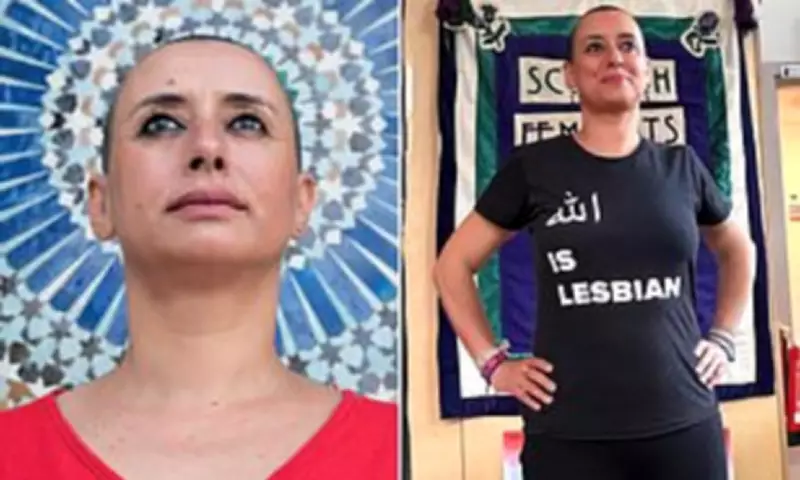
The Moroccan feminist activist imprisoned for wearing a T-shirt bearing the phrase 'Allah is a lesbian' now faces the potential amputation of her arm due to severe health deterioration while incarcerated. Ibtissame 'Betty' Lachgar, a prominent campaigner for women's and LGBTQ+ rights, has been held in Salé prison since September last year, serving a two-and-a-half-year sentence for a social media post deemed offensive to Islam.
Critical Health Crisis in Detention
Lachgar, a 50-year-old bone cancer survivor who uses a prosthesis between her left shoulder and elbow, has sustained a fractured elbow during her imprisonment. Medical professionals have warned that without urgent specialist treatment, she will require amputation of her arm. Her prosthesis has completely dislodged, yet she receives only paracetamol for pain management, despite needing complex surgical intervention.
According to her lawyers and family, Lachgar has been sleeping on a cold cell floor without a mattress for six months, in a room with a broken window. These conditions have exacerbated her physical vulnerabilities. Her sister, Siham Lachgar, stated that the activist requires specialist care in France to prevent catastrophic consequences, emphasizing that the punishment reflects her beliefs rather than her actions.

Legal and International Outcry
Lachgar's legal team argues that her conviction contradicts Morocco's 2011 Constitution and the country's obligations under United Nations treaties protecting freedom of expression. The United Nations established a working group in February to examine her case, highlighting international concern.
The activist wore the T-shirt in a 2022 Facebook post as an act of solidarity with two LGBTQ+ activists in Iran who faced death sentences. She reposted the image on X in July with captions criticizing Islam as fascist, phallocratic, and misogynistic, sparking online outrage and threats of violence, including calls for her stoning and lynching.
Broader Context of Activism and Repression
Lachgar, co-founder of the Alternative Movement for Individual Liberties in Morocco, has a history of advocacy. In 2013, she organized a public 'kiss-in' in Rabat supporting teenagers arrested for posting a kissing photo, and in 2012, she invited the Women on Waves abortion boat to Morocco in protest of anti-abortion laws.
Her case has galvanized global support, with a petition by Avaaz amassing nearly 400,000 signatures—the largest targeting Moroccan authorities in a decade. The 'Free Betty' coalition includes Amnesty International and Human Rights Watch, which have documented abuses in Salé prison, including physical torture.
Lawyer Ghizlane Mamouni condemned Lachgar's solitary confinement for five months as treatment befitting a violent criminal, noting her only 'crime' was wearing a T-shirt in support of Iranian women. Another lawyer, Chirinne Ardakani, cited violations of international law and inhumane detention conditions.
Melanie Motta of Avaaz emphasized that wearing a T-shirt is not a crime, calling on King Mohammed to release Lachgar immediately. The case underscores ongoing tensions between freedom of expression and religious sensitivities in Morocco, with Lachgar's health crisis amplifying demands for justice and reform.






