

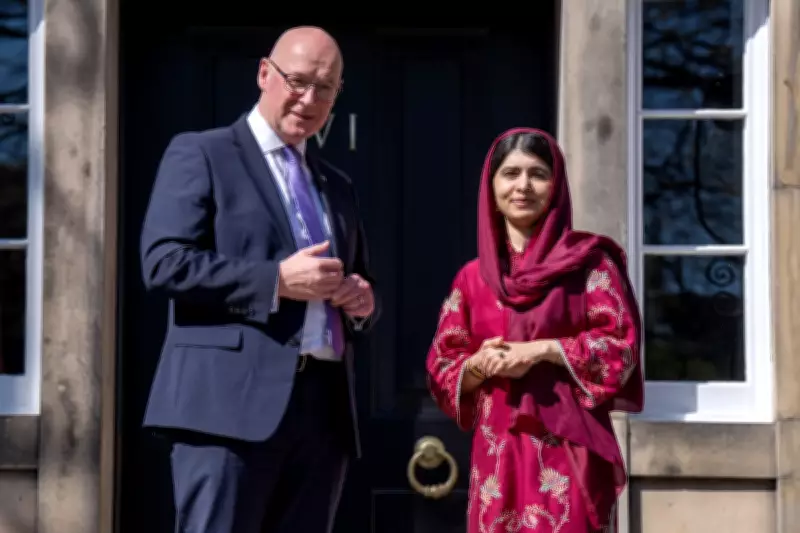
Leading human rights campaigner Malala Yousafzai has called on world leaders to show their “support and solidarity” for Afghan women and girls living under the Taliban regime, as she pushes for the criminalisation of “gender apartheid”.
Meeting with First Minister
Ms Yousafzai met Scottish First Minister John Swinney at his official residence in Edinburgh on Wednesday, where he pledged the support of any government he leads to her campaign. The meeting comes just over a week before the Scottish election.
Since the Taliban took control of Afghanistan almost five years ago, Ms Yousafzai said others have been “looking away” from the issues facing women in the country. The Nobel laureate, who was shot by the Pakistani Taliban at age 15 for advocating for girls' education, has since become a global figurehead for women's rights.

Call for Criminalisation of Gender Apartheid
Ms Yousafzai is seeking to have gender apartheid – the systematic exclusion of women and girls from education, work, and public life – recognised as a crime under international law. She told the Press Association: “This is a very critical moment for us to gain more support and solidarity for Afghan women and girls because, right now, they have been living under the Taliban’s brutal regime of gender apartheid.”
She highlighted the plight of Afghan women, noting that girls cannot attend school and women are banned from employment. She thanked Scotland for its support, particularly for bringing 19 female medical students to Scotland in 2024 through a joint effort by the Scottish and UK governments and the Linda Norgrove Foundation.
Taliban Rule Worsening
Ms Yousafzai described Taliban rule as “worsening”, with recent decrees allowing husbands to beat their wives or daughters. She argued that criminalising gender apartheid would create accountability: “When we have mechanisms in international law, such as the recognition of gender apartheid, it helps us hold the Taliban, the perpetrators, accountable. It also helps to make countries obliged to act because, right now, I feel like more countries are looking away.”
She urged other nations to lend their voices, emphasising that this is a human rights cause that transcends geography: “We need voices from all around the world... this is a human rights cause.” She called on Muslim countries in particular to step forward in solidarity.
Joint Statement
In a joint statement, Mr Swinney and Ms Yousafzai declared: “A society that strips women and girls of their rights – to education, employment, freedom of speech and political participation – cannot thrive. When half the population is excluded from public life, the societal, economic and political costs are borne by everyone.”
They condemned the Taliban’s “deliberate and institutionalised system of domination” and called for urgent international action, including recognising gender apartheid as a crime against humanity. They expressed solidarity with Afghan women and girls, praising their courage and leadership in the face of repression.






