

The Quest for a Missing Piece of Scottish History
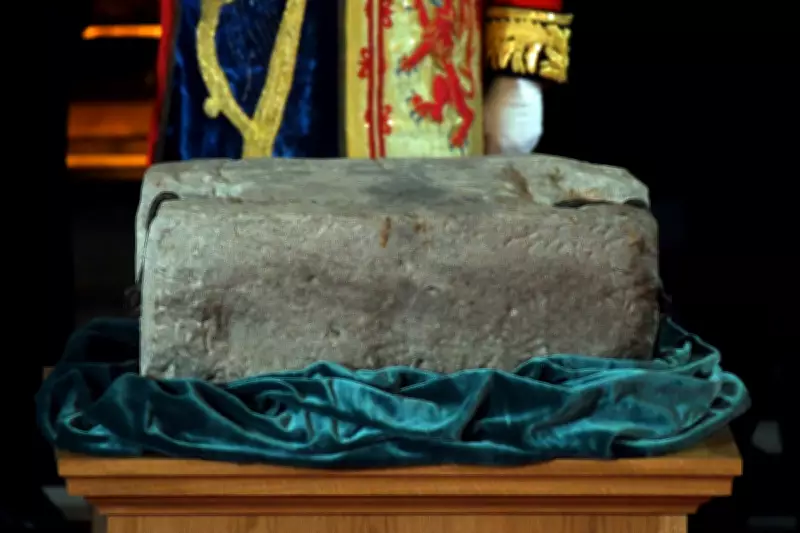
A remarkable search has been launched to locate a ring believed to contain one of approximately 34 fragments from the historic Stone of Destiny. The artefact was separated from the original stone following its famous theft from Westminster Abbey on Christmas Day 1950.
A Family Mystery Unfolds
Viv Rollo, daughter of David Rollo, reveals that her father was gifted a piece of the ancient stone in 1951, shortly after the audacious raid by Scottish nationalist students. The fragment was then carefully set into a ring with a distinctive Celtic design featuring three points, likely crafted from silver or a similar metal.
"I would definitely like to know what happened to it," Ms Rollo stated from her home in Wester Ross. "It would be such a thing to have as a family heirloom."

David Rollo, who died in 1997 at age 70, was close friends with Gavin Vernon, one of the four students who executed the Westminster Abbey heist. The two shared student accommodation in Glasgow during that turbulent period.
The Hidden Fragments Revealed
Following the theft, the Stone of Destiny broke into two pieces during transportation. It was secretly repaired by sympathetic stonemason Bertie Gray, whose meticulous work apparently created numerous fragments from the original sandstone block.
Recent research indicates Gray distributed these fragments to supporters within the Scottish nationalist movement. One fragment eventually reached the Scottish National Party headquarters after being presented to former First Minister Alex Salmond.
Professor Sally Foster of Stirling University has been leading a research project to document the fate of these historically significant pieces, many of which remained hidden for decades.
A Web of Secrets and Coincidences
Ms Rollo believes her father was invited to participate in the Christmas Day raid but declined, reportedly telling Vernon: "Don't be daft, you'll never do it." Despite his non-involvement, David Rollo was questioned by police in the aftermath as authorities scrambled to recover the stolen artifact.
In a curious coincidence, another man named John Rollo—no relation—actually helped conceal the Stone of Destiny before its recovery at Arbroath Abbey in April 1951.
"There must have been about 100 people who knew about the stone," Viv Rollo observed, "but they all kept quiet."
The Ring's Mysterious Disappearance
David Rollo left few clues about the ring's ultimate fate, telling his daughter only that it was either lost or stolen. He hinted that he suspected someone specific but refused to name the individual, not wanting to falsely accuse a friend.
The ring was already missing by 1956 when Rollo married, suggesting its disappearance occurred relatively soon after its creation. Despite being well-known among nationalist student circles—his parties were legendary enough to inspire a song called The Lane Outside Dave Rollo's Door—he remained tight-lipped about the fragment's origins and disappearance.
Professor Foster continues to seek information from anyone with knowledge about the whereabouts of these historic fragments. The missing ring represents just one of many intriguing stories emerging from this research into Scotland's most symbolic artifact, used for centuries in the coronation ceremonies of Scottish and British monarchs.






