
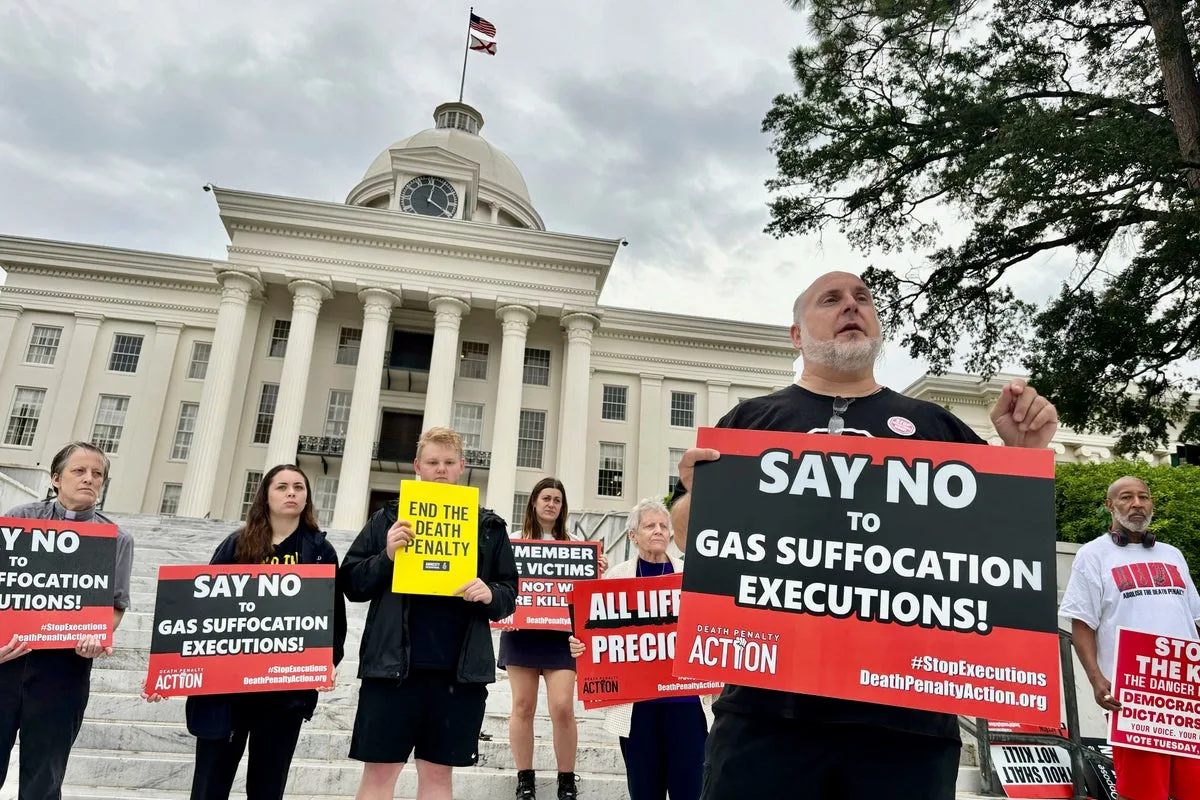
A federal judge in Alabama has ruled that execution by nitrogen gas does not violate the constitutional ban on cruel and unusual punishment, rejecting a death row inmate's challenge. The decision, issued by U.S. District Judge Emily C. Marks on Thursday, follows the first full trial in the United States to examine the method's constitutionality.
The ruling clears the way for Alabama and other states to continue using nitrogen gas, which has been employed in eight executions since 2024. The method involves strapping a respirator to the inmate's face and replacing breathable air with pure nitrogen, causing death from oxygen deprivation. Judge Marks acknowledged that the protocol likely causes severe air hunger for one to three minutes but found it did not meet the high legal standard for cruel and unusual punishment.
The lawsuit was filed by death row inmate Jeffery Lee, 58, who is scheduled for execution on June 11. Lee was convicted of capital murder for the 1998 shooting deaths of Jimmy Ellis and Elaine Thompson at a pawn shop in Orrville, Alabama. A jury recommended life imprisonment, but a judge overrode that decision, a practice Alabama later abolished in 2017.
Alabama Attorney General Steve Marshall praised the ruling, stating that the court affirmed that capital punishment is a matter for the people and their representatives. Lee's attorneys indicated they would appeal. Critics, including Death Penalty Action's executive director Abraham Bonowitz, argued that the decades-long wait on death row constitutes torture and noted that Lee would not face execution under current sentencing laws.




