

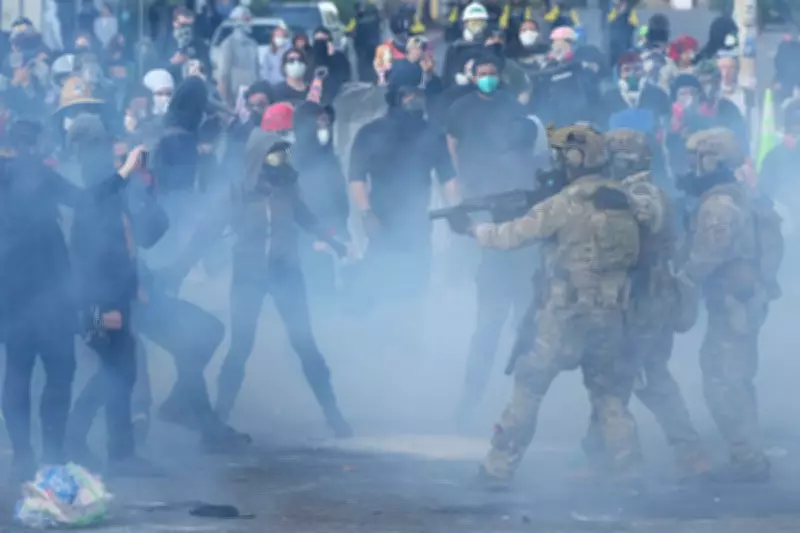
Federal Judge Declares Teargas Use in Portland ICE Protests Unconstitutional
A federal judge in the United States has issued a landmark ruling, declaring that the deployment of teargas by law enforcement agencies during protests against Immigration and Customs Enforcement (ICE) in Portland in 2026 was unconstitutional. This decision marks a significant legal rebuke of police tactics employed during the demonstrations, which drew widespread attention for their intensity and scale.
Background of the Protests and Legal Challenge
The protests erupted in Portland in early 2026, fueled by public outcry over ICE policies and operations. Thousands of demonstrators gathered to voice their opposition, leading to confrontations with police forces. Law enforcement responded with teargas and other crowd-control measures, resulting in numerous injuries and allegations of excessive force. Civil rights groups swiftly filed lawsuits, arguing that these actions violated constitutional protections, including the First Amendment right to free speech and assembly, as well as protections against unreasonable force under the Fourth Amendment.
Judge's Ruling on Excessive Force and Free Speech Violations
In a detailed opinion, the judge found that the use of teargas was not justified by the circumstances and constituted excessive force. The ruling emphasized that the protests, while sometimes disruptive, were largely peaceful expressions of political dissent. The judge stated that law enforcement's response was disproportionate and failed to adequately distinguish between violent actors and lawful protesters, thereby chilling free speech and assembly rights. This decision underscores the judiciary's role in scrutinizing police conduct during public demonstrations, particularly in politically charged environments.

Implications for Law Enforcement and Protest Rights
This ruling is expected to have far-reaching implications for how police handle protests across the United States. It sets a precedent that could limit the use of teargas and similar tactics in future demonstrations, requiring law enforcement to adopt more restrained approaches. Additionally, the decision reinforces the constitutional safeguards for protesters, potentially empowering civil liberties advocates in similar legal battles. Authorities may now face increased scrutiny and potential liability for aggressive crowd-control methods, prompting a reevaluation of training and protocols.
Reactions from Stakeholders and Next Steps
Civil rights organizations have hailed the ruling as a victory for democracy and accountability, urging other jurisdictions to follow suit. In contrast, some law enforcement representatives have expressed concerns about operational challenges in managing large-scale protests. The case may proceed to appeals, but for now, it stands as a critical judicial statement on the balance between public safety and constitutional rights. Observers note that this ruling could influence ongoing debates over police reform and protest management in the US, highlighting the enduring tensions in a polarized political landscape.






