Federal Judge Mandates Clergy Access to Minneapolis ICE Holding Facility
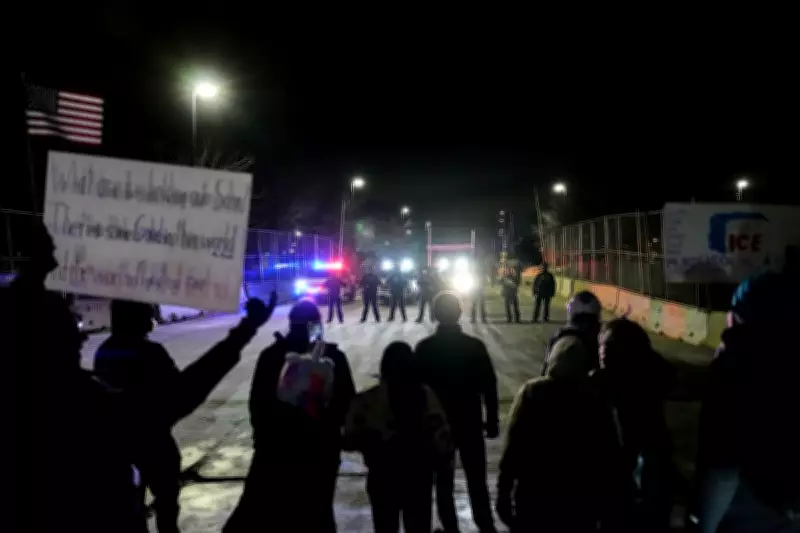
In a landmark ruling that underscores the intersection of religious freedom and immigration enforcement, a federal judge has ordered that clergy members be permitted to visit and minister to immigrants detained at the Bishop Henry Whipple Federal Building in Minneapolis. This decision represents a significant legal victory for religious organizations challenging access restrictions at facilities central to the Trump administration's enforcement operations in Minnesota.
Legal Victory for Religious Freedom Advocates
U.S. District Judge Jerry Blackwell issued the ruling on Friday, granting an injunction sought by Minnesota branches of the Evangelical Lutheran Church in America, the United Church of Christ, and a Catholic priest who had filed legal action against the Department of Homeland Security. The judge determined that the plaintiffs had demonstrated a strong likelihood of prevailing when the case reaches its final conclusion and that restrictions on clergy access constituted "irreparable harm" to religious freedom.
Judge Blackwell has ordered both parties to convene within four business days to negotiate the specifics of providing access while addressing legitimate government security concerns. A formal plan, or competing proposals if an agreement cannot be reached, must be submitted within seven business days following those negotiations.

Clergy Response to the Ruling
Bishop Jennifer Nagel of the Minneapolis Synod of the Evangelical Lutheran Church in America, who was previously denied entry to the Whipple facility on Ash Wednesday when she attempted to visit detainees, spoke emotionally to reporters after the hearing. "The trauma that families are going through, and individuals are going through, at these times is exorbitant," Bishop Nagel stated. "And so to be able to meet people in those needs, that's very much at the core, the heart and soul of what we do as ministers of all different traditions."
The lawsuit itself alleges that the Whipple building, named after Minnesota's first Episcopal bishop and a prominent 19th-century human rights advocate, "now stands in stark contrast to its namesake's legacy." It further claims the facility has "become the epicenter of systematic deprivation of fundamental constitutional and legal rights by the federal government."
Government Arguments and Broader Context
Government attorneys countered by noting that Operation Metro Surge officially concluded on February 12 and argued that the number of new detentions has since decreased, leading to an easing of temporary visitor restrictions. They maintained that clergy visits had been permitted for over two weeks prior to the ruling.
However, Judge Blackwell sided with plaintiffs' attorneys who contended that the issue remains pertinent because the government still lacks a formal plan outlining access requirements and the specific conditions under which clergy are admitted. The request for access garnered broad support from religious leaders across Minnesota, including Catholic and Episcopal bishops, other Christian and Jewish clergy, and the Minnesota Council of Churches.
National Pattern of Access Challenges
This case reflects a broader national pattern where clergy nationwide have been advocating for greater access to immigration detention facilities, particularly during significant religious periods like Lent and Ramadan. While ministering to detainees has long been a practice for faith leaders, it has become increasingly contentious amidst current immigration enforcement efforts.
Similar legal action was required last month for two Catholic priests and a nun to gain entry into an ICE facility in the Chicago suburb of Broadview on Ash Wednesday. Muslim and Christian clergy in Texas have also reported facing difficulties accessing large Immigration and Customs Enforcement detention facilities across the state.

Facility Classification and Additional Access Issues
Tauria Rich, a senior local ICE official overseeing the Whipple facility, stated in a recent filing that visitors to the facility are rare and that any clergy requests are handled on a case-by-case basis. She recounted one instance in early March where a clergy member attempted a visit but left because no detainees were present, asserting that the visit would have been allowed had detainees been available.
ICE classifies the building as a short-term holding facility, distinguishing it from long-term detention centers where clergy visits are typically more routine. Access challenges at Whipple extend beyond clergy members to include elected officials and legal representatives.
Three members of Congress from Minnesota were initially denied entry when they sought to inspect the facility, and upon gaining access, they reported observing poor conditions. Attorneys have also faced obstacles, with another federal judge last month ordering Homeland Security to provide new detainees at Whipple immediate access to legal counsel before their transfer elsewhere.