
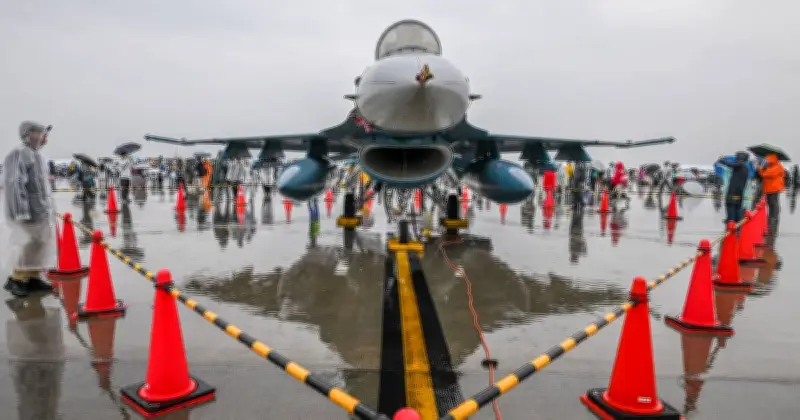
Japan has scrambled aircraft as it perceives Moscow to be a critical threat. The two countries dispute the possession of the Kuril Islands, a volcanic archipelago administered by Russia.
Putin's Visit to Iturup
The country's president, Vladimir Putin, visited the territory for the first time on August 13, which experts suggest was "likely in response to the more assertive defence policy Japan has recently adopted". Putin was on the largest island, Iturup, which Japan calls Etorofu.
There he held a number of meetings, including with Sakhalin Oblast Governor Valery Limarenko, Russian Pacific Fleet Commander-in-Chief Admiral Viktor Liina, Sakhalin Oblast Federal Security Service (FSB) Border Service Head Sergey Makhorin and the acting commander of the Russian 68th Guards Army Corps (Eastern Military District), Alexey Shvedov, the Institute for the Study of War (ISW) reported.
Kremlin's Response to Japan's Defence Policy
Experts added that Putin’s visit is "likely part of the Kremlin’s response" to Japan’s 2026 defence White Paper, which was published earlier in August. The Kremlin "aims to undermine" the Japanese Prime Minister, Sanae Takaichi’s efforts to improve her country's defence capabilities, the ISW wrote.
Putin has criticised the legislation for "identifying Russia as one of Japan’s critical threats", and during his time on Iturup/Etorofu the Russian leader addressed the need for Moscow to "ensure security" on "all of its borders, all of its territories".
Japan's Condemnation and Aircraft Scrambles
This is "a noteworthy statement in the context of frequent Russian air operations requiring Japan to scramble aircraft in response, as noted by the White Paper", the ISW noted. Meanwhile, Takaichi "strongly condemned" Putin’s visit to Iturup/Etorofu and "reiterated Japan’s territorial claims" to the islands.
Experts reiterated that Russia and Japan "never signed a formal peace treaty at the end of the Second World War, and the dispute over the Kuril Islands remains".




