
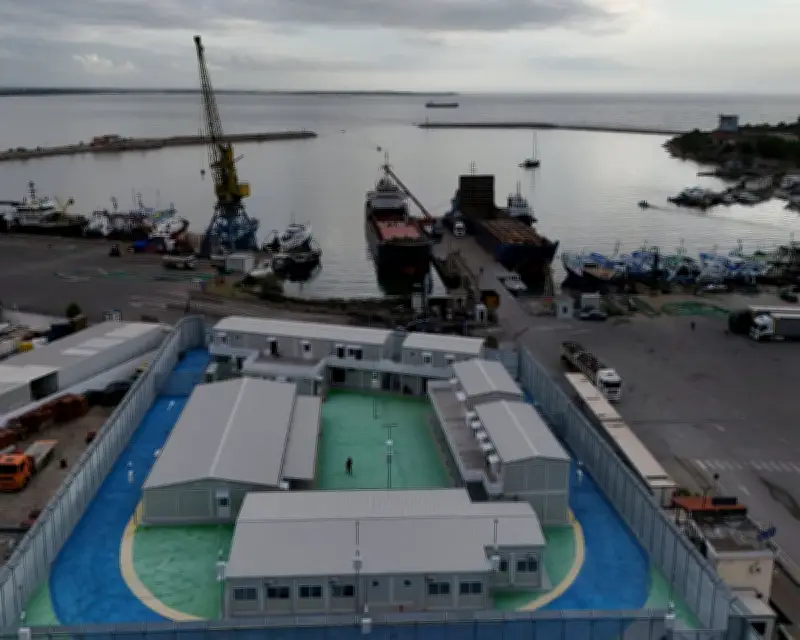
Cristina Guarda, an Italian MEP from the Greens and Left Alliance (AVS), has accused the Italian government of potentially concealing the reality of life inside an offshore migrant detention centre in Gjadër, Albania. Guarda claimed that staff refused to provide key information to a delegation from the Greens/EFA group, including the number of detainees, and denied access to the cells.
Conditions Inside the Centre
Guarda stated that testimony from detainees described a daily existence of “limbo and alienation.” She cited an official register of “critical events” revealing six suicide attempts since mid-May, along with other acts of self-harm. She also noted “sweltering” heat within the facility. “Whether they want to hide the truth about the conditions of life inside the detention centre, something is not clear,” Guarda said.
Background of the Centres
Italy opened two centres in Albania—Gjadër and Shëngjin—in 2024 under a controversial five-year deal costing an estimated €130-140 million (£112-120 million) annually. The centres process asylum applications of adult men intercepted at sea by Italian vessels and detain rejected applicants pending deportation. The agreement has faced legal challenges, with Italian judges blocking many transfers due to safety concerns in migrants' home countries.
Current Population and Operations
Although official figures are unavailable, Gjadër is believed to hold 70-80 people, primarily awaiting expulsion. The combined capacity of both facilities is roughly 1,000, with a cap of 3,000. Guarda reported that psychotropic drug use is “a constant,” and detainees fill time by sleeping because “essentially they have nothing to do.” One detainee said he was “living his days in pursuit of his freedom.”
Political Reactions
Dutch MEP Tineke Strik called the visit “very disappointing and disgraceful,” adding that staff created obstacles and denied access to cells. Cecilia Strada of Italy’s centre-left Democratic party demanded explanations from the Italian government and European Commission, noting that MEPs with authority to enter were unable to verify respect for human rights. Meanwhile, Italian Prime Minister Giorgia Meloni has vowed to make the initiative work, despite failing to meet the goal of sending 36,000 people annually. In April, senators from her party described the facility as “modern, efficient, and in excellent condition.”




