
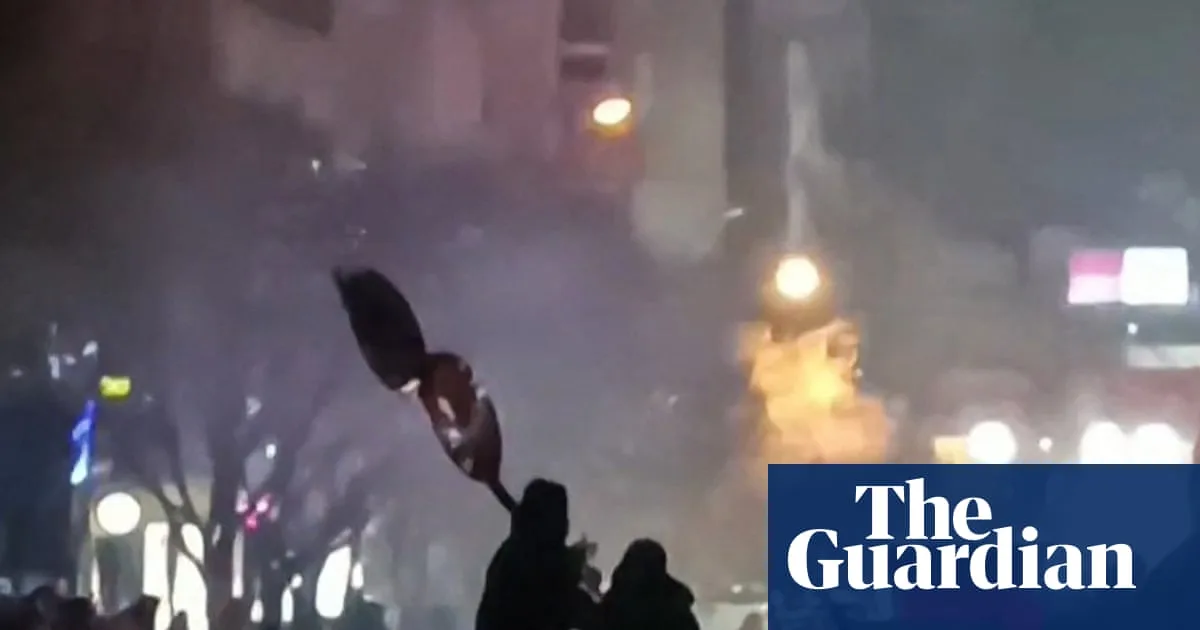
Iran experienced a complete internet blackout on Thursday night as protests over economic conditions spread nationwide, according to the internet freedom monitor NetBlocks. The outage, which began after reports of disruptions in the western city of Kermanshah, mirrors previous shutdowns by Iranian authorities in response to demonstrations.
Security forces have killed at least 45 protesters, including eight children, since the protests began 12 days ago, reported the Norway-based NGO Iran Human Rights (IHR). Wednesday was the bloodiest day, with 13 confirmed deaths. The IHR director stated that the crackdown is becoming more violent and extensive, with hundreds wounded and over 2,000 arrested.
Demonstrations reached all 31 provinces on Thursday, with a general strike in Kurdish regions and other cities. In the southern Fars province, protesters pulled down a statue of former Revolutionary Guards commander Qassem Suleimani. In Tehran, a large crowd gathered on Ayatollah Kashani Boulevard, and protests continued late into the night in Abadan, where a woman was shot in the eye.
Rights groups accused authorities of raiding hospitals to detain wounded protesters and using unlawful force. Amnesty International condemned the use of live fire. President Masoud Pezeshkian called for restraint and dialogue, urging security forces to avoid violent behaviour.
The protests were triggered by a sudden currency slide and economic malaise, with food prices rising over 70% and medicine by 50% since last year. The government attributes the crisis to external factors, primarily western sanctions over Iran's nuclear programme.




