

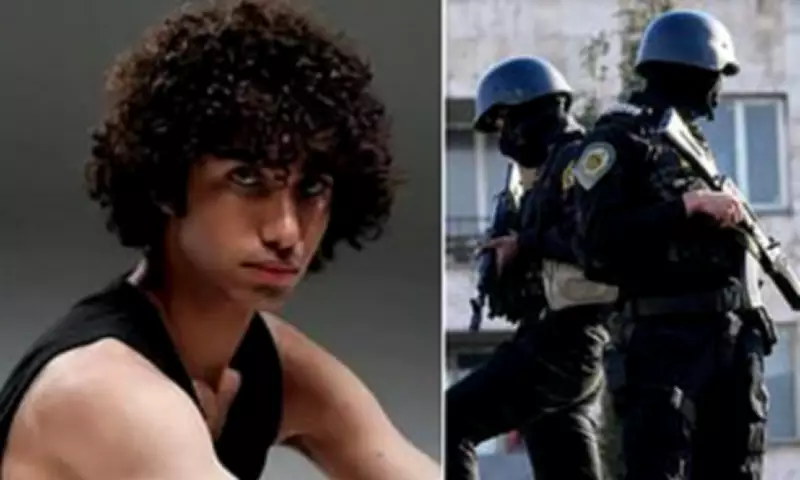
Iran Executes Teenage Musician in Defiant Display of Brutality
Iran has executed an 18-year-old musician, Amirhossein Hatami, in a shocking escalation of its use of the death penalty against political dissidents. The talented guitarist was hanged at dawn on Wednesday in the notorious Ghezel Hesar prison outside Tehran, dashing any hopes that his youth might spare him from the regime's brutal justice system.
Arrest and Unfair Trial
Hatami was arrested on January 8 and accused of committing arson against a Basij paramilitary base in Tehran during anti-regime protests. He endured weeks of solitary confinement, had his distinctive long, curly black hair forcibly shaved, and was paraded on national television while being brutally interrogated. On February 6, he was convicted of 'Moharebeh' or 'Enmity Against God' in what human rights organizations describe as a grossly unfair trial.
The Iranian judiciary's Mizan Online website claimed he acted 'against national security' on behalf of Israel and the United States by allegedly breaking into 'a military centre and destroying it in order to seize the weapons stored there' during protests. However, Amnesty International expressed outrage at what it called the 'arbitrary execution of the teenage protester,' emphasizing that his trial was fundamentally unfair and that he received a death sentence less than a month after his arrest.

Escalating Execution Campaign
Fears are now growing for dozens more prisoners on death row, with reports indicating that four other men have been moved to pre-execution solitary confinement in the same prison where Hatami was killed. The individuals identified as at imminent risk include:
- Mohammad Amin Biglari, 19
- Ali Fahim, 23
- Abolfazl Salehi Siavashani, 51
- Shahin Vahedparast Kolor, 30
Exiled Crown Prince Reza Pahlavi shared their pictures before news broke of Hatami's execution, writing: 'The bloodthirsty regime in Iran is preparing to commit yet another unforgivable crime.' He added that these young men are condemned 'not for anything they did, but because of what they represent.'
Broader Pattern of Political Executions
Hatami's execution follows the hanging of four political prisoners earlier this week who were convicted of rebellion for membership in the banned People's Mujahedin of Iran (MEK) after Iran's supreme court upheld their sentences. Additionally, Iranian wrestler Saleh Mohammadi, 19, was killed alongside Mehdi Ghasemi and Saeed Davvodi last week.
Mahmood Amiry-Moghaddam, Director of Iran Human Rights NGO, stated: 'Amirhossein Hatami was executed following a grossly unfair trial and on the basis of forced confessions. The execution of three protesters and four political prisoners in just two weeks signals that the regime has intensified its war against the Iranian people.'
He warned that 'hundreds more now face imminent executions in the coming days and weeks' as the regime views the Iranian people, who are demanding fundamental change, as the primary threat to its survival.
International Condemnation and Warnings
During a briefing on Wednesday, Mohammad Mohaddessin, Chair of the National Council of Resistance of Iran's Foreign Affairs Committee, said the executions represent 'a message from the regime' intended to intimidate and control the population. He warned that the world might be witnessing 'a prelude to a massacre of political prisoners, similar to 1988, when the regime carried out mass executions in which 30,000 political prisoners were executed.'
Mohaddessin urged the international community to take effective measures to halt executions in Iran, stating: 'The UN, US, and all defenders of human rights must condemn the executions of PMOI members. The international community must uphold its obligation.'
Execution Statistics and Context
The executions come amid Iran's ongoing conflict with Israel and the United States, which erupted on February 28 with strikes that killed the Islamic Republic's supreme leader, Ali Khamenei. There has been a significant surge in executions during this war, as the Islamic Republic seeks to demonstrate strength while facing internal unrest.

According to Iran Human Rights, at least 145 people are confirmed to have been executed in 2026 so far, with an additional 400-plus executions reported but not yet verified. The regime appears to be using executions as a tool to suppress dissent and maintain control during a period of heightened political tension and external conflict.





