

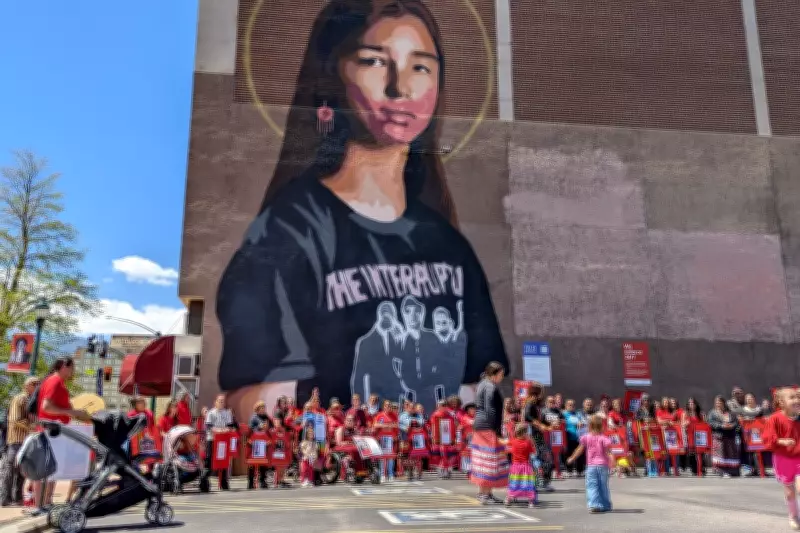
Across the United States, Indigenous communities are gathering this week to honor loved ones who have gone missing or been killed, while calling for improved data collection, law enforcement responses, and systemic reforms to enhance public safety. The week of May 5 marks the national day of awareness for the Missing and Murdered Indigenous Peoples (MMIP) movement, a time that reflects both collective grief and resilience.
A Hidden Crisis
Native Americans face disproportionately high rates of violence, a crisis rooted in historical displacement and federal efforts to erase Indigenous cultures. According to the U.S. Department of Justice, Native Americans and Alaska Natives are more than twice as likely as the general population to experience violent crime, with Native women twice as likely to be homicide victims. By the end of 2025, the FBI's National Crime Information Center recorded nearly 1,500 active federal cases involving missing Native Americans, though experts believe this is an undercount due to jurisdictional confusion, racial misclassification, and inconsistent data.
Abigail Echo-Hawk, director of the Urban Indian Health Institute and a citizen of the Pawnee Nation, acknowledged progress in documenting the crisis but stressed that law enforcement resources lag behind. "Don't look at the numbers and feel sorry for us," she said. "Look at the numbers and ask, 'How do we ensure this doesn't continue?'"

Federal Action and Challenges
In 2020, President Donald Trump signed Savanna's Act and the Not Invisible Act, aimed at improving data collection and law enforcement responses to violent crimes in Indian Country. However, implementation has been slow. A federal commission studying the crisis convened two years behind schedule under the Biden administration, releasing extensive recommendations in 2023. Those recommendations were later removed from government websites amid the Trump administration's purge of diversity, equity, and inclusion initiatives.
The Trump administration's Department of Justice continued Operation Not Forgotten, deploying FBI agents and analysts to tribal lands on a rotating basis. Since 2023, this initiative has led to over 200 arrests and convictions in homicide, domestic abuse, and sexual assault cases. However, Michael Henderson, director of public safety for the Navajo Nation, noted both pros and cons. While federal officers bring fresh perspectives and advanced forensic tools, many lack experience in Indigenous communities. "More manpower from the FBI on reservations is not a good solution," Henderson said, advocating instead for better funding of tribal police departments.
Families Advocate for Their Relatives
At a Sunday prayer walk in Colorado Springs, Colorado, marchers chanted, "No more stolen lives on stolen land," carrying signs with photos and stories of dozens of Indigenous victims. Among them was Denise Porambo, whose daughter Destiny Jeriann Whiteman, 24, was killed last August on the Ute Mountain Ute reservation. "It hurts every day," Porambo said, her voice breaking.
In the absence of a national strategy, families often bear the burden of advocacy. Grace Bulltail's niece, Kaysera Stops Pretty Places, 18, disappeared from her home on the Crow Reservation in Montana in August 2019 and was found dead days later. No arrests have been made, and the cause of death was inconclusive. The family organizes marches and vigils to keep the case alive. "We have had to advocate for ourselves every step of the way," Bulltail said.






