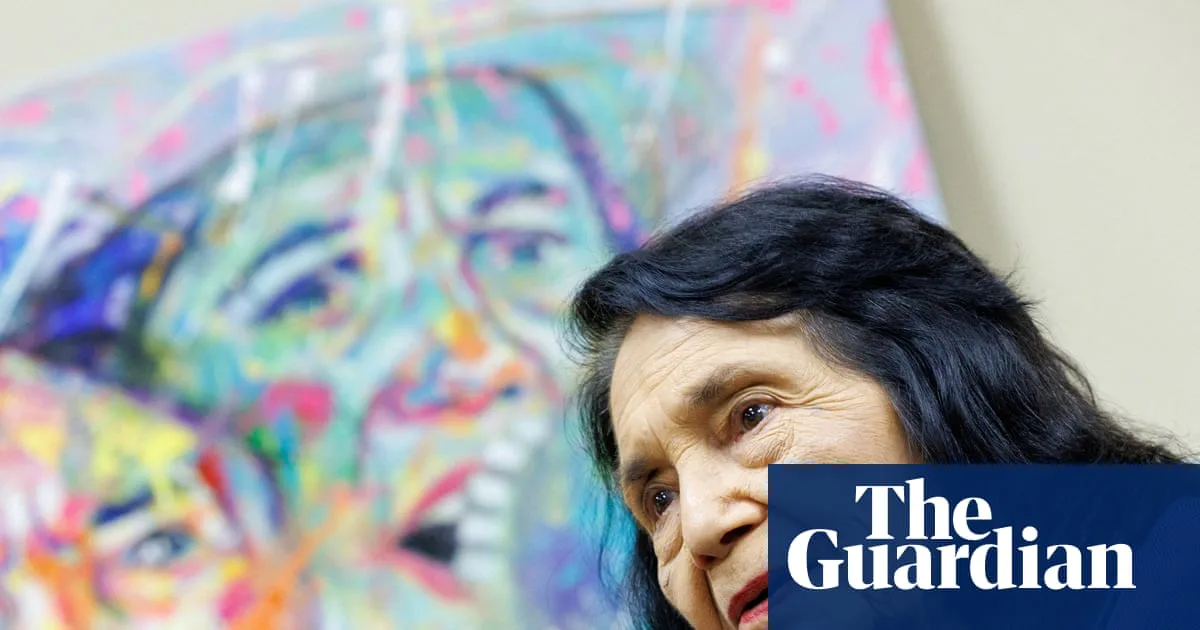
Dolores Huerta Breaks 60-Year Silence on Chavez Abuse, Legacy Debate Ignites
Dolores Huerta, the legendary labour leader and civil rights activist, has ended decades of silence by revealing she was sexually abused by César Chavez, the co-founder of the United Farm Workers union. This shocking disclosure, kept secret for 60 years to protect the movement, has ignited a national debate about legacy and recognition.
A Life of Advocacy and Resilience
Huerta, now nearly 96, has dedicated her life to breaking down barriers for marginalized communities. Born Dolores Clara Fernandez in 1930 in Dawson, New Mexico, she grew up in California's culturally diverse San Joaquin Valley. Her early career as an elementary school teacher was transformed by frustration over her students' poor living conditions, leading her to organize farmworkers instead.
In the 1950s, she met Chavez through her work with a Latino civil rights group. Together, they founded the National Farm Workers Association in 1962, which later became the United Farm Workers. Huerta was a fearless negotiator and key leader, coining the iconic slogan "Si, se puede" (Yes, it can be done) in 1972—a phrase later adapted by Barack Obama as "Yes, we can" for his 2008 presidential campaign.
The Hidden Trauma and Its Aftermath
In a statement released Wednesday, Huerta disclosed that Chavez's abuse led to the birth of two children, a fact she concealed to safeguard the farmworkers' movement she helped build. "I channeled everything I had into advocating on behalf of millions of farm workers and others who were suffering and deserved equal rights," she said, explaining her decades of silence.
This revelation has prompted calls from activists and officials to rename the plethora of government buildings, schools, monuments, and streets across the country that currently honor Chavez. On social media, there are already demands to rename an avenue in Albuquerque—partly dedicated to Huerta and partly to Chavez—entirely in her honor.
An Unyielding Legacy of Activism
Despite the trauma, Huerta's activism never wavered. She was jailed over 20 times for demonstrations and seriously injured during a 1988 protest. After recovering, she shifted focus to campaign for women's rights and encourage Latinas to run for office. Through her California-based Dolores Huerta Foundation, she continues to march and speak on issues of race, poverty, and gender equality.
Her decades of work have earned her numerous accolades, including the Presidential Medal of Freedom in 2012, induction as the first Latina into the National Women's Hall of Fame, and nine honorary doctorates. Schools in California, Texas, and Colorado bear her name, and her image is celebrated in murals nationwide.
Reactions and Reflections
Politicians and advocates have commended Huerta and other survivors for coming forward. U.S. Senator Martin Heinrich, a Democrat from New Mexico, stated, "I cannot imagine the pain and suffering they've endured over decades. Thank you for showing us what real strength is." This moment underscores the complex interplay between personal sacrifice and public legacy in social movements.
As the debate over renaming monuments gains momentum, Huerta's story serves as a poignant reminder of the hidden costs behind iconic figures and movements. Her resilience and unwavering commitment to justice continue to inspire, even as her painful truth reshapes historical narratives.






