
Five EU member states are 'consistently and intentionally' eroding the rule of law, according to a new report by the Civil Liberties Union for Europe (Liberties). The group identified Bulgaria, Croatia, Hungary, Italy and Slovakia as 'dismantlers' actively weakening democratic standards. The 800-page report, released on Monday, draws on evidence from more than 40 NGOs across 22 countries.
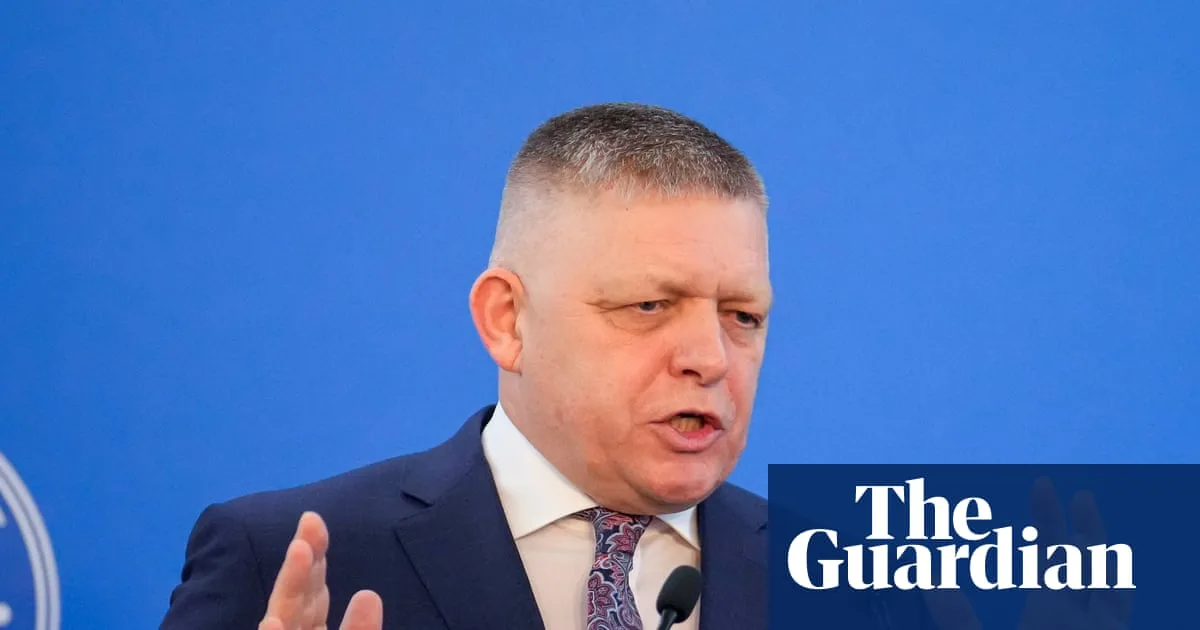
Liberties found that the rule of law has regressed in all areas—justice, anti-corruption, media freedom and civil society checks—in Slovakia under Prime Minister Robert Fico. Hungary, where Viktor Orbán has been in power for 16 years, 'remains in a category of its own, continuing to pursue ever more regressive laws and policies with no sign of change', the report said. Bulgaria and Italy also faced criticism for regressive policies.
Six other countries, including Belgium, Denmark, France, Germany and Sweden, were classified as 'sliders', where the rule of law is declining in some areas without being part of an overall political strategy. The Czech Republic, Estonia, Greece, Ireland, Lithuania, the Netherlands, Romania, Spain and Poland were labelled 'stagnators', with neither improvement nor deterioration. Poland's limited progress under Prime Minister Donald Tusk showed 'just how challenging and fragile it can be to restore compromised institutional independence', Liberties said. Only Latvia was deemed a 'hard worker', actively improving standards.
The report also criticised EU mechanisms for addressing rule-of-law erosion as largely ineffective. It found that 93% of recommendations in the European Commission's 2025 rule of law report were repeats from previous years, with many unchanged. Out of 100 recommendations assessed, 61 showed zero progress and 13 deteriorated. 'The commission's report was meant to prompt concrete action,' said Ilina Neshikj, Liberties' executive director. 'Repeating recommendations without meaningful follow-up will not reverse this.'
Liberties further accused EU institutions of mirroring member-state issues, including normalising fast-track lawmaking and rolling back fundamental rights protections. 'They normalised the use of exceptional, fast-track lawmaking, rolled back key fundamental rights protections, and led a concerted campaign against watchdog organisations,' said Kersty McCourt, senior advocacy adviser. The report highlighted increased regressive legislation and penalties for protests, including Hungary's ban on Pride events and Italy's security decree criminalising road blockades.




