As Iran's regime begins to ease a severe communications blackout, the full, tragic scale of its crackdown on recent anti-government protests is starting to emerge. For the vast Iranian diaspora, scattered across Europe and North America, the news has been met with profound shock, sadness, and fury as they learn of family members killed on the streets.
Voices Silenced: The Families' Devastating Ordeal
According to the US-based Human Rights Activists News Agency, more than 2,500 people have been killed in the regime's response to the uprising, a toll expected to rise significantly as information filters out. For relatives overseas, discovering the fate of those in Iran has been a tortuously slow process due to the internet shutdown imposed since 8 January.
Hali Norei, 40, described collapsing when she finally received a call informing her that her 23-year-old niece, Robina Aminian, had been killed. The fashion student was shot in the head from behind while protesting with university friends in Tehran on 8 January. The news only reached Norei after relatives travelled to the Iraqi border to find an internet signal strong enough to call abroad.

"It's a tragedy for my family," Norei said. "I want to be Robina's voice and don't want this regime to silence the voices of our children." Her family in Iran faced further horror when they went to identify Robina, witnessing "hundreds of bodies of young people shot and killed." Authorities refused to release the body, forcing Robina's mother to secretly carry her daughter away. The family was then denied a funeral and forced to bury her by the roadside, digging the grave themselves under the watch of security forces.
A Diaspora Reacts with Grief and Defiance
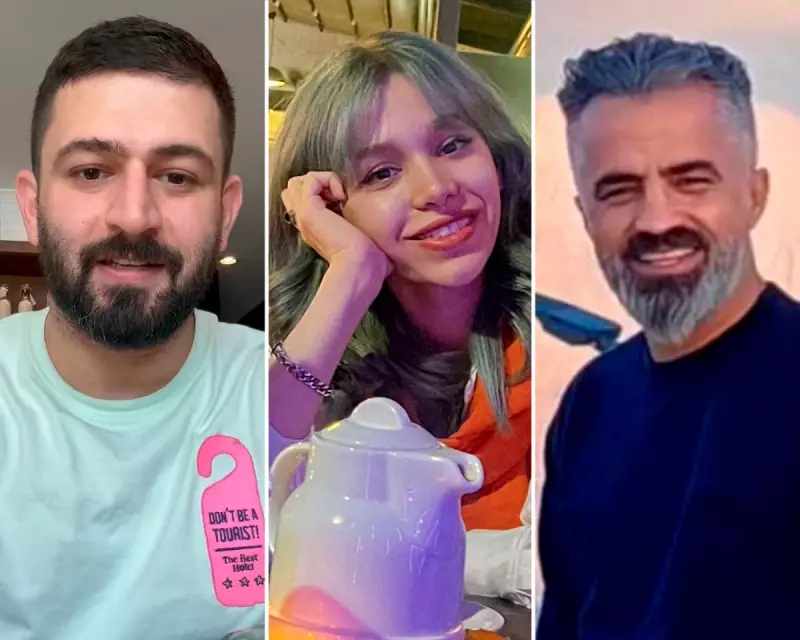
The stories echo across the diaspora. Sara Rasuli, 39, a refugee in Germany who fled after the 2022 protests, discovered her cousin Ebrahim Yousefi had been killed. The 42-year-old Kurdish father of three was shot by security forces. Hours before, he had posted a poignant message on social media lamenting a life of hardship for his generation and his children's.
"The whole world needs to know what's happening to the children of Iran, especially the Kurds," Rasuli stated. The situation remains desperate for her family; two relatives who tried to retrieve Yousefi's body were themselves arrested, and the communication blackout has left them in agonising uncertainty.
In Canada, champion bodybuilder Akbar Sarbaz, 36, was shattered to learn his coach and friend of 15 years, Mahdi (Masoud) Zatparvar, was shot dead at a protest on 9 January. Zatparvar, a two-time bodybuilding champion, had shared a final, defiant Instagram post, writing, "I just want my rights. A voice that has been silenced in me for over 40 years must scream."
"He asked me to share this post and be the voice of the protesting people of Iran," Sarbaz recalled. "He was the bravest."
A Chilling Pattern of Intimidation
The regime's tactics extend beyond the initial violence. The case of Siavash Shirzad, a 38-year-old father, illustrates a chilling pattern. Shot after dancing to Kurdish songs around a fire with other protesters, he was taken to an overwhelmed hospital and died. His body was among hundreds at the Kahrizak forensic centre, numbered 12,647.
His family was forced to pay to view his body and were only allowed to take it for burial under strict conditions: the ceremony had to be private, or he would be disposed of in a mass grave. Military vehicles followed them, warning that any shouted slogan would result in the body being confiscated.
With one of the world's largest diasporas, at least half a million of whom live in Europe, the grief and anger emanating from Iran's crisis are now felt globally. These first-hand accounts, emerging through immense difficulty, reveal not just the scale of the loss but the systematic intimidation employed to suppress mourning and memory.