

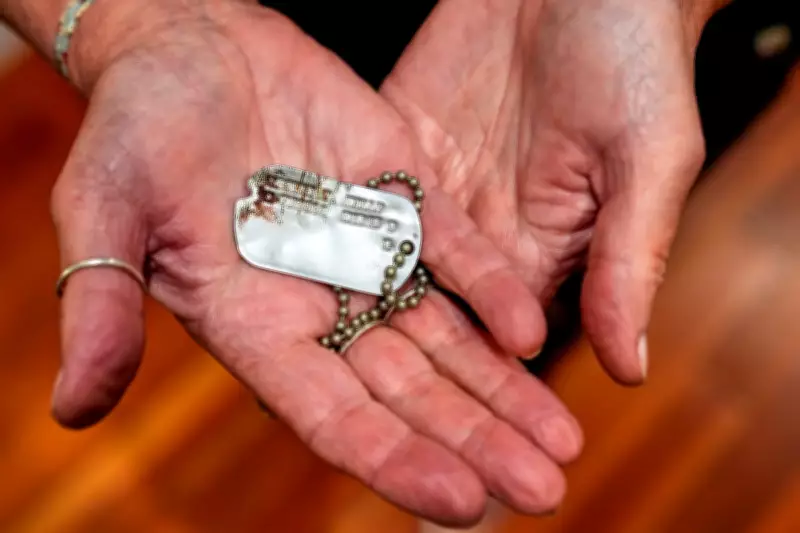
Military identification tags — popularly known as dog tags — became standard issue for U.S. troops at the request of an Army chaplain concerned about identifying fallen soldiers at the beginning of the 20th century. More than a century later, they remain one of the most powerful links for grieving military families to their lost loved ones.
Origins of Dog Tags
The need to identify those fallen in battle was highlighted by the American Civil War, when staggering numbers of soldiers were buried as 'unknown' — such as 75% of the 17,000 Union troops at Vicksburg National Cemetery, according to the National Park Service. At the end of the Spanish-American War in 1898, Chaplain Charles C. Pierce, then in charge of the morgue in the Philippines, first requested that Army soldiers be issued tags. By the U.S. entry into World War I, all combat soldiers were required to wear them, and they became an official part of the uniform by World War II.
Symbolism and Connection
Today, advances in forensics make tags less crucial for identification, but the religious affiliation on them is still useful for chaplains on the battlefield to provide appropriate prayers to dying or fallen troops, said Air Force Chaplain and Maj. Benjamin Quintanilla Jr. at Dover Air Force Base, where U.S. casualties from wars in Afghanistan and Iran have been repatriated. 'What they’re searching for is connection,' he said. 'So these dog tags become just a sacred symbol.'

Surviving families treasure the dog tags their loved ones wore — and the new ones placed in honor on the casket at dignified transfer ceremonies — so much that some keep wearing them or even have them tattooed. For troops, they’re the simplest sign of belonging. 'I can trust somebody who is wearing the same identification as me,' said Quintanilla, who first joined the Air Force as a dental technician. 'It means that I was a part of something greater than myself.'
From the World Wars to Vietnam and conflicts in the Middle East, military identification tags have also been a symbol of Americans’ sacrifice in global conflicts. It’s unclear why the small metal rounded rectangles — hanging on ball chains and listing name, rank, company and other information, depending on the era — are called dog tags, according to the Pentagon.






