Damascus Alcohol Sales Limits Ignite Protests Over Secular Freedoms
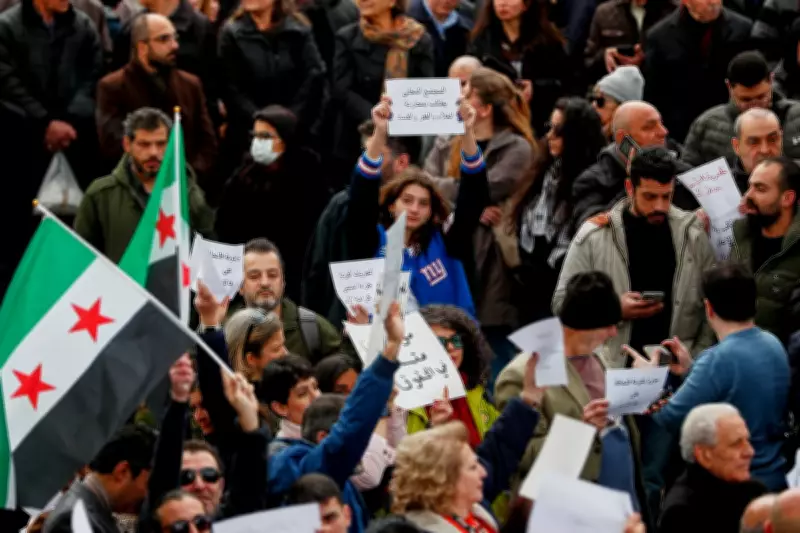
Hundreds of Syrians rallied in Damascus on Sunday to protest new government restrictions on the sale and consumption of alcohol, highlighting growing fears that the country's Islamist-led interim administration may undermine long-standing secular values in the cosmopolitan capital.
Unity and Liberty Chanted in Christian Neighborhood
Protesters from diverse religious backgrounds gathered in Bab Touma, a historically Christian district, filling a grassy square and chanting "Syrians are united!" while holding signs calling for the protection of personal freedoms and minority rights. The demonstration, which passed without incident despite a heavy security presence, underscored deep-seated anxieties about the direction of Syria's post-war society.
"This is not about whether we want to drink alcohol, this is about personal freedom," declared Isa Qazah, a 45-year-old sculptor who joined the protest along the medieval stone lanes near Damascus' Old City. "We have come here to defend an idea."

Controversial Decree Targets Restaurants and Nightclubs
The controversy erupted last week when the Damascus governor issued a decree banning "the provision of alcoholic beverages of all kinds in restaurants and nightclubs" across the capital. Establishments have three months to remove wine lists and convert bar or club licenses to cafe permits. Authorities claimed the move was made "at the request of the local community," but it comes as interim President Ahmed al-Sharaa, a former Islamist rebel, faces pressure from hard-liners to impose conservative religious values.
Al-Sharaa has not publicly commented on the alcohol debate. More than a year after his movement ousted former President Bashar Assad, Syria remains in turmoil, grappling with the aftermath of 14 years of civil war and decades of dictatorship while struggling to define its future identity.
Secular Legacy Under Threat
Under Assad's secular Alawite-led regime, Syrians enjoyed limited civic and political freedoms but could drink alcohol, frequent nightclubs, and dress as they pleased. Al-Sharaa initially vowed to unite the country and respect pluralism, treading lightly on social restrictions. However, Syria's religious and ethnic groups remain on edge, with sectarian attacks by pro-government Sunni fighters killing hundreds of Alawites and Druze over the past year.
Protesters expressed concern that the alcohol restrictions could exacerbate these tensions. The decree allows alcohol sales only in three predominantly Christian neighborhoods—Bab Touma, al-Qassaa, and Bab Sharqi—but prohibits on-site consumption and limits shops to sealed take-away bottles. Vendors must also maintain distances from mosques, schools, police stations, and government offices.
Accusations of Discrimination and Backlash
Critics argue that by singling out Christian areas, authorities are framing these communities as responsible for what the decree terms "violations of public morals," despite Damascus being home to many secular Muslims. "How our neighborhoods are violating public etiquette? The division this creates is unfair and irresponsible," said Fawaz Bahauddin Khawja, a Christian lawyer at the rally. "This is the real face of Damascus. The only flag we raise is the Syrian flag."
In response to mounting criticism ahead of the protest, Damascus authorities issued a statement late Saturday apologizing to the city's Christian population "for any misunderstanding or misinterpretation of the decision." The statement clarified that hotels would be exempt from the restrictions and asserted, "This decision does not interfere with citizens’ personal freedoms. The regulation of alcohol sales exists in all countries, with differences in how it's applied and enforced."
As Syria navigates its fragile recovery, the alcohol debate has become a flashpoint for broader struggles over identity, freedom, and the role of religion in public life, with protesters determined to safeguard the secular traditions that have long defined Damascus.