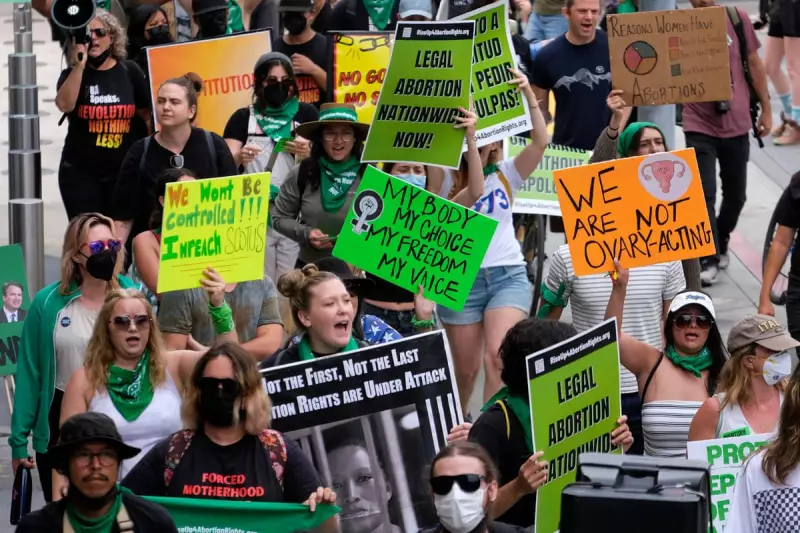
In a bold move underscoring the deep national divide over reproductive rights, California Governor Gavin Newsom has publicly refused a request from Louisiana to extradite a doctor accused of mailing abortion pills into the southern state.
A Firm Rejection from the West Coast
On Wednesday, the Democratic governor issued a definitive statement denying the extradition request for Dr. Remy Coeytaux. "Louisiana's request is denied," Newsom declared. "We will not allow extremist politicians from other states to reach into California and try to punish doctors based on allegations that they provided reproductive health care services. Not today. Not ever."
The confrontation stems from an indictment by Louisiana authorities, who allege that Dr. Coeytaux, based in California, mailed abortion pills to a woman in Louisiana in October 2023. The pills were reportedly sent via Aid Access, an organisation that provides mail-order medication across the United States, directly challenging Louisiana's near-total ban on abortion procedures.

The Legal Battle Over 'Shield Laws'
California's defiance is rooted in its so-called "shield laws," legislation passed in the wake of the 2022 Supreme Court decision overturning Roe v Wade. These laws are designed to protect healthcare providers from extradition and prosecution by other states for actions related to abortion care that are legal within California's borders.
Louisiana's Republican Attorney General, Liz Murrill, announced the extradition effort on the same day. Her office released records alleging Dr. Coeytaux violated a state statute banning "criminal abortion by means of abortion-inducing drugs." If convicted in Louisiana, the doctor could face substantial fines and a staggering prison sentence of up to 50 years of hard labour.
In a strongly worded response, Murrill condemned California's position. "It's appalling to see the California governor and attorney general openly admitting that they will protect an individual from being held accountable for illegal, medically unethical and dangerous conduct," she stated. Notably, the documents from her office did not contain any claim from the Louisiana woman who received the pills that she had been coerced.
A Wider Pattern of Interstate Conflict
This is not an isolated incident. Louisiana has previously sought the extradition of a New York-based doctor, Margaret Carpenter, on similar allegations. That request was also refused by New York's Democratic Governor, Kathy Hochul, whose state has enacted similar protective shield legislation.
The case highlights a complex and bitter legal frontier in post-Roe America, where blue states with protective laws are increasingly pitted against red states with severe restrictions. Abortion opponents argue that shield laws illegally obstruct justice, while proponents view them as a necessary defence for providers and patients seeking care across state lines.
This high-stakes refusal by Governor Newsom sets a powerful precedent, signalling that California will act as a legal fortress for abortion providers targeted by authorities in restrictive states. The standoff is almost certain to escalate, potentially leading to further legal challenges as the national battle over reproductive rights continues to fracture along state borders.