Autistic Woman Dragged from Car by ICE Faces Death Threats After Ordeal
Autistic Woman Dragged by ICE Faces Death Threats

Autistic Woman Recounts Violent ICE Encounter and Subsequent Online Abuse

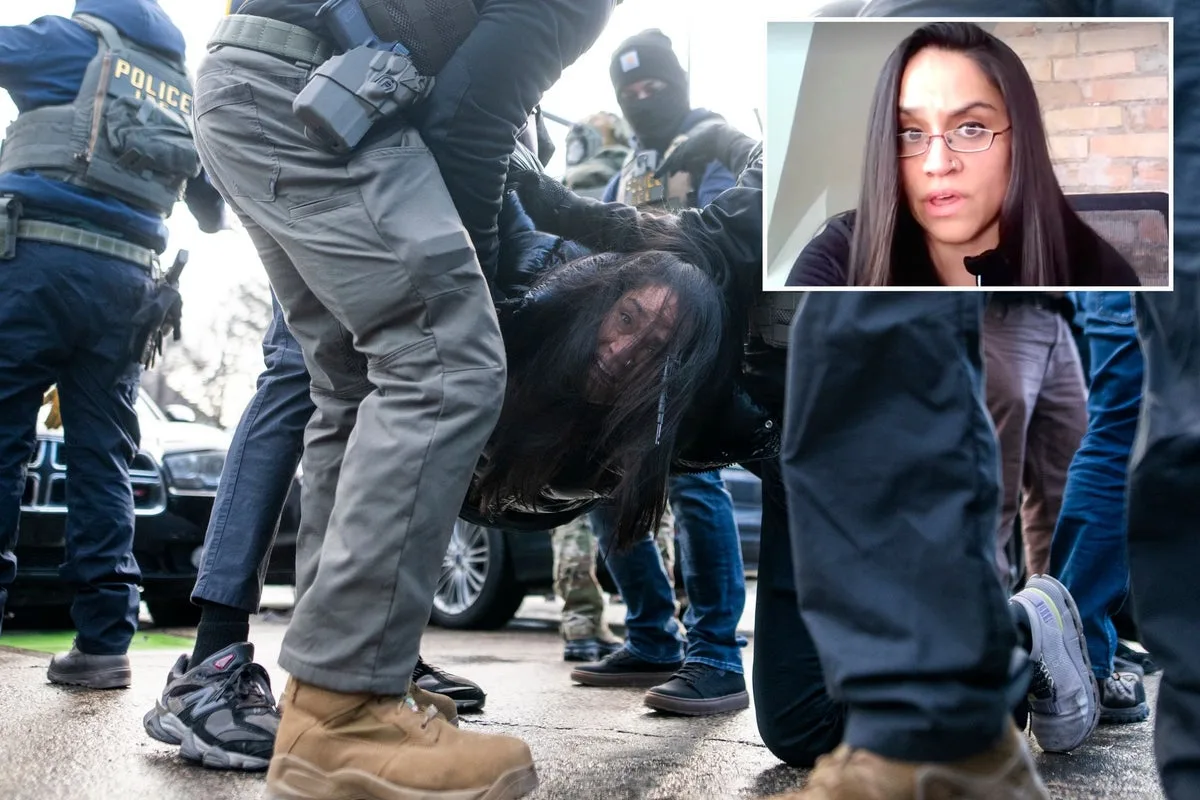
Aliya Rahman, a 43-year-old autistic woman, has spoken exclusively about the harrowing experience of being forcibly dragged from her car by Immigration and Customs Enforcement agents in Minneapolis, followed by detention where she was mocked for her disability and later subjected to a barrage of online death and rape threats.

A Routine Journey Turns into a Nightmare

Rahman was driving to a medical appointment on 13 January 2026, her 39th since suffering a traumatic brain injury in 2024, when traffic abruptly halted. She suddenly found herself amidst an ICE operation. "I heard a cacophony of conflicting commands," she told The Independent, describing how an agent threatened to break her window. As an autistic person with sensitivity to loud noises and an auditory processing condition that makes multiple voices sound equally loud, the situation quickly became overwhelming.

Despite identifying herself as disabled and autistic, agents proceeded to violently remove her from the vehicle, an incident captured on video that later went viral. The Department of Homeland Security subsequently labelled her an "agitator" who ignored commands, a characterisation Rahman strongly disputes.

Wide Pickt banner — collaborative shopping lists app for Telegram, phone mockup with grocery list

Detention Centre Mockery and Medical Crisis

Rahman was taken to the Whipple Building, a federal detention facility in Minneapolis criticised for its conditions. "People are horrified by what happened on the street, but for me, it's nothing compared to what I experienced inside," she stated. She reports being mocked by staff; when she requested accommodations, she was told if she were "normal" this wouldn't have happened. Agents laughed and made references to "bringing in a body," causing her to fear for her life.

Her heart rate escalated dangerously, leading her to focus solely on survival. "At that point, I stopped asking for a lawyer. I thought, 'I just have to make it through this alive,'" she recalled. She eventually lost consciousness and woke up in Hennepin County Medical Center, where staff demonstrated appropriate care by asking if they should dim lights for her autism.

A Pattern of Violence and a City Under Scrutiny

The incident occurred against a backdrop of heightened ICE activity in Minneapolis, ostensibly targeting the city's Somali population. It took place just days after ICE agent Jonathan Ross allegedly shot and killed Renee Good, and shortly before Border Patrol agents fatally shot Alex Pretti. Rahman's detention occurred mere blocks from where Good was killed.

Rahman, a former software engineer, notes that interactions with law enforcement carry heightened risks for autistic individuals. Behaviours like stimming or lack of eye contact—common autistic traits—can be misinterpreted as threat or non-compliance by officers.

Late Diagnosis and Facing Stereotypes

Rahman, who is not white and female, represents a demographic often overlooked in autism diagnoses. She was not diagnosed until 2022, having been misdiagnosed throughout her life. "When I was young, it was treated as a discipline issue," she explained. This experience informs her view that systemic bias played a role in her treatment. "You can feel the absolute disregard for the humanity of people of colour. If you don't think someone's a human, you don't care if they're disabled," she said.

Aftermath: Threats and a Call for Accountability

Following her release without charge, Rahman faced an onslaught of online abuse. "I've gotten a lot of hate messages saying I'm an r-word who should be deported, or death threats, rape threats, all kinds of stuff," she revealed. Her attorney, Alexa Van Brunt of the MacArthur Justice Center, confirmed they are gathering evidence to pursue legal remedies for the violation of her rights.

Pickt after-article banner — collaborative shopping lists app with family illustration

Rahman has since spoken on Capitol Hill alongside the family of Renee Good. She emphasises that her story should not end with personal pity but should highlight a broader, dangerous pattern. "My autistic brain gravitates towards patterns," she said. "What we have on the ground is not new, and if we don't understand it in terms of the larger pattern, we are in even more trouble." She urges the public to see beyond her individual case and address the systemic issues at play.




