The United Kingdom has agreed to fund 200 French officers tasked with detaining and deporting individuals seeking asylum from some of the world's most oppressive and war-ravaged regimes, as part of a new bilateral agreement aimed at curbing unauthorised Channel crossings. This initiative marks the first time the French government has explicitly targeted those heading to the UK via small boats, according to officials.
Detention and Deportation Plan
A newly established removal centre in Dunkirk will be used to hold individuals from ten nationalities: Eritrea, Afghanistan, Iran, Sudan, Somalia, Ethiopia, Iraq, Syria, Vietnam, and Yemen. The Home Office identified these as the top ten nationalities of small boat arrivals last year. Detainees will be held by officers paid for by the UK and subsequently deported either to their home countries or to other EU nations they had passed through. The funding for this operation is drawn from a £162 million package designed to pilot new approaches to prevent small boat crossings, which supplements a three-year, £500 million baseline agreement with France to enhance enforcement actions along northern French beaches.
The detain-and-deport strategy is part of a broader £162 million 'payment by results' package, layered on top of the £500 million baseline deal running until March 2029. Officials anticipate that hundreds, potentially thousands, of individuals will be detained under this targeted scheme. However, EU countries, including France, have historically encountered difficulties deporting individuals to neighbouring countries under the Dublin regulation.

Criticism from Advocacy Groups
Jo Cobley, Chief Executive of Safe Passage International, condemned the plan as 'disgraceful and unlawful,' arguing that deporting people to unsafe countries violates international law. 'With no accessible safe routes and the government's suspension of refugee family reunion, the only way to reach the UK to ask for protection is across the Channel – punishing people with detention, deportation threats, and police violence does not change that,' she stated. Cobley emphasised that returning individuals to active war zones or places where they face persecution, such as Afghanistan, Sudan, and Iran, is unlawful, particularly when those individuals would likely have been granted protection in the UK.
Home Office sources clarified that the UK would only request deportation of detainees if their home countries have been deemed safe, citing Vietnam as an example. Asylum seekers who cannot be sent home may be transferred to third EU countries if they have already been processed and fingerprinted there.
Government Justification
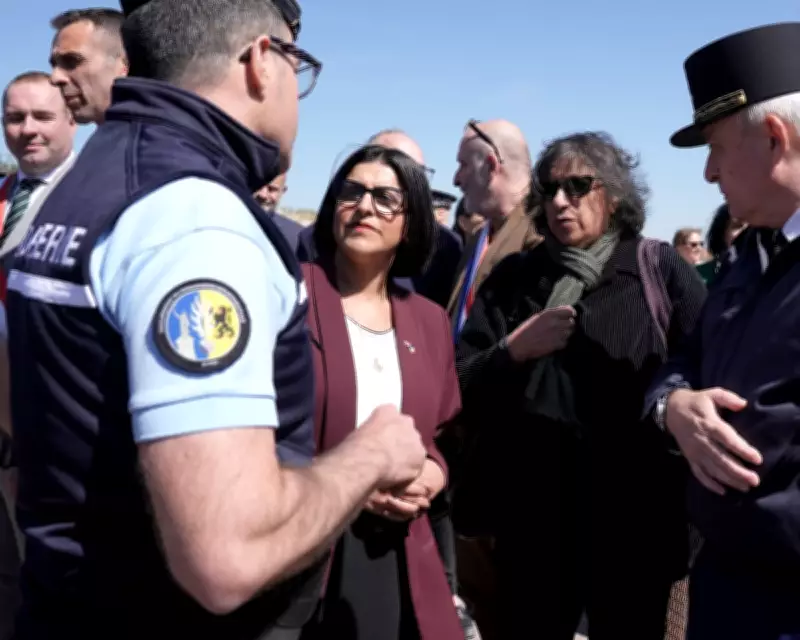
Speaking to journalists in Dunkirk, Home Secretary Shabana Mahmood defended the approach, arguing that the EU's 'new pact on migration and asylum' permits member states to remove individuals who have travelled through safe EU countries. 'If safe, they can be returned to their home country. And if not safe, then to a safe country from Europe that those people have transited through. That is where the French want to go, and that is why we have invested in the detention centre,' she said.
Mahmood acknowledged that the UK cannot stop the boats without paying France hundreds of millions of pounds, dismissing Nigel Farage's call for zero payments as 'fundamentally unserious.' She described the issue as a 'shared problem' requiring a joint response, stressing that collaboration with France is critical to addressing Channel crossings.
Implementation Timeline and Conditions
Officials confirmed that the Dunkirk site, with a capacity of 140 people, is expected to be operational by the end of 2026. First promised by Rishi Sunak's government in 2023, the facility remains under construction with no buildings completed. A pilot programme targeting individuals by nationality will begin next month at an existing removal centre in Coquelles, using current capacity. Investment in the new detention centre comes from the £162 million flexible, results-based pot. If the scheme fails to deliver value for money and proven results within its first year, funding will be withdrawn.

Sile Reynolds, Head of Asylum Advocacy at Freedom from Torture, expressed outrage that taxpayer money is funding the detention of torture and war survivors in France. 'Even the briefest period in detention can cause profound damage, increasing the risk of suicide and self-harm. The idea that they will be swiftly returned to their home country is grossly misleading, bearing in mind the risk of persecution that so many of these people face on return,' she said. The French government typically takes 30 days from detaining migrants to deportation.
Deal Signing and Additional Measures
The agreement was signed on Thursday by Home Secretary Shabana Mahmood and her French counterpart, Laurent Nuñez, at a ceremony in Dunkirk. As part of the deal, a 50-strong riot squad will be trained in 'crowd control tactics' to 'stop illegal migrants in their tracks,' according to the Home Office. UK funds are expected to cover batons, shields, and teargas for dealing with 'hostile crowds and violent tactics.'
The announcement follows protracted negotiations between the two countries over how to halt unauthorised small boat journeys and who should bear the cost. The previous £478 million, three-year deal expired on 31 March.