

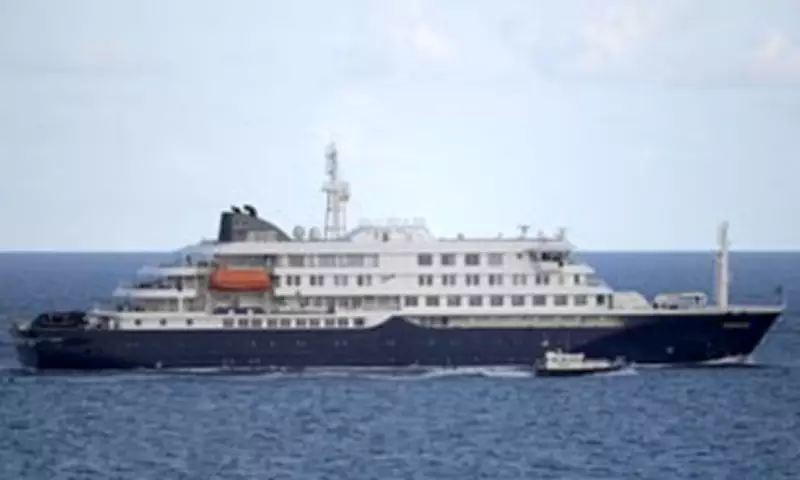
The United Kingdom has dispatched a rapid response mobile laboratory to the island of St Helena following an outbreak of hantavirus on a cruise ship, as ten British nationals are being flown home in an effort to protect them from the rat-borne virus. The UK Health Security Agency (UKHSA) announced on Friday evening that a three-person team from the UK Public Health Rapid Support Team (UK-PHRST) has been sent to the UK overseas territories of St Helena and Ascension in the South Atlantic. This deployment comes in response to a request for assistance from the island's government.
Details of the Deployment
The move follows earlier news that ten Britons from these South Atlantic islands, linked to the MV Hondius cruise ship outbreak, are being brought to the UK as a precautionary measure to shield them from the illness. These individuals, believed to be residents of St Helena and Ascension, are being transported to the UK to complete their self-isolation. The UKHSA confirmed that none are symptomatic, and their final destination has not been disclosed. Once in Britain, they will have access to NHS infectious disease specialists should they become ill, and the UKHSA stated it will announce where they will isolate in due course.
The deployed specialist team includes microbiologists Clara Milroy and Kimberley Steeds, who will support PCR testing for hantavirus as well as testing for other conditions. They are joined by infection prevention and control expert Anthony Twyman, who will assist the 54-bed local Jamestown General Hospital in handling potential cases and treatment. The team is expected to remain on the island for the next eight weeks.

Official Statements
Dr Edmund Newman, director of the UK Public Health Rapid Support Team, said: 'This deployment reflects UKHSA's commitment to responding rapidly to health threats wherever they emerge and to supporting our international partners in protecting public health globally. Our teams continue to work closely with all those affected by this outbreak, both in the UK and overseas, to ensure all necessary support is in place. The risk to the general public remains very low.'
The outbreak of the respiratory disease, which is spread through contact with infected rodents, on the MV Hondius has led to at least 11 reported cases among passengers, including three deaths. The UK has sent a rapid response mobile laboratory to the island of St Helena after the outbreak.
Impact on British Nationals
Meanwhile, 20 British nationals from the MV Hondius, together with a German who is a UK resident and a Japanese passenger, who have been isolating at Arrowe Park Hospital on the Wirral in Merseyside, are preparing to leave the facility. They were taken there on Sunday night after the ship docked in Tenerife for a three-day isolation and assessment period. They will isolate for another 42 days at home.
Public Health Scotland warned on Thursday that a small number of people in Scotland have potentially had contact with the virus and that it was working to get in touch with 'a small number of individuals' who could be affected.
International Response
The team's deployment on Friday follows the naming of a Briton among the six people who arrived on the same day at a remote quarantine facility in Australia after sailing on the hantavirus-affected cruise. A flight organised by the Australian Government left the Netherlands on Thursday morning carrying the six passengers - four Australian citizens, a UK citizen and a New Zealander - who were all evacuated off MV Hondius. The six passengers were in 'good health', showed no symptoms, and recently tested negative for the virus, Health Minister Mark Butler told a news conference in Canberra, adding that they will be held in quarantine for at least three weeks.
They were all made to wear heavy personal protective equipment (PPE) as the plane flew them to an air force base in Perth, western Australia, on Friday morning. From there, the group were taken to the Bullsbrook Centre for National Resilience, a 500-bed quarantine facility where the six will be required to stay for at least three weeks. The government has yet to determine how to handle the passengers' isolation after the initial three-week quarantine, given the virus' potential incubation period of 42 days, the minister said.

Quarantine in Italy
Meanwhile, a British man was made to quarantine in Milan over hantavirus fears, despite not having any symptoms, and was taken from the bed and breakfast he was staying in, where he will now have to remain locked up for a month. The man, in his 60s, was stopped at the guesthouse where he was staying in the Pasteur area of Milan, along with a 50-year-old man who had joined him in Italy. Officials in Milan said they had been alerted by the UK Ministry of Health and had traced the men to their B&B late on Tuesday night, and he and his companion were taken to the Sacco hospital by police.
Both have tested negative for the hantavirus, but the older man has been told to remain in Italy as he is deemed a 'close contact' of Dutch woman Mirijam Schilperood, who died in South Africa and was onboard MV Hondius. Schilperood, who had been on the April 25 Airlink flight from St Helena to Johannesburg, was sitting in 13C, a subsequent positive hantavirus case sat in 14B, while the British passenger was in 15F. The man had then flown on to Italy, where he had spent 17 days touring Rome, Florence, Venice and the Cinque Terre near Genoa.
Mrs Schilperood's husband Leon also died on the ship, and the two are thought to have contracted the deadly rat-borne Andes virus strain while travelling in southern Argentina, where it is prevalent. Guido Bertolaso, of the health department at Lombardy council in Milan, said: 'Both men were identified at their B&B after details were provided by British authorities. One is in his 60s and a resident of St Helena, while the other is younger, in his 50s. Neither is showing symptoms of the virus, and both have tested negative, but the older man will remain in quarantine in Italy until June 6 to ensure he doesn't develop the virus. The younger man will be allowed to return home.'
The UK government notified Italian authorities about the British tourist, who had visited various countries, including Amsterdam, before arriving in Milan, where his travel plans came to an abrupt halt. Because he had no private accommodation and was staying in a B&B, he will have to endure the whole of his quarantine in a single room in the Infectious Diseases ward of the hospital.
The UKHSA said of this group: 'Public health and clinical specialists have assessed each passenger's individual circumstances, and, where it is safe and possible, tailored support packages will be provided to enable people to isolate at home. Health protection teams across the UK will continue to monitor and support everyone after they leave the facility, with daily contact throughout the isolation period to ensure they can isolate safely.' The statement also said a 'small number of individuals who have been isolating at home or elsewhere in England' will also be assessed at the hospital.





