

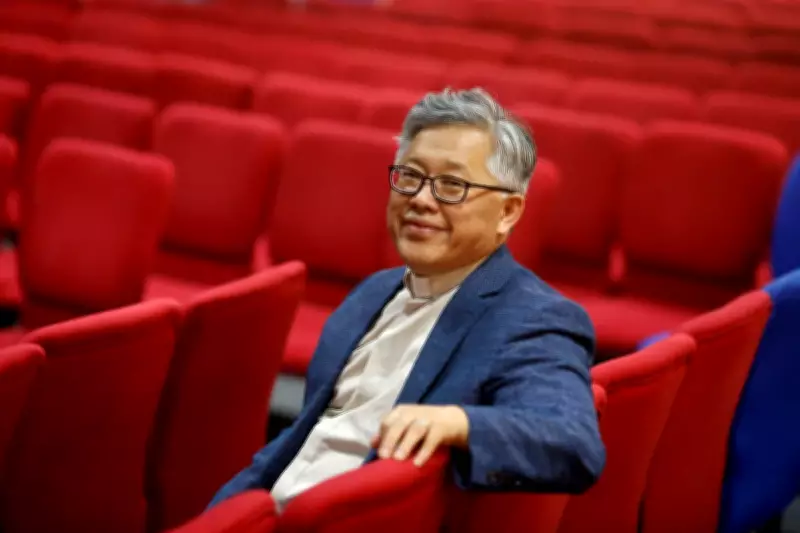
As US President Donald Trump sits down for tea with Chinese President Xi Jinping, Christians in China are facing an unprecedented crackdown. Beijing has been accused of cracking down on unauthorised churches and arresting dozens of their members, including Pastor Jin Mingri, founder of the Zion Church.
Arrests and Crackdown
Pastor Jin Mingri was eating dinner at his apartment in Beihai, Guangxi province, on 10 October when at least 20 plainclothes police officers barged in and arrested him. He was among dozens of Christians arrested that month in a nationwide crackdown on unauthorised churches. Pastor Sun Cong was arrested at a retreat for older church members on the outskirts of Beijing, and another pastor was detained at an airport in Shanghai. The wave of arrests was quickly condemned by activists as one of the worst ever crackdowns on Christians in China.
House Churches and New Rules
China has long promoted atheism and requires all religious groups to be formally registered. However, smaller, unlicensed religious gatherings known as “house churches” have continued to operate in secret and online. Whatever tolerance existed for such activities appears to have ended after China introduced new rules enforcing a strict ban on unlicensed religious groups from holding online sermons. Pastor Jin remains in prison, along with 17 members of his church, and faces a potential sentence of up to three years.

Trump's Role
Trump, currently visiting China, is facing renewed calls to press for Pastor Jin’s release and express concern over the detention of Christians during his summit with Xi. Pastor Jin’s children are US citizens. Before travelling to China, Trump told reporters: “I've gotten a lot of people out of different countries, including China. So we’ll take a look at that.”
The pastor’s son-in-law, Bill Drexel, hopes Trump will be able to secure his release and fly him out on Air Force One. “Last Thursday, we got this really amazing news that president Trump will press for my father-in-law's release and again reiterated that on Monday,” Drexel told The Independent. “So that’s a lot of encouragement for us and we are hoping the president will be able to free pastor Jin.” If that didn’t happen, Drexel said, his family would continue to fight for his release.
Family's Plea
The pastor’s daughter, Grace Drexel, is weeks away from welcoming her third child and hopes her father is released in time to meet his grandchild. “A week before my father was detained, we told him we got pregnant. And it was so early that we weren’t sharing it widely or anything like that,” she told Fox News this week. “And we’re really grateful that we are actually able to tell my dad about the baby before he was in prison. It’s like this baby has kind of walked through it all with us since the beginning.”
International Condemnation
The pastor’s arrest has previously been condemned by US Secretary of State Marco Rubio, who is also part of Trump’s entourage in Beijing. Maya Yang from Human Rights Watch argued that Trump should still raise the pastor’s case even if human rights were unlikely to feature prominently during his talks with Xi. “Beyond individual cases, he should also press China to end the ongoing crimes against humanity in the Uyghur region and address the broader escalation of repression across the country,” she said.
Conditions in Detention
Pastor Jin, 56, is being held in isolation, and his family has limited information on his condition. “The prison authorities are still not giving him his prescribed medications,” Drexel said. “Instead, he has been given some substitutes irregularly.” He claimed the Chinese authorities had forced lawyers defending the arrested Zion Church members out of the case by suspending their licenses or issuing them verbal warnings.
Religious Landscape in China
Christianity maintains a strong presence in communist-governed China. By official estimates, there are 38 million Protestants and six million Catholics in the country. Chinese law promises freedom of religion but requires religious groups to register with the state and operate under strict political oversight. Those unwilling to comply are often left with no choice but to worship underground.

Sinicisation Policy
Xi is accused of cracking down on religious freedom through the communist party’s policy of “Sinicisation”, a term officials use to describe the adjustment of religion to fit Chinese culture as interpreted by the party. The government is also accused of cracking down on independent Christian congregations over the past decade, destroying crosses, burning Bibles, shuttering churches, and ordering followers to sign papers renouncing their faith.
Rights activists say tens of millions of Chinese attend unregistered or house churches, which defy government restrictions requiring believers to worship only in registered congregations. Many underground churches were targeted during a nationwide crackdown in 2018, and the Zion Church’s main sanctuary was shut down.
Zion Church History
Pastor Jin founded the church in 2007 after quitting the official Protestant church. During the 2018 crackdown, the government placed travel restrictions on him so he could not visit his wife and three children, who had resettled in the US. During the Covid pandemic, Zion Church membership grew after it started conducting online prayer sessions, attracting believers who were unable to attend worship at state-sanctioned churches which often shut their doors due to public-health restrictions. The church currently estimates 5,000 regular worshippers across nearly 50 cities.
Broader Crackdown
Nearly two months after last year’s crackdown on the Zion Church, Chinese authorities arrested approximately 100 members of another unofficial Protestant church, Yayang Church in Wenzhou, Zhejiang province. At least two dozen of them are reportedly still in detention. A month later, Li Yingqiang, leader of the Early Rain Covenant Church, was taken by police from his home in Deyang, while at least six members of the prominent underground church were arrested in Chengdu without any formal arrest notices or charges and prohibited access to legal counsel. Wang Yi, the founder of the church, was given nine years in prison in 2019 for “inciting subversion of state power” and running “illegal business operations”.
Expert Analysis
Marie-Eve Reny, professor in the department of sociology at Zhejiang University, said: “China has many underground churches – in fact, most Protestant churches are underground – that manage to survive and are left largely unbothered by the state because they are low-key. Early Rain church is not representative of the state’s general attitude towards underground churches, but the state can be ruthless in its dealings with churches whose leaders are political activists against communist party rule.” She added that the Chinese government would ideally like underground churches to register and work under its supervision, but that would not be acceptable to most church leaders. “Even though observers talk about a tightening of restrictions, most underground churches ignore central government rules and are unlikely to be affected by tightened restrictions because they don't abide by them in the first place. The fact that the church attracts international attention makes things worse and does not dissuade the state from interfering in its activities and detaining its leaders,” she said.





