

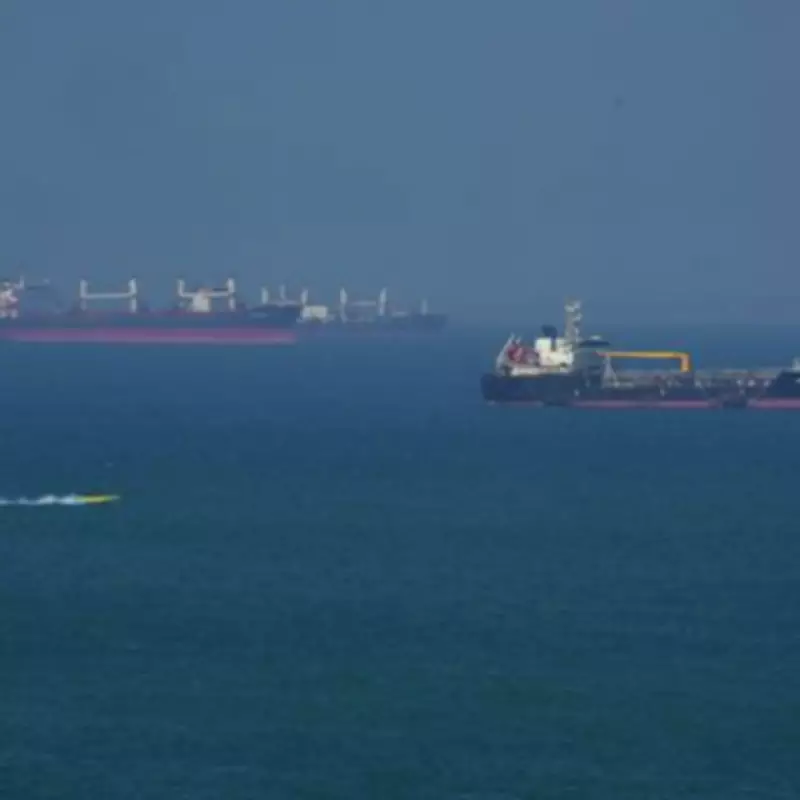
President Donald Trump has reportedly instructed his aides to prepare for an extended blockade of Iranian ports, as oil prices continue to soar for the eighth consecutive day, putting pressure on UK drivers and the wider economy. The move comes amid ongoing conflict in the Middle East, with the Strait of Hormuz remaining closed and global oil supplies disrupted.
Oil Prices Surge Amid Extended Blockade Reports
Oil prices have risen sharply, with Brent crude futures for June delivery increasing by 52 cents, or 0.47 percent, to reach $111.78 a barrel overnight. This marks the eighth consecutive day of gains, up from around $104 a barrel at 10am yesterday. The increased costs are likely to be passed on to consumers at UK petrol pumps if the Strait of Hormuz remains closed and the US blockade continues.
According to the Wall Street Journal, US officials confirmed that Trump has decided to continue preventing shipping to and from Iranian ports, squeezing the country's economy. The blockade aims to pressure Iran amid a ceasefire in the war, as Tehran's cutoff of the strategic waterway ripples across the global economy.

King Charles Joins Trump at State Dinner
On Tuesday, King Charles joined Trump for a state dinner at the White House, where Trump claimed that the King agrees with him on preventing Iran from obtaining a nuclear weapon. Trump stated, "We have militarily defeated that particular opponent and we're never going to let that opponent, and Charles agrees with me even more than I do, we're never going to let that opponent have a nuclear weapon, they know that."
The comments have sparked controversy, with critics accusing Trump of dragging the monarch into the Iran war. The Foreign Office has stressed that the remarks do not reflect the UK Government's position.
Iran's Storage Capacity Nears Limit
As the war enters its 60th day, there appears little sign of an end to the conflict. With the Strait of Hormuz closed, Iran faces a critical problem: its oil storage facilities are filling up. Independent estimates suggest that Iran has between 12 and 24 days of storage capacity left. After that, oil wells will start backing up, potentially causing critical damage to much of the country's oil infrastructure.
Iran has proposed reopening the Strait of Hormuz if the US lifts its blockade and ends the war, before later holding talks on Tehran's nuclear programme. However, Trump is said to be unlikely to accept the offer, with one US official reportedly saying, "He doesn't love the proposal."
UK Government Response
Prime Minister Keir Starmer has urged the public not to panic about the economic impact of the Iran war, but acknowledged that some changes may be necessary. Speaking to Sky News, Starmer said, "There is going to be an impact on the UK. There already is. And I think it's really important that I level with the public that we are doing everything we can to get the Strait of Hormuz open, because obviously that is vital in terms of minimising the impact."
Chancellor Rachel Reeves reiterated that any help for households must be "targeted" and not push up interest rates, stressing the need for responsible fiscal policy. The Government has extended the energy profits levy to tax windfall profits from energy companies like BP, which reported a surge in profits due to the soaring cost of crude.
International Developments
Israel launched air strikes on the Lebanese town of Hanine, destroying several houses, according to Lebanon's National News Agency. The Israeli foreign minister claimed that the military-controlled buffer zone in southern Lebanon is necessary to protect residents in Israel's north, and noted that direct talks with Lebanon are important for a different future.
The United Arab Emirates announced it will leave OPEC effective May 1, stripping the oil cartel of one of its largest producers. While the announcement does not change the blockage of the Strait of Hormuz, it could help lower oil prices after the war if the UAE increases its production capacity.

The Foreign Office summoned Iran's ambassador to the UK over "unacceptable and inflammatory comments" posted by the Iranian embassy on social media, calling on Iranian expats in the UK to "sacrifice their lives for the Homeland." The Minister for the Middle East made clear that such actions and comments were completely unacceptable.
The UN General Assembly president urged a ceasefire, warning that the conflict is disrupting global supplies and deepening regional crises. Russia's ambassador to the UN defended Iran's right to control the Strait of Hormuz, accusing Western countries of hypocrisy.
Economic Impact on UK Drivers
Oil prices have raced higher since the US-Israel war on Iran started on February 28, and are now more than 60% up so far this year. BP revealed its underlying replacement cost profit surged by over 130% to £2.4 billion in the first quarter, drawing criticism from campaigners who accused the group of profiting at the expense of households.
End Fuel Poverty Coalition co-ordinator Simon Francis said, "These astronomical profits are a startling reminder that when conflict drives up the price of oil and gas, energy companies profit and households pay." Chancellor Reeves defended the energy profits levy, stating that it ensures windfall profits are taxed appropriately.
As the conflict continues, UK drivers face rising petrol prices, with no immediate end in sight to the blockade or the closure of the Strait of Hormuz. The Government has urged calm but warned that the economic impact will be felt across the country.





