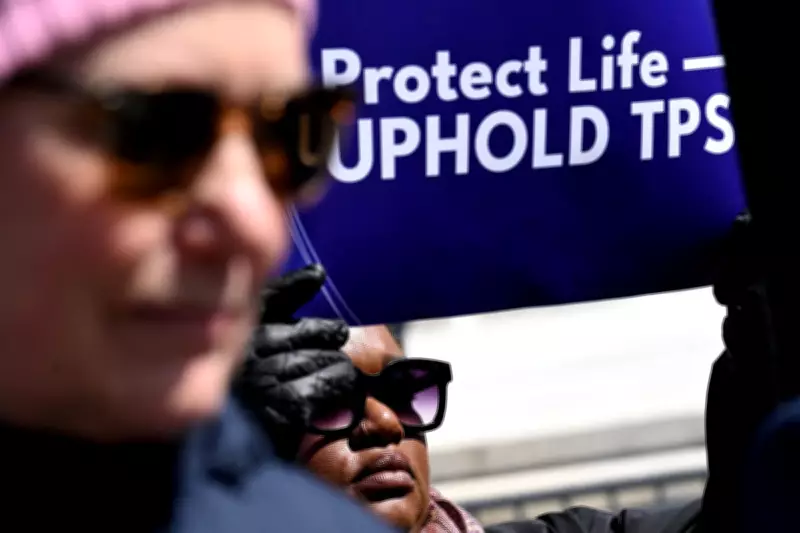
Temporary Protected Status Holders Add $29 Billion to US Economy Annually
A new report published this week reveals that individuals holding Temporary Protected Status (TPS) contribute approximately $29 billion every year to the United States economy. The findings from FWD.us emerge just one week before the Supreme Court is scheduled to hear arguments challenging the Trump administration's efforts to terminate TPS protections for Syrian and Haitian nationals.
Economic Impact and Legal Challenges
The report estimates that nearly 1.3 million people were TPS holders at the beginning of the second Trump administration. These individuals, who are protected from deportation due to unsafe conditions in their home countries, pay close to $8 billion in combined federal, payroll, state, and local taxes annually. Around 800,000 US citizens live alongside TPS holders across the nation, highlighting their integration into American communities.
"Despite these deep ties, the Trump administration has moved to terminate protections for a large share of TPS holders, including more than 600,000 Venezuelans and roughly 330,000 Haitians," FWD.us stated. "Not only do the conditions in these countries threaten the ability for people to safely return, but these families are now embedded into communities across the country."

Legislative and Judicial Developments
The report's release follows the House of Representatives passing legislation last week to extend temporary protections for Haitian immigrants. The bill, sponsored by Massachusetts Representative Ayanna Pressley, received unusual bipartisan support, with a small group of Republicans defying party leadership. "I know firsthand how important our Haitian neighbors are to our communities, to our civic life, to our culture, to our workforce, to our economy," Pressley said, according to the Associated Press.
The Supreme Court is set to hear arguments on April 29 regarding the administration's attempts to end TPS for Syrians and Haitians residing in the US. Lower courts have previously ruled against the Trump administration, delaying efforts to terminate the program. Two separate cases, one for Syrians and another for Haitians, are being consolidated for the Supreme Court's review. Immigration advocates point to dangerous conditions in both countries as justification for maintaining TPS.
Broader Immigration Policy Context
Over the past year, the Trump administration has aggressively targeted the TPS program, revoking legal immigration status for approximately 1 million individuals and placing them at risk of deportation. In total, the administration has attempted to remove protections for people from 13 different TPS-designated countries. These anti-TPS maneuvers are part of broader efforts to undermine immigrants legally present in the United States.
Established more than three decades ago, the TPS program does not provide a pathway to citizenship but grants holders work authorization. The administration has successfully terminated TPS designations for countries including Afghanistan, Honduras, Venezuela, and Yemen. Designations for Myanmar, Ethiopia, Haiti, South Sudan, and Syria are currently being challenged in courts.
As the Supreme Court prepares to weigh these critical cases, the economic contributions of TPS holders underscore the program's significance beyond humanitarian concerns, impacting national fiscal health and community stability.