

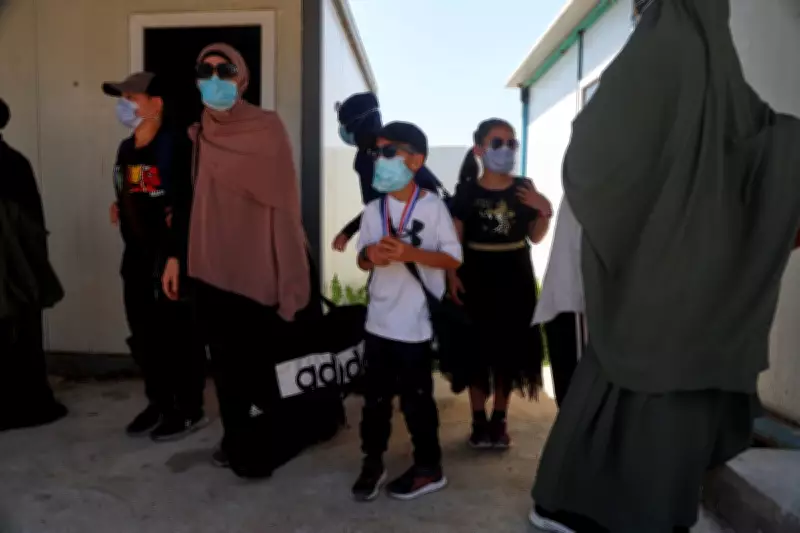
Syrian officials have stated that Australian authorities have refused to allow the return of a group of women and children who departed from a camp in Syria housing individuals with alleged ties to the Islamic State group. The 13 individuals, consisting of four families, left the Roj camp near the Iraqi border last Friday and traveled to Damascus, expecting to be repatriated to Australia within 72 hours.
Refusal to Repatriate
According to a statement from Syria's information ministry, after the families left the camp, the foreign ministry was informed that the Australian government had declined to receive them. The group was reportedly turned back from reaching Damascus International Airport. The ministry added, "These families are still awaiting a solution, which can only be achieved through coordination with the relevant international parties."
Australian Government's Position
Australian Prime Minister Anthony Albanese confirmed at a news conference on Wednesday that "we are providing no support for repatriation and no assistance for these people." This stance aligns with previous Australian policy regarding individuals linked to IS militants.

Passports and Coordination
The Syrian information ministry noted that the families had obtained passports through a lawyer, delivered by an unidentified individual while they were still in northeastern Syria, an area controlled by the Kurdish-led Syrian Democratic Forces (SDF). Lebanese-Australian doctor Jamal Rifi, who had been coordinating the repatriation effort according to Australian media, could not be reached for comment.
Previous Attempts and Context
This is not the first such incident. In February, a previous attempt to return 34 women and children from the same camp was thwarted by Syrian authorities. The Roj camp is part of a network of facilities in northeast Syria that have housed former IS fighters and their families since the militant group lost its territorial control in 2019. Despite its defeat, IS continues to operate sleeper cells that launch deadly attacks in Syria and Iraq.
The larger al-Hol camp has since been closed, and thousands of suspected IS militants were transferred to Iraq by the U.S. military for trial. These developments followed clashes between government forces and the SDF in January, during which government forces seized much of the SDF-held territory, leading to the escape of many detainees from al-Hol and a detention center.
Australian governments have repatriated Australian women and children from Syrian detention camps on two previous occasions, while others have returned without government assistance.






