

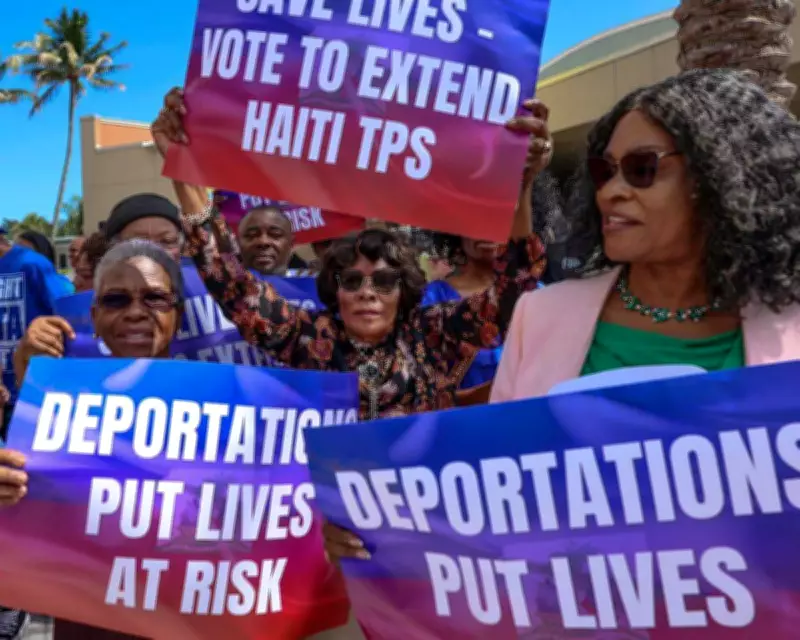
The US Supreme Court heard oral arguments on Wednesday over whether the Trump administration can terminate the Temporary Protected Status (TPS) of hundreds of thousands of immigrants from Haiti and Syria, a program that has shielded them from deportation due to unsafe conditions in their home countries. During the arguments, conservative-leaning justices appeared sympathetic to the administration's position.
Background of TPS
TPS allows individuals from designated countries to live and work in the US when their home nations are deemed unsafe due to war, political instability, or natural disasters. The Trump administration has sought to end the program for several countries, potentially affecting over 350,000 Haitians and 6,100 Syrians currently protected.
Key Arguments
John Sauer, the US solicitor general representing the Trump administration, argued that the TPS legislation prevents courts from reviewing the Department of Homeland Security’s (DHS) decision to terminate the status. He stated that such decisions involve foreign policy judgments best left to the political branches.

In contrast, lawyers for the immigrants argued that former DHS Secretary Kristi Noem failed to follow proper procedures when ending TPS for Haiti and Syria. Ahilan Arulanantham, representing Syrian plaintiffs, said the administration’s position “contravenes the text, bedrock administrative law and common sense.”
Court Dynamics
Chief Justice John Roberts expressed skepticism about the administration's reliance on a previous travel ban case, noting that TPS involves the DHS secretary and immigrants already present in the US. Liberal justices raised concerns about racial animus, citing President Trump’s derogatory remarks about Haiti and immigrants. Justice Ketanji Brown Jackson referenced Trump’s comments calling Haiti a “shithole country” and associating TPS holders with “poisoning the blood of America.” Sauer dismissed these as taken out of context.
Conservative justices Samuel Alito and Neil Gorsuch did not question Sauer, indicating likely support for the administration.
Implications
If the Supreme Court sides with the Trump administration, analysts expect the administration to seek termination of TPS for all countries, affecting nearly 1.3 million holders. The court is expected to rule by late June or early July.
In February, a federal judge in DC blocked the end of TPS for Haitians, citing possible racial motivation. The current case consolidates challenges from New York and Washington DC rulings that halted the administration’s actions.






