
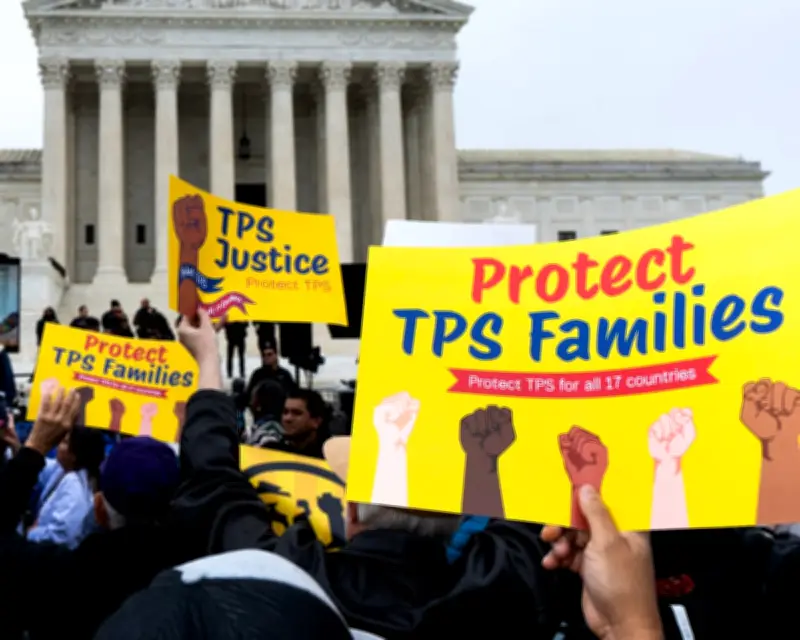
The US Supreme Court on Thursday ruled in favor of the Trump administration's bid to strip temporary protected status (TPS) from hundreds of thousands of Haitians and Syrians, who were legally in the US and protected from deportation. The decision affects more than 350,000 people from Haiti and 6,100 from Syria, according to court documents.
Background on Temporary Protected Status
People with TPS are given permission to live and work in the US because the Department of Homeland Security (DHS) deemed their home countries unsafe due to war, political instability, or natural disasters. In the past year, Trump officials have attempted to cut the program for various countries, opening the door to the removal of hundreds of thousands of protected immigrants.
Court's Rationale and Arguments
During oral arguments in late April, the Supreme Court – controlled by a supermajority of conservative justices – appeared sympathetic to the administration's move. The federal government argued that the executive branch's decision to terminate TPS for Syria and Haiti could not be reviewed by the judicial branch due to the way the TPS legislation was originally written. Attorneys who sued the administration last year argued that DHS did not follow proper process to terminate TPS and that Haiti and Syria were not safe enough for people to return.
Impact and Broader Implications
The decision was highly anticipated, as analysts feared it could open the door for the administration to terminate TPS for all countries in what would be the biggest de-documentation move in US history. Nearly 1.3 million people were TPS holders in the US when Donald Trump returned to office in January 2025. Last year, the Supreme Court allowed the Trump administration to strip TPS from more than 300,000 Venezuelans under the court's emergency docket.




