Sir Keir Starmer's attempt to reset European human rights relations has been branded 'a waste of time' that will not help take back control of Britain's borders. Ministers hailed an agreement reached at a summit in Moldova this morning, aimed at making it easier to deport illegal migrants and foreign criminals. The agreement was signed by all 46 members of the European Convention on Human Rights (ECHR), including the United Kingdom.
However, critics pointed out that the controversial ECHR text remained unchanged, and that previous similar side-agreements, known as 'political declarations', have made no difference. The Tories and Reform UK have vowed to leave the ECHR if they win the next election, arguing it is the only way to regain border control.
Sir Keir sent his closest Cabinet ally and former human rights lawyer, Lord Hermer, to the summit, partly to reassure European court chiefs that Britain remains committed to the treaty. Lord Hermer's attendance, alongside Foreign Secretary Yvette Cooper, fuelled suspicions that any agreement would amount to 'business as usual'. He has previously been accused of being an 'activist' for human rights that favours Britain's foes, with past clients including jihadi bride Shamima Begum, former Sinn Fein leader Gerry Adams, and 9/11 terror plotter Mustafa al-Hawsawi.

The agreement, known as a 'political declaration', aims to limit the ECHR's Article 8, which protects the right to family life, and Article 3, the ban on inhumane treatment. More than two dozen countries were calling for an overhaul to prevent these articles from being used by illegal migrants and foreign criminals to avoid deportation. However, the treaty's text was not changed, and it made clear that UK judges should still consider whether deporting someone could cause 'a negative impact' breaching their rights under Article 3. Regarding Article 8, while it stated that European judges would need 'strong reasons' to overrule domestic justices, the agreement said deportations must be 'in accordance' with human rights law and 'in pursuit of a legitimate aim', such as national security, public safety, or the prevention of disorder.
The agreement also allowed countries to pursue new approaches, such as 'return hubs' to address irregular migration. Ministers have spoken to several countries about hosting such hubs, where the UK could send failed asylum seekers before deportation. But experts said the declaration amounted to little more than 'reaffirming existing principles' and would be unlikely to change the decisions of UK immigration and human rights judges.
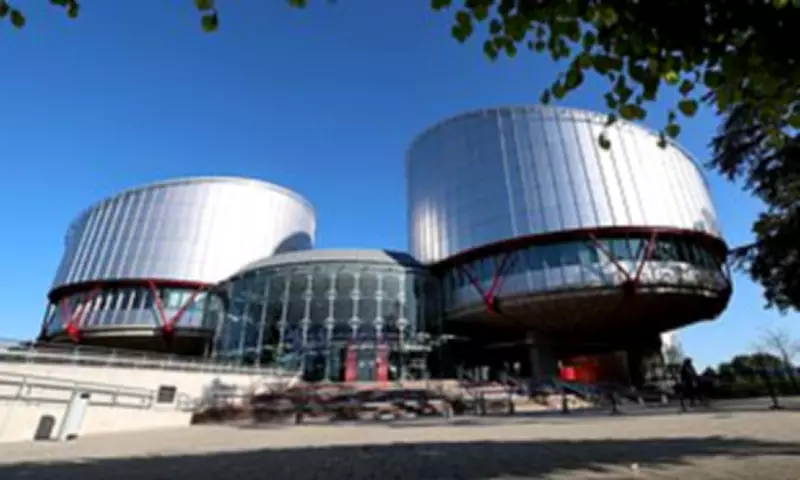
Former Supreme Court judge Lord Sumption noted that a similar declaration agreed in Brighton in 2012, aimed at reining in the European Court of Human Rights, made 'absolutely no practical difference', adding that 'past experience suggests political declarations don't get very far'. He told the BBC: 'I would expect judges deciding immigration and human rights cases generally to have regards to political declarations. But ultimately, what binds them is the case law of the Strasbourg court and they're not going to drift very far from that... Articles 3 and 8 are deeply embedded in its case law, and therefore extremely difficult to get rid of.'
Former Attorney General Michael Ellis added that the declaration 'doesn't seem to do anything other than reaffirm existing principles', concluding: 'It will not make any difference at all. It's a complete waste of time.'
Robert Jenrick, a former Tory immigration minister who defected to Reform, said the UK should 'quit' the ECHR, stating: 'The only way to secure our borders and deport the thousands of foreign criminals in our country is to quit and make these decisions in our own Parliament.' Chris Philp, the Tories' shadow home secretary, echoed this, saying: 'This will make no difference whatsoever. We've seen this before with the so-called Brighton declaration over a decade ago... The only way to fix this is to leave the ECHR entirely.'

The Court and Convention are part of the Council of Europe, a separate organisation from the European Union, which Britain remains a member of. In December, following calls from Denmark and Italy, Sir Keir said the ECHR needed modernising to allow nations to protect their borders and counter the rise of Right-wing parties. However, critics argue that ECHR chiefs are not interested in meaningful reform or rewriting the treaty.