Spain's Migrant Regularisation Scheme Faces Long Queues and Political Debate
Spain's socialist government has launched a massive regularisation programme for undocumented migrants, championing the economic and social benefits of migration at a time when many European countries are tightening borders. The scheme, which began last week and runs until the end of June, is expected to benefit at least 500,000 people by offering a legal residence permit with an initial validity of one year.
Navigating Complex Documentation
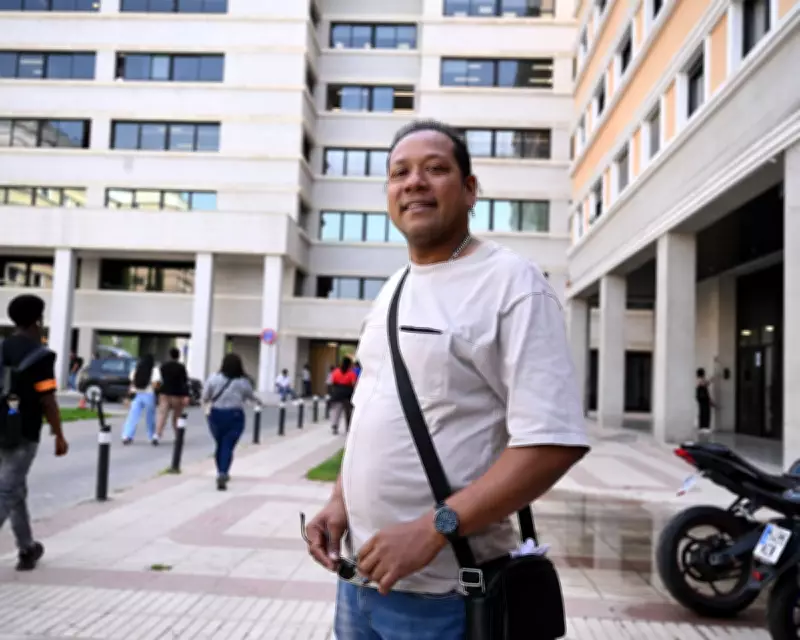
In Madrid, near the bustling Calle Ponzano, migrants gather at the offices of the regional transport consortium to obtain certificates proving their use of public transport. This humdrum document is crucial for proving prior residence in Spain, a requirement under the new decree. Among those navigating this process is Gimbad Mosquera, a 46-year-old musician from Antioquia, Colombia, who has been in Spain for 13 months. He hopes to regularise his status so he can tour Europe with his vallenato band.
Similarly, Shiva Pyuthani and his girlfriend Sirjana Ghising, both from Nepal, collected their transport certificates with aspirations to work in hospitality. "We've come here so that we can work and earn money to send home to support our parents and families," said Ghising. However, the process is fraught with confusion. Mosquera noted, "There's been lots of confusion, and it's hard to know how to navigate the process."

Political Opposition and Economic Arguments
The regularisation programme has sparked fierce political debate. The conservative People's party (PP) warns it will overwhelm public services, while the far-right Vox party accuses Prime Minister Pedro Sánchez of trying to replace the Spanish population. Sánchez defends the scheme, asking, "When did recognising rights become something radical?" The government points out that similar processes have been implemented in Spain before, with over one million people regularised between 1986 and 2005, including under PP governments.
Despite the criticism, economic studies suggest benefits. Research on the 2005 regularisation of nearly 600,000 non-EU immigrants found tax revenues increased by about €4,000 per immigrant annually, with no "magnet effects" encouraging further arrivals. Currently, Spain has around 840,000 undocumented migrants, mostly from Latin America, according to the Funcas thinktank.
Challenges and Community Support
Applicants face significant hurdles, including long queues and bureaucratic complexity. Photos from across Spain show huge lines outside town halls and consular offices. Many rely on WhatsApp groups and NGO talks for guidance, as official information is lacking. One Peruvian woman, who wished to remain anonymous, explained, "The official information isn't great, so people are relying on NGOs or paying lawyers—if they can spare €300."
Police unions have warned that the scale of applications could saturate the system, leading to a proposed strike by immigration officers that was called off after the government offered improved conditions. Meanwhile, migrants like MD Abdal, a 23-year-old from Bangladesh, remain hopeful. "I think Spain is a kind, humanitarian country," he said, expressing gratitude and a desire to work hard in a restaurant.
As Spain moves forward with this controversial scheme, the balance between humanitarian aims and practical challenges continues to unfold, with migrants striving for a better future amidst political and bureaucratic obstacles.