
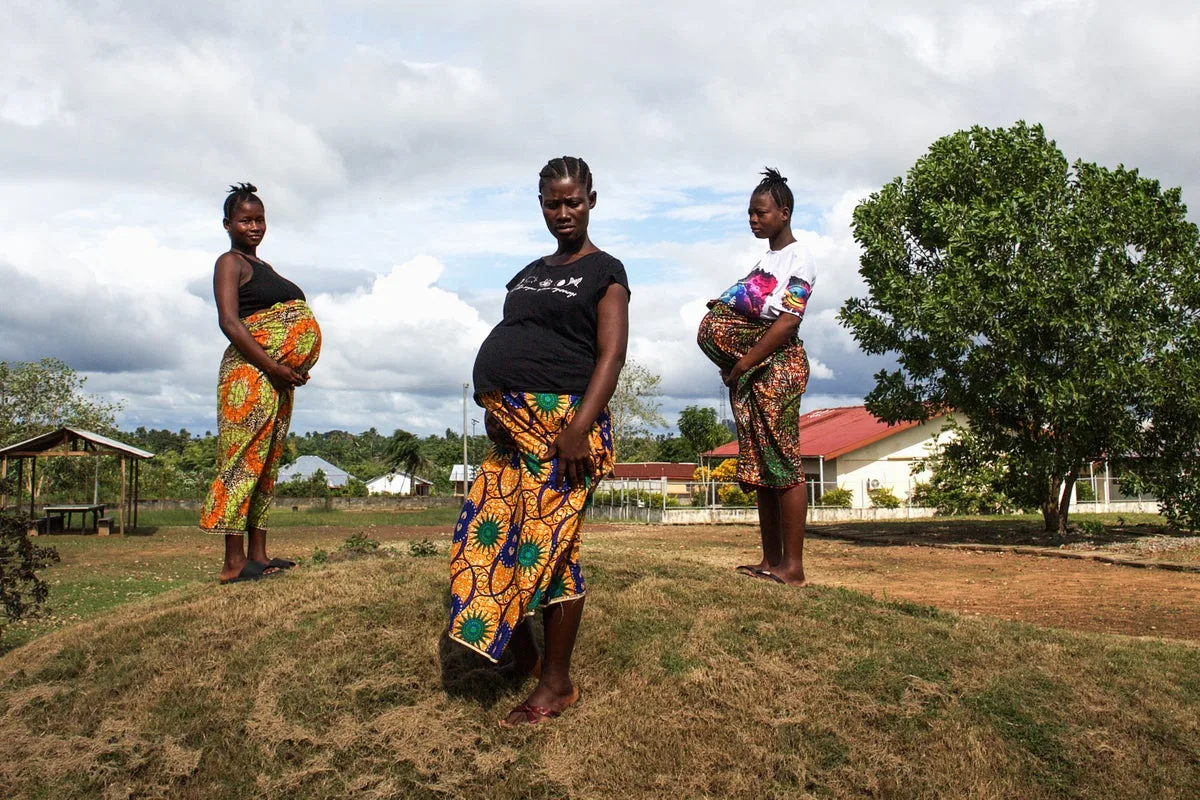
In a crowded room in Sierra Leone's Tonkolili District, adolescent girls gather at the Adolescent Friendly Centre (AFC) to discuss menstruation, contraception and consent – subjects their mothers were often never allowed to discuss. Many come from communities where girls are still expected to marry young, leave education behind and remain silent about their bodies.
For these teenagers, the AFC has become a rare place where they are listened to. Mamah, 21, who is studying mass communications and training as a journalist through the centre, told The Independent: 'If this centre didn't exist, it would be a problem for girls. Not having this centre would lead to more girls dropping out of school, getting pregnant at an early age, being forced into early marriage, not knowing their rights, when to say no and when to give consent.'
Across Sierra Leone, child marriage and teenage pregnancy remain deeply entrenched. Thirty per cent of girls marry or enter unions before turning 18, while up to 40 per cent of maternal deaths occur among teenagers. The lifetime risk of maternal death in Sierra Leone is one in 52, with this risk believed to be even greater for adolescents. More than two-thirds of maternal deaths result from haemorrhage, hypertension, and sepsis, and roughly a third are linked to unsafe abortions, particularly among adolescents.
The government has taken steps to address these issues, including the Prohibition of Child Marriage Act passed in 2024 and a 2021 act allowing pregnant girls to return to school. However, in rural areas, girls still face severe barriers to education driven by poverty and social pressure for early marriage.
Médecins Sans Frontières (MSF) Holland ran the centre from 2019 to tackle rising rates of teenage pregnancy and unsafe abortions. In early 2025, as Donald Trump slashed US aid and reproductive health funding, MSF withdrew from Sierra Leone. The centre was handed to Plan International in March 2025, but full services did not resume until September – leaving adolescents without reproductive health support for six months. Funding is secured only until spring 2028, and the UK government's Equalities Impact Assessment suggests Britain is likely to stop delivering aid programmes with health objectives in Sierra Leone altogether. Sierra Leone's Ministry of Health cannot sustain the centre alone, staff and activists say.
Inside the centre's two cramped rooms, adolescents crowd around three ageing computers, often sharing in pairs while others wait for lessons on sexual health, life skills and technology. Staff say the growing number of young people seeking help has stretched the building beyond capacity, with only one shared toilet serving the centre. Mariatu Fofanah, 59, a pastor and teacher and the only woman among 30 school principals in her district, recalled being pressured into marriage at 14. She resisted, but knows what that pressure costs most girls. 'Here, parents don't guide their children about their bodies. Menstruation is not handled at all,' she said, noting that some girls stop going to school altogether due to stigma.




