
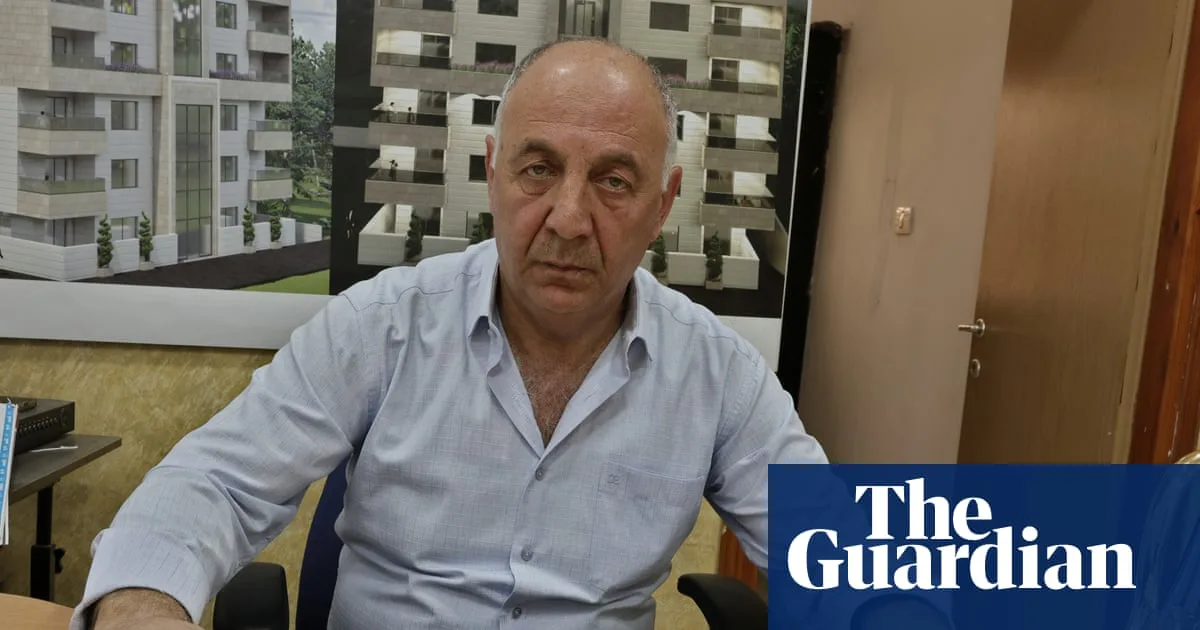
Mohammad al-Sbeih’s childhood memories of his family’s farm in the hills south of Bethlehem are now overshadowed by the sight of an Israeli settlement where wheat and barley once grew. The land on which Neve Daniel now stands, seized from the Sbeih family, is advertised on Booking.com as a rental property with a garden, terrace and picnic area, described as “ideal for outdoor gatherings”.
A report by US-based advocacy group Ekō has identified 41 Booking.com listings in 14 illegal Israeli settlements across the occupied West Bank, including two in East Jerusalem. The settlements involve the transfer of civilians into occupied territory, a breach of the Fourth Geneva Convention and defined as a war crime under the Rome Statute of the International Criminal Court.
Booking.com’s main operating arm is headquartered in the Netherlands, where Dutch prosecutors are reviewing a criminal complaint by the European Legal Support Center. The complaint alleges that bookings in settlements may constitute money laundering under Dutch law, as the commercial activity is linked to illegal settlements.
In July 2024, the International Court of Justice issued an advisory opinion confirming the illegality of Israeli settlements and urging states and organisations not to recognise them. Israel disputes the applicability of the Geneva Conventions and the ICJ’s jurisdiction over the West Bank.
Airbnb also lists settlement properties, despite a 2018 pledge to remove them that was reversed after legal challenges. Booking.com introduced a small-print warning for searches by settlement name, advising guests to consult government advisories about conflict-affected areas, but this does not appear on individual property pages.
A Booking.com spokesperson said the company believes “it’s not our place to decide where someone can or cannot travel” and that it monitors the situation, applying its human rights statement in disputed areas. The Ekō report, titled “Booking.com: experience Israel’s illegal occupation”, calls on the company to stop facilitating what it describes as “the systematic appropriation of Palestinian land”.




