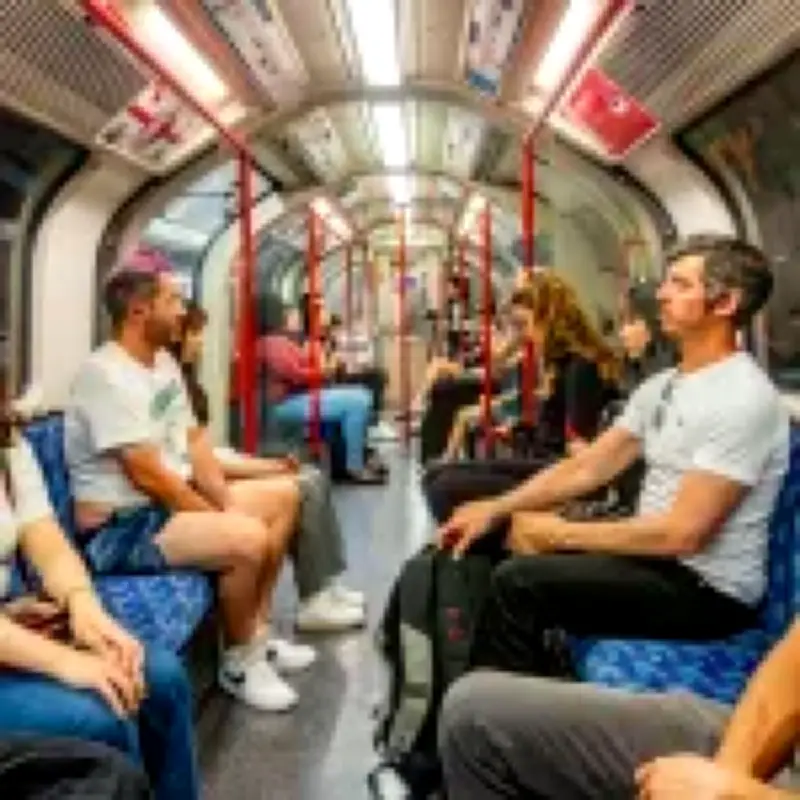
Seat sliding—the subtle shuffle across a train carriage when a double seat opens up—is the latest commuter behaviour sparking debate. Coined by Metro, the term describes passengers who tactically move to an alternative spot the moment one becomes available, leaving their original seatmate behind.
Commuters Split on the Unspoken Rule
Metro asked commuters for their take, and personal space preferences vary dramatically. Writer and communications officer Rosie Mullender, 48, says: 'I usually move, mainly to give the other person more room. If I'm settled in, I won't bother though – they can always move if they want to.'
Interior architect Ellora Coup, 48, who takes the Tube often, says 'it's an absolute given' that she'd shift. Business owner Tatjana Teapro, 36, admits to seat sliding on her Elizabeth line commute: 'It has happened once that someone next to me smelled really bad, so I had to move as soon as another seat became available. I actually felt bad doing it, but in the end I thought, why torture myself for no reason?'
Journalist Hilary Freeman, 55, who takes the Tube five days a week, says she 'never' moves. 'I talk to people on public transport too,' she adds, sharing that she has met lovely people on public transport, including a woman who gave her tissues when she was upset and stayed with her.
Social Media Reactions
On TikTok, viewers were also divided. '@xx.evy.x' said: 'I always stay because I don't want them to feel bad,' and '@motime27' agreed: 'I stay, seems rude to move.' But '@trophypop' chimed in with: 'I'm team “move as soon as a seat frees up” and am more offended if someone stays sitting next to me when it's not necessary.' '@thepokeparadox' called it being 'Stuck in choice paralysis mixed with social anxiety'.
Etiquette Experts Weigh In
'The seat slide is never rude and, more often than not, a most gracious gesture. Like all things related to etiquette, context is everything,' Rupert Wesson, of Debrett's etiquette training, tells Metro. 'When it comes to travel, it is always nice to have a little bit more space and, in these post-Covid times, many people welcome it for health reasons.'
'There is no need to explain the move to your fellow travellers; why disturb them? Just slip discreetly away,' Wesson recommends. 'There is always a chance that your move may be confounded when all the seats fill up with oncoming passengers. This should not alter the fact that your intentions were good and it was the right thing to do. If on your next bus or train, you find people moving away from you at the first opportunity, please don't take it personally. It may not be your perfume, aftershave or deodorant; your fellow passenger is probably just showing you a little courtesy, and for that you can be grateful.'
Laura Windsor, the 'Queen of etiquette', agrees, explaining that it's not the move itself, but how it is done. 'I don't think anyone even notices,' she says. 'We're not sitting there monitoring each other's manners; people simply do what suits them. If a seat frees up and you'd rather take it, no one is forcing you to stay put.'
'What does matter is how you move,' Laura emphasises. 'A sigh, a tut, a slightly aggressive shift away — that's where it may be perceived as rather rude, because now your body language is sending a message to the person you're leaving behind.'
In other words: moving seats is usually fine; making someone feel like the reason you moved is what creates the awkwardness.