

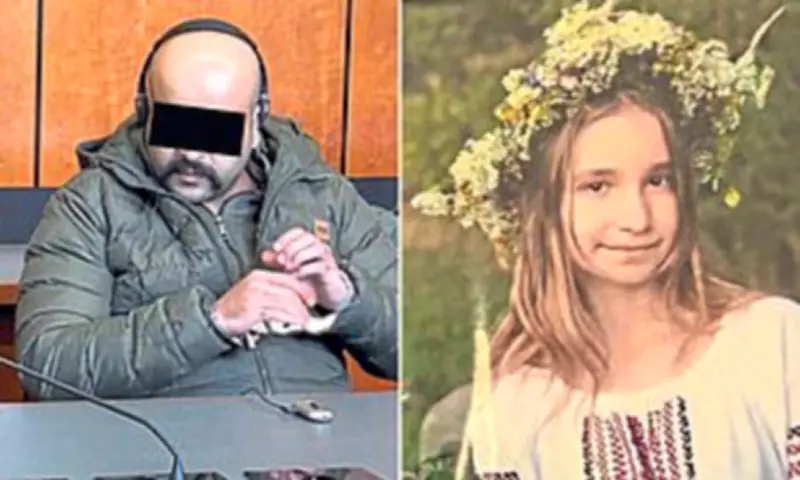
A rejected asylum seeker who pushed a 16-year-old girl to her death under a train has been ordered into psychiatric care in Germany. The victim, identified as Liana K., was speaking to her grandfather moments before she was struck by the train in August last year, according to Geisleden's mayor Markus Janitzki.
The Incident
Janitzki stated, 'Her grandfather had to listen to everything. He heard screams, then just the sound of a train.' The suspect, Muhammed A., a 31-year-old Iraqi national, will not face a murder trial after prosecutors determined he suffers from paranoid schizophrenia and is not criminally responsible. Instead, a court ruled on Wednesday that he will be detained indefinitely in a secure psychiatric facility.
Evidence and Court Proceedings
Prosecutors cited DNA evidence linking Muhammed A. to the scene, with traces found on the teenager's shoulder, and argued he poses an ongoing danger to the public. The court accepted that he carried out the killing despite the absence of witnesses or video footage. During the proceedings, the defendant did not respond to the accusations and instead complained of alleged mistreatment by emergency responders who restrained him on the day of the attack. Observers noted he showed no visible remorse, even in the presence of the victim's mother.

Legal Arguments
His defence team pushed for acquittal, contending insufficient evidence and the possibility of alternative scenarios, while also highlighting his psychiatric diagnoses. Conversely, the victim's lawyer demanded a murder conviction, arguing for full accountability.
Administrative Failures
The case has raised questions about potential administrative failures. The suspect had been in custody in Hanover weeks before the killing and was scheduled for transfer to Lithuania, the EU country where he first entered, but the request was rejected. He was subsequently released back into Lower Saxony, where the attack occurred three weeks later.
Victim's Background
Liana K. had fled the war in Ukraine with her family in 2022 and had recently begun training as a dental assistant. Her tragic death has sparked public debate over the handling of asylum seekers with mental health issues and the effectiveness of cross-border judicial cooperation within the EU.






