
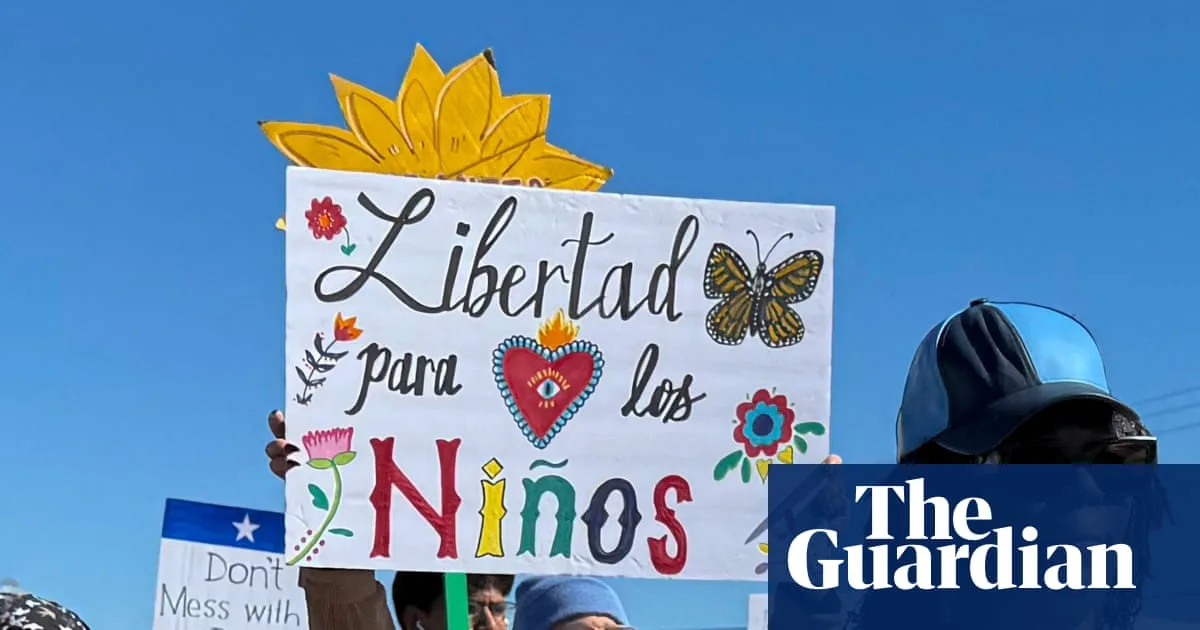
All unaccompanied pregnant immigrant children in US custody, many of whom are pregnant as a result of rape, are being transferred to a single facility in Texas in what critics describe as a deliberate attempt to deny them abortion services. The practice, which has intensified since July, is being called a significant human rights violation.
The children, some as young as 13, are being held at a facility in the small border town of San Benito. Around half of the more than a dozen pregnant girls moved there are believed to have become pregnant following sexual assault, according to a joint investigation by the Texas Newsroom and the California Newsroom. Texas bans abortion in nearly all circumstances, including cases of rape and incest.
Jonathan White, a former senior official in the Office of Refugee Resettlement (ORR) under the Obama and Trump administrations, said the relocation was a choice to ensure zero abortions. 'As long as she is in Texas, she can't access an abortion – without a federal official needing to deny her an abortion,' he said. He described the situation as 'an extraordinary human rights problem', adding: 'Everyone attempts to write their politics on the bodies of these children.'
The move has amplified longstanding concerns about reproductive healthcare in immigration detention, including allegations of inadequate medical care for pregnant detainees, the separation of nursing mothers from their infants, and forced sterilisation. Diana Romero, professor and director of the Center on Immigrant, Refugee and Global Health at the CUNY graduate school of public health, said the 'total disregard' for the rights of pregnant and nursing detainees was a 'dramatic violation' of international law and public health standards.
White noted that the typical age of pregnant unaccompanied minors is 15 or 16, though they can be younger. Many face comparatively high-risk pregnancies and require specialised care, yet it remains unclear whether the south Texas facility, which is hours from major cities, is adequately equipped. He added that the government does not track the prevalence of sexual assault among these girls, but external estimates range from 80% to 90%, with around half of pregnancies resulting from sexual abuse or assault. ORR has not recorded how many pregnancies occurred in home countries or during transit.
In response, a spokesperson for the Department of Health and Human Services, Emily Hilliard, said the claims were 'completely inaccurate' and that ORR 'remains committed to ensuring the safety, well-being, and appropriate care' for children in its custody. The 1997 Flores settlement agreement, which governs the treatment of detained children, requires access to comprehensive reproductive health services.




