Mother Defends Boyfriend Accused of Manslaughter After Daughter Froze on Austrian Mountain
In a heartbreaking development ahead of a manslaughter trial, the mother of a woman who froze to death on Austria's highest mountain has publicly defended her daughter's climbing partner and boyfriend. Kerstin Gurtner, aged 33, tragically perished just 150 feet below the summit of the 12,460-foot Grossglockner in January 2024, as temperatures plummeted to a brutal minus 20 degrees Celsius.
Trial Approaches for Climbing Partner
This week, Thomas Plamberger, 39, will stand trial in Innsbruck accused of negligent homicide. Prosecutors allege he left Gurtner "exhausted, hypothermic and disorientated" during their ill-fated climb. However, in a surprising turn, Kerstin's mother Gertraud has vehemently defended Plamberger, expressing anger at how her daughter has been portrayed.
"It makes me angry that Kerstin is being portrayed as a naïve little thing who let herself be dragged up the mountain," Gertraud told German newspaper Die Zeit from her Salzburg home. "And I think it's unfair how Kerstin's boyfriend is being treated. There's a witch hunt against him in the media and online."

Mother Insists Decisions Were Mutual
Gertraud emphasized that climbing decisions were always made jointly by the couple. "The two of them always made their decisions together. If Kerstin disagreed, they didn't go on a mountain tour – or her boyfriend went on it alone," she explained. "Therefore, he didn't deserve to be held responsible as a guide. But one thing is certain for me: My daughter's death was the result of a tragic chain of unfortunate circumstances. I don't want to blame my daughter's boyfriend for it."
When questioned about her stance, Gertraud elaborated: "For us as parents, it's not about assigning blame, but about understanding, providing information, and doing justice to our daughter and her dreams. She loved the mountains. And the mountains, as we know, have two sides. Joy and sorrow are closely intertwined."
Haunting Evidence and Investigation Findings
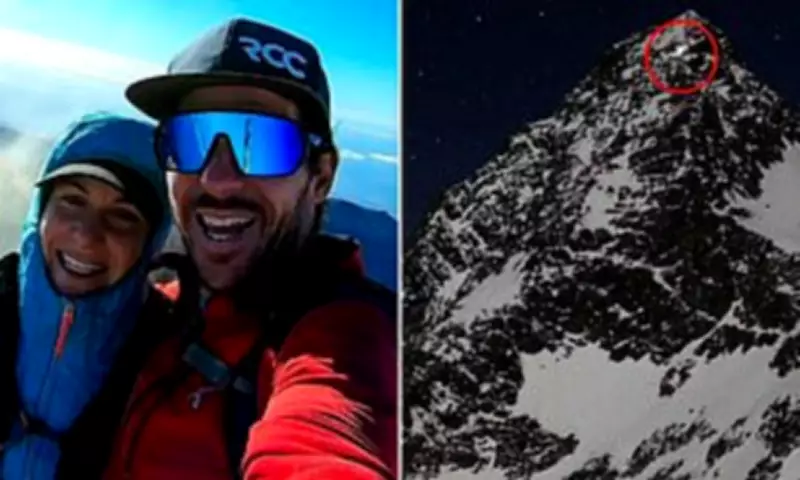
Chilling webcam images captured the couple's final hours, showing two headtorches approaching the summit around 6pm on January 18, approximately twelve hours after their departure. Hours later, only one light was visible descending the mountain. Rescue teams faced hurricane-force winds that prevented immediate intervention, ultimately finding Gurtner's body the following day near the summit cross.
Prosecutors concluded an eleven-month investigation last December, determining that Plamberger should face trial. Their findings highlighted several critical errors:
- The couple were poorly equipped, with Gurtner wearing snowboard boots instead of proper hiking footwear
- Plamberger allegedly "turned away" despite a helicopter flying low over the area
- The climb began approximately two hours later than recommended
- Insufficient emergency equipment was carried
- No distress signals were given when a police helicopter flew overhead
Contrasting Perspectives on Responsibility
The Innsbruck prosecutor's office stated: "At approximately 2am on January 19, the defendant left his girlfriend unprotected, exhausted, hypothermic, and disoriented about 50 meters below the summit cross of the Grossglockner. The woman froze to death. Since the defendant, unlike his girlfriend, was already very experienced with alpine high-altitude tours and had planned the tour, he was to be considered the responsible guide of the tour."
Prosecutors further noted that Plamberger failed to account for his girlfriend's inexperience with such demanding alpine tours. Even when he departed to seek help, he allegedly did not secure her in a wind-protected location or utilize emergency equipment like bivouac sacks or rescue blankets.
Through his lawyer Kurt Jelinek, Plamberger has denied all allegations, maintaining the incident was a "tragic, fateful accident." He insists he left to obtain assistance rather than abandoning his partner.

Remembering Kerstin Gurtner
Gurtner's social media profiles revealed her passion for mountains, filled with climbing photographs and self-descriptions as a "winter child" and "mountain person." Her mother described her as someone who "loved pushing her limits" but was fundamentally "responsible and nature-loving."
"For her, the mountains were not a place of recklessness, but of silence, mindfulness, and respect," Gertraud reflected. "She prepared meticulously for her tours and approached the alpine world with humility. That she had to lose her life precisely where she felt so alive is almost incomprehensible to me. I miss her terribly."
A funeral notice posted online last January captured the family's grief: "Our lives are in God's hands; if it is His will, then do not grieve for me. But remember me with love."
As the trial approaches, Gertraud offered perspective for those quick to judge: "Many people who blame Kerstin's boyfriend have never been in such a situation. I hope they never find themselves in such an exceptional situation. Because nobody knows how they'll react then. It's easy to be a hero in the comfort of your own home."