Mexican Cartels Deploy Drones for Drug Smuggling and Warfare
The temporary closure of airspace over El Paso, Texas, on Wednesday has sparked unease south of the U.S.-Mexico border, drawing sharp attention to the escalating use of drones by Mexican cartels. These criminal organisations have harnessed this technology to modernise their operations, employing drones to smuggle fentanyl, coordinate migrant border crossings, conduct surveillance, and wage war against rival cartels and Mexican authorities.
Airspace Shutdown and Border Incursions
U.S. officials initially cited an incursion by Mexican cartel drones as the reason for the airspace closure, though later reports cast doubt on this explanation. Steven Willoughby, deputy director of the Department of Homeland Security’s counter-drone programme, informed Congress in July that cartels utilise drones almost daily to transport drugs across the border and monitor Border Patrol agents. Data reveals that in the last six months of 2024, more than 27,000 drones were detected within 500 meters of the U.S. southern border, primarily during nighttime hours.
Historical Context: From ‘The Lord of the Skies’ to Modern Tactics
Drug trafficking by air is not a novel phenomenon, with deep roots in the history of Ciudad Juarez, located across the border from El Paso. In the 1990s, drug trafficker Amado Carrillo Fuentes, founder of the Juarez Cartel, gained the nickname “The Lord of the Skies” for his expertise in moving large drug shipments via small aircraft. After his death in 1997 under suspicious circumstances following botched plastic surgery, his brothers and sons continued operations from Ciudad Juarez. By the time his brother Vicente was arrested and extradited to the United States last year, it was estimated that 70% of the cocaine entering the U.S. passed through Juarez.

Evolution of Drone Use in Cartel Operations
Mexico issued an international alert in 2010 regarding drug traffickers’ use of remotely piloted aircraft systems, marking the beginning of a rapid expansion in this practice. Between 2012 and 2014, U.S. authorities detected 150 unmanned aircraft systems crossing the border with Mexico. A decade later, U.S. Customs and Border Protection reported 10,000 incursions in the Rio Grande Valley area of southern Texas alone, according to data from the International Narcotics Control Board. Concurrently, the drugs being smuggled shifted from bulky marijuana bales to more compact synthetics like methamphetamine and fentanyl, which are easier for drones to carry.
Drones as Attack Weapons and Surveillance Tools
In 2021, the Mexican government began publicly reporting the use of explosive-laden drones to attack security forces, a tactic initially associated with the Jalisco New Generation Cartel (CJNG) in states such as Michoacan, Guanajuato, and Jalisco. The army noted that these drones were less effective than criminals desired due to their limited capacity for small explosive charges, often taped onto the devices. However, drone usage has since proliferated across nearly all criminal groups, serving both offensive and surveillance purposes, including real-time image transmission.
Widespread Adoption and Technological Advancements
In states like Michoacan, cartels employ both commercial drones and larger agricultural drones approximately one meter in diameter, modified with adapters for explosives instead of sprayers. The International Narcotics Control Board reported in 2025 that cartels are increasingly using this method to smuggle fentanyl, with homemade drones capable of carrying up to 100 kilograms of cargo. New satellite technologies enable traffickers to pre-program precise landing sites, reducing risks in deliveries and enhancing operational efficiency.

Government Countermeasures and Armed Responses
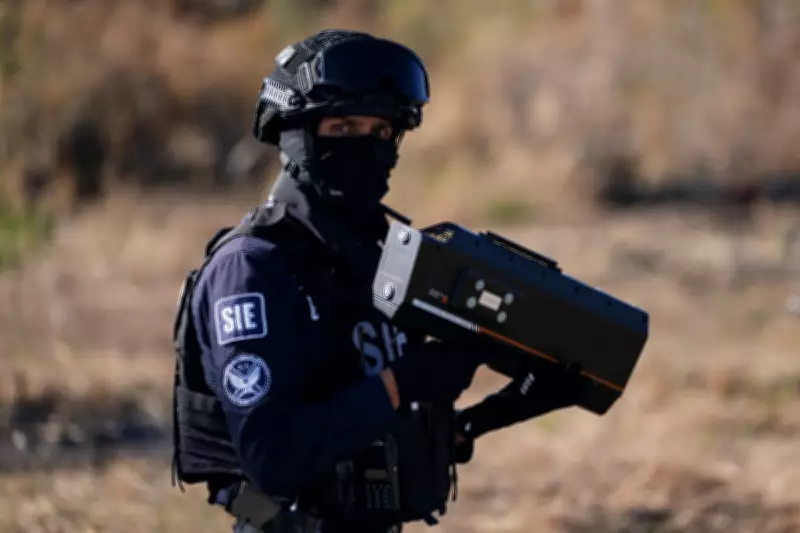
The Mexican government has also leveraged drones for its own purposes, such as combating cartels and monitoring migrant caravans in 2018 and 2019. It has deployed specialised anti-drone equipment, with the army operating such systems along the borders of Sinaloa, Jalisco, and Michoacan, though Michoacan maintains its own dedicated unit. In a significant escalation last July, the southern state of Chiapas announced the purchase of a fleet of armed drones to battle the Sinaloa and Jalisco cartels, which are vying for control of Mexico’s southern border.