

British tourists are increasingly booking their holidays abroad at the last minute since the Iran war began, amid growing anxiety over the conflict and jet fuel supply. Holiday firm Jet2 revealed today that the 'booking profile has become increasingly close to departure' due to worries about the impact of the Middle East conflict.
Heathrow Warns of Passenger Impact
It follows a separate warning from London Heathrow Airport that passenger numbers will be affected by the situation for the rest of the year amid an 'uncertain outlook'. Airspace closures following the outbreak of the war in the Middle East on February 28 have had a major impact on air travel. While much of the region's airspace has since reopened, many people are avoiding flying there because of the conflict.
Jet Fuel Shortages Loom
Airlines have raised alarm over jet fuel shortages within weeks, given the disruption to their main supply route through the Strait of Hormuz. Some consumers are holding off booking amid concerns over future cancellations. Around three quarters of Europe's jet fuel supply comes from the Middle East and travels through this crucial shipping route. Imports are now increasingly being sought from other countries such as the US and Nigeria to make up the shortfall.

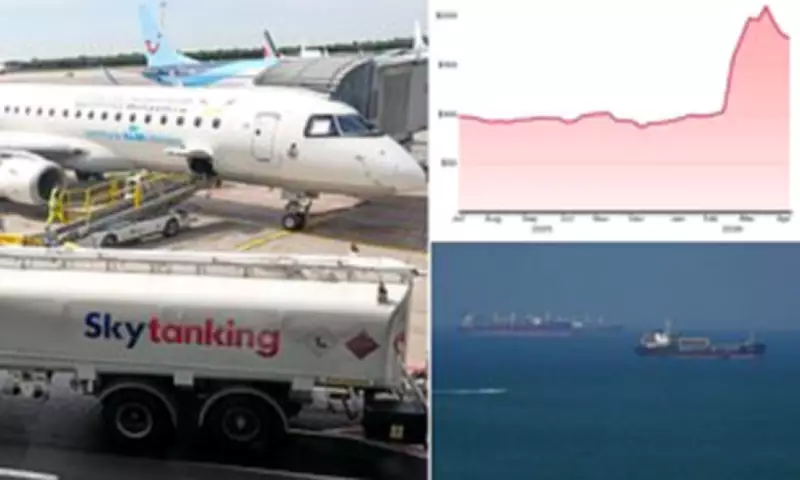
Most airlines have largely ridden out the crisis so far with hedges that have tamed costs since the war began, but they could face shortages if it does not end soon. The jet fuel price increased from about $99 (£73) per barrel at the end of February to as high as $209 (£155) at the start of April, although it has fallen in recent weeks to $179 (£132), according to the latest International Air Transport Association data.
Staycations Gain Popularity
Uncertainty has seen demand soar for UK staycations. Jet2 said summer passenger number bookings so far are up 6.2 per cent thanks to growth across its airline and package holiday business, but these are becoming more last minute. Jet2 said it is well protected from the fuel cost spike this summer, while 'maintaining frequent dialogue with our fuel suppliers and airport partners on fuel supply'.
The group's load factor – a key measure of how well it fills its planes – has remained flat year-on-year for its first quarter so far, though it said the conflict meant there was limited visibility for the peak summer season and beyond.
Industry Responses
European airlines are responding to the jet fuel crisis in various ways:

- Aegean Airlines: Expects suspended Middle East flights and a spike in fuel prices to have a 'notable impact' on its first-quarter results.
- Air France-KLM: Plans to increase long-haul ticket prices to address surging fuel costs, with cabin fares set to rise by €50 (£43) per round trip. KLM said on April 16 it would cancel 160 flights in Europe in the coming month due to rising fuel costs.
- EasyJet: Warned of a bigger half-year pre-tax loss of between £540million to £560million, including £25million in extra fuel costs in March.
- IAG: British Airways-owner IAG said it would raise ticket prices to reflect higher jet fuel costs, as, despite its fuel hedges, it was 'not immune' to the broader fallout from fuel cost volatility.
- Lufthansa: Unveiled a new 'Economy Basic' low-cost fare option for short- and medium-haul flights, limiting free carry-on bags to only a 'laptop bag or a small backpack'. Previously said 20,000 short-haul flights would be removed from its schedule through October, equivalent to about 40,000 metric tons of jet fuel.
- Ryanair: CEO Michael O'Leary said the risk of a jet fuel supply shortage in Europe is receding, but it had lowered some fares for flights between June and September to stimulate demand which had been 'a little bit weaker' than for April and May.
- SAS: Said it would cancel 1,000 flights in April because of high oil and jet fuel prices, after canceling a 'couple hundred' flights in March.
- TAP: Said its price hikes would partially mitigate the impact of fuel price changes on its revenue.
- TUI: Cut its full-year underlying profit outlook and suspended revenue guidance, saying it had incurred about €40million (£35million) in extra costs due to the war in March, including repatriation efforts and operational disruptions.
- SunExpress: A joint venture between Turkish Airlines and Lufthansa, said it would impose a temporary fuel surcharge of €10 (£9) per passenger from May 1 on routes between Turkey and mainland Europe.
- Virgin Atlantic: Is adding fuel surcharges to fares but will still struggle to return to profitability this year, its CEO Corneel Koster said.
- Volotea: Introduced a new pricing policy linking ticket prices to fuel costs, which could potentially add a post-purchase surcharge of up to €14 (£12) per passenger, per flight.
Jet2's Outlook
Steve Heapy, chief executive of Jet2, said: 'Clearly, we continue to monitor the situation in the Middle East but remain focused on our medium-term goals.' The group said it expects to report a drop in operating profits to between £435million and £440million for the past year to March 31, down from £446.5million in 2024-25, but said this was in line with market forecasts. It has increased its summer programme for 2026 by 7.7 per cent to 19.9million passenger seats.
A Jet2 spokesperson also said the airline remains in 'continual dialogue with our fuel suppliers, as is standard practice' and that 'based on the conversations we have been having, we see no reason not to look forward to operating our scheduled programme of flights and holidays as normal'.
Heathrow's Warning
Meanwhile Heathrow warned it expects its passenger numbers for the rest of the year to be 'impacted' by the Iran war and told of 'an uncertain outlook ahead'. Some 18.9million people passed through its four terminals during the first three months of the year - a year-on-year increase of 3.7 per cent, which the airport said was because it 'temporarily absorbed demand from elsewhere'.
Before the conflict began, about half a million passengers per day were usually using airports in Dubai, Doha or Abu Dhabi, which have become vital hubs for travel between Europe and the continents of Asia and Australia. In a trading update, Heathrow said: 'While Heathrow has temporarily absorbed demand from elsewhere, passenger numbers for the rest of the year are likely to be impacted whilst there is significant uncertainty in the Middle East.'
Expert Opinions
Former British Airways boss Willie Walsh, now head of the International Air Transport Association, warned that there is 'risk that we'll see rationing of fuel supply, particularly in Asia and Europe'. He added that supply remained robust for now and the situation was not as bad as the disruption caused by the pandemic in 2020, which saw travel demand collapse and the aviation sector lose hundreds of billions of pounds in losses. Mr Walsh said: 'I think Covid was on a completely different scale. What we're seeing here is, in effect, a cost issue for the airlines. The underlying demand for aviation remains robust, and that's a positive.'
Yesterday, Sweden's Energy Minister Ebba Busch fired an 'early warning' about potential jet fuel shortages despite good current supply, cautioning Swedes to think through travel plans. Oil analyst Benedict George, head of European product pricing at Argus, told CNBC: 'While we can import more, and we are, from the U.S. and Nigeria, we have to fight for every cargo that's going to come. We have to fight against Singapore, against Australia - and the price... just goes higher and higher.'
The Airports Council of Europe has warned some of the continent's smaller regional airports were the most exposed and may have to close if the crisis leads to widespread route cancellations. And Janiv Shah, the London-based vice president of oil markets and downstream analysis at Rystad Energy, said: 'Multiple cases point towards a shortage of diesel and jet fuel in Europe as the summer evolves, as imports from vital supply lines in the Middle East and Asia have waned with the current disruption.'
Global shipments fell to their lowest level on record last week as less than 2.3million tonnes of jet fuel and kerosene transported on vessels around the world, according to estimates from Kpler analysts. The UK Government is also said to be considering relaxing rules on what type of jet fuel can be used in planes, in an attempt to reduce the risk of last-minute cancellations this summer.
But Ryanair chief executive Michael O'Leary has played down concerns for Europe, saying that the 'risk of a supply disruption is receding' and citing conversations with suppliers across the continent earlier in the week. He added: 'A month ago we were saying we're all fine until the end of May. The fuel companies are now saying they're seeing no supply disruption risk until the end of June.' While demand for last-minute bookings in April and May has been stronger than expected, Mr O'Leary said demand was 'a little bit weaker' for flights between June and September, prompting Ryanair to lower some fares to increase demand.
Budget airline Wizz Air's chief executive Jozsef Varadi said on Monday that summer bookings were strong, but easyJet and TUI have announced drops in forward bookings and issued profit warnings in recent weeks. Mr Varadi also cautioned that even an end to the conflict would not quickly resolve high fuel prices. 'Even if the war is stopped in Iran, I don't think this is going to put the fuel price back to what it used to be two months ago,' he told reporters.
Speaking about booking levels, Yvonne Moynihan, Wizz Air's UK managing director, told Business Insider: 'We've seen maybe some uncertainty initially in April, but now we see that that's recovering a little bit and that people are booking later. So what we see is the trend 'wait and see'.' Air France-KLM, British Airways-owner IAG and Lufthansa are set to report first-quarter results starting this week.
Gulf airlines have been the hardest hit, with data from Cirium Ascend showing that flights operated by Middle Eastern operators dropped 50 per cent year-on-year in March, while bookings for Q2 and Q3 connecting via the main Gulf hubs are down 42.5 per cent. But global passenger capacity remains up near 2 per cent so far in 2026 versus 2025.





