Iran's Supreme Leader Ayatollah Mojtaba Khamenei has issued a directive that the country's near-weapons-grade uranium should remain in the country, two senior Iranian sources told Reuters. The move is expected to further anger US President Donald Trump and complicate talks on ending the war in the Middle East.
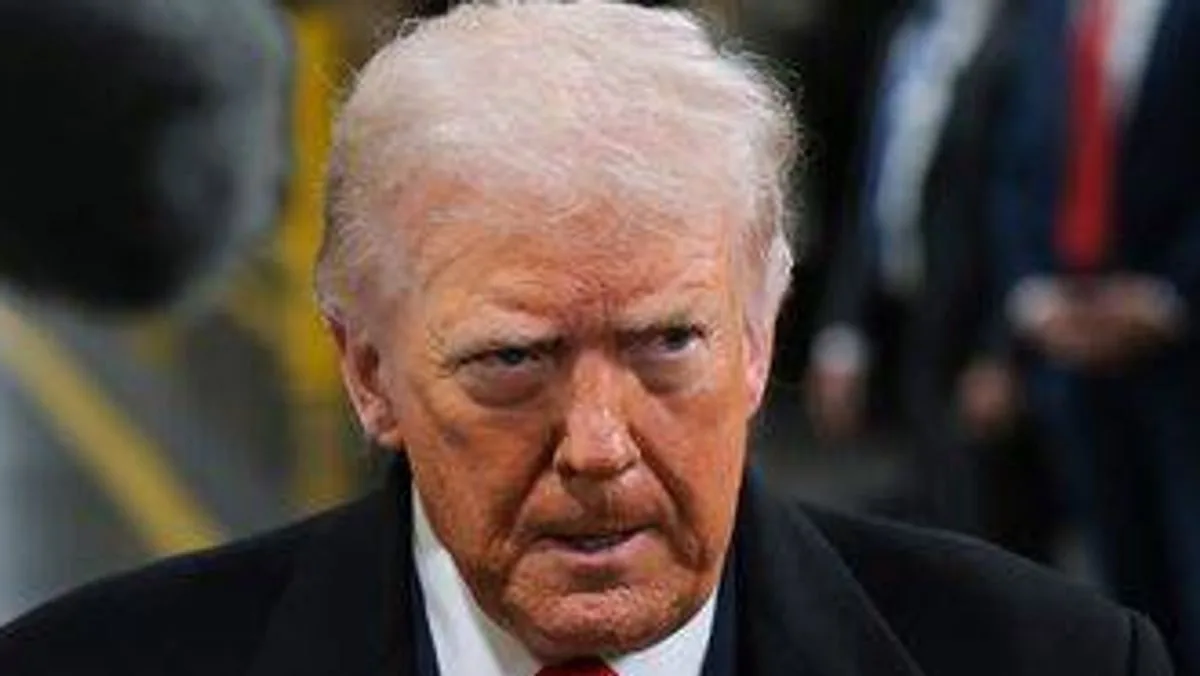
Trump has threatened to hit Iran "even harder" and get a "little bit nasty" if a peace deal is not reached soon. During an address at the US Coast Guard Academy, Trump said: "We hit them very hard. We may have to hit them even harder - but maybe not. But we're not going to let Iran have a nuclear weapon and blow up the entire Middle East, Israel, the entire Middle East, and then come here for you. Not going to happen."
Israeli Prime Minister Benjamin Netanyahu has stated he will not consider the war over until enriched uranium is removed from Iran.
Key Developments
Trump's Warnings
Trump told reporters at Joint Base Andrews that negotiations were in the "final stages" and that the US would do "a little bit nasty" if no deal is reached. "Either have a deal or we're going to do some things that are a little bit nasty, but hopefully that won't happen," he said. "Ideally, I'd like to see few people killed, as opposed to a lot. We can do it either way."
Iran's Response
Iranian President Masoud Pezeshkian said the country has "explored every avenue to avert war" but would not "surrender through coercion." Writing on X, he stated: "Forcing Iran to surrender through coercion is nothing but an illusion. Mutual respect in diplomacy is far wiser, safer, and more sustainable than war."
The Revolutionary Guards threatened that if the US attacks again, "the promised regional war will extend beyond the region this time."
Ceasefire Talks
Pakistan is mediating talks between Iran and the US, with Interior Minister Mohsin Naqvi visiting Tehran. Iran's Nour News Agency reported that Washington and Tehran are discussing the wording of a proposed ceasefire document, with messages exchanged via Pakistan. China is also playing a behind-the-scenes role, according to former Iranian ambassador to China Abdolreza Rahmani Fazli.
Military and Economic Impact
The US military has redirected 90 ships and disabled 4 as part of the maritime blockade against Iran. Iran's IRGC said it gave permission for 26 ships to pass through the Strait of Hormuz in the past 24 hours.
The war has driven UK petrol prices to their highest since the conflict began, with the average price of a litre of petrol and diesel 26p and 44p more expensive respectively. Prime Minister Sir Keir Starmer scrapped a planned fuel duty increase to help motorists.
Humanitarian Toll
Israeli attacks have killed at least 3,089 people in Lebanon and injured 9,397 since March 2. Iran's near-total internet blackout has entered its 83rd day, affecting 92 million citizens.
Iran executed two men accused of belonging to a terrorist group and creating security disruptions. Meanwhile, 20 Iranian sailors from a vessel seized by the US have returned to Tehran.
Hezbollah launched more than 20 attacks on Israeli forces in southern Lebanon, while Israel carried out strikes on eight towns in the area.
The UN called for the swift return of Gaza flotilla activists detained by Israel, with Greece condemning the capture of its citizens.
US Central Command reported that 42 US aircraft have been lost or damaged in the Iran war, including three F-15E Strike Eagle fighter jets worth $300 million downed by friendly fire.






