ICE's Legal Upper Hand in National Detention Center Expansion
Immigration and Customs Enforcement has solidified its position in a nationwide push to establish twenty-four new detention facilities, with legal experts highlighting the agency's constitutional advantages over local opposition. The controversy centers on ICE's systematic acquisition of large industrial warehouses for conversion into immigration detention centers, a strategy that has sparked frustration among affected communities across multiple states.
Multi-Million Dollar Warehouse Purchases
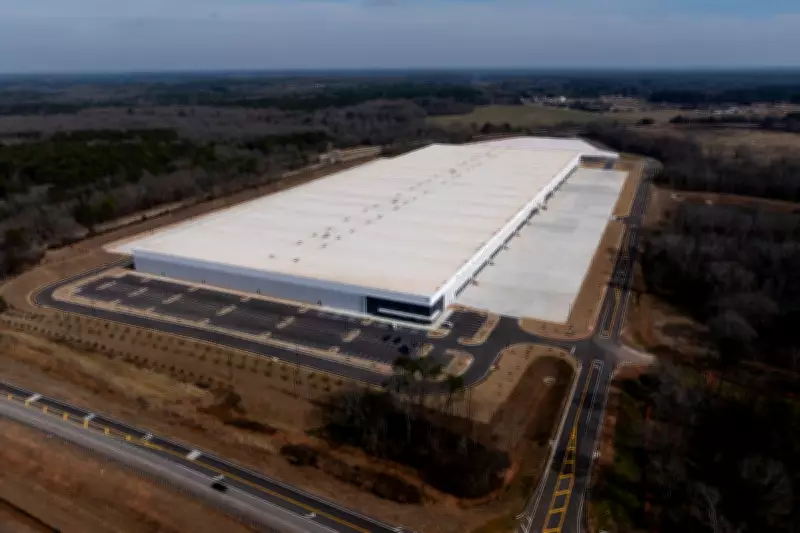
In February 2026, ICE finalized the purchase of a substantial 520,000-square-foot warehouse in Berks County, Pennsylvania, paying approximately $87 million for the property. This acquisition represents just one component of a broader national initiative by the agency to significantly expand its detention infrastructure. The "ICE Detention Reengineering Initiative" aims to transform two dozen vacant warehouses into operational detention facilities, including sixteen regional processing centers and eight larger-capacity facilities.
Currently, ICE utilizes roughly 220 facilities nationwide to detain immigrants, with the agency's detention funding reaching $3.4 billion in the most recent Department of Homeland Security budget. Historically, this funding has been allocated toward contracts with private detention providers, but the current expansion represents a shift toward direct federal ownership of facilities.

Constitutional Barriers to Local Opposition
As communities discover ICE's plans for their neighborhoods, legal experts emphasize the limited tools available to state and local governments attempting to block these federal acquisitions. Under the property clause of the United States Constitution, Congress maintains exclusive authority over public lands, meaning that once real estate is purchased by the federal government, it is classified as public land and falls under federal jurisdiction.
The constitutional supremacy clause further prevents states and localities from interfering with federal property acquisitions or regulating land use on federal property following a sale. This legal framework was reinforced by the landmark Supreme Court decision in McCulloch v. Maryland, which established that states lack the power to tax the federal government.
Section 1231(g) of the U.S. Code specifically authorizes ICE to acquire land and construct or operate detention facilities when suitable federal facilities are unavailable. The agency is utilizing funding from President Donald Trump's tax-and-spending legislation, signed into law in July 2025, to finance these warehouse purchases.
Community Concerns and Financial Impacts
Residents in affected areas have expressed significant concerns about the lack of public disclosure regarding ICE's property acquisitions before transactions were finalized. In Berks County, Pennsylvania, community members voiced opposition to having a detention facility in their neighborhood, with one Upper Bern resident stating that "no one wants a prison, a detention center, in their backyard."
U.S. Senator John Fetterman of Pennsylvania has criticized both the Berks County purchase and another facility acquisition in Schuylkill County, Pennsylvania, arguing that these facilities would place excessive strain on local utilities and infrastructure.
The financial impact on communities is substantial, as properties transition from tax-generating entities to federally owned facilities exempt from state and local taxation. The Upper Bern property previously generated approximately $199,620 annually in county taxes, $31,229 in township taxes, and $597,110 in school district taxes, even while vacant, according to reporting by Spotlight PA. This revenue stream disappears entirely once the federal government assumes ownership.
Geographic Scope of Expansion
Warehouses already identified for conversion to detention centers span multiple states, including facilities in Surprise, Arizona; Social Circle, Georgia; Hagerstown, Maryland; Romulus, Michigan; Trenton, New Jersey; Schuylkill, Pennsylvania; and Socorro, Texas, among other locations. ICE is relying heavily on private contractors to rapidly expand detention capacity nationwide, with these contracts supported by a $45 billion congressional budget allocation.

Limited Legal Recourse for Communities
Politicians from both major political parties have called for greater transparency surrounding ICE's property acquisitions, particularly when facilities are located within their districts. While earlier public disclosure about intended purchases could potentially facilitate community input, states possess few legal mechanisms beyond political pressure to influence these federal decisions.
Pennsylvania Governor Josh Shapiro has acknowledged that state options are limited when the federal government serves as the buyer, though he has suggested that local governments may retain more leverage through permitting processes. Local governments do maintain some control over regulatory steps preceding facility openings, especially when projects involve converting existing warehouses rather than new construction.
Some localities have attempted to utilize permitting authority to block ICE facilities. Officials in Howard County, Maryland, for example, revoked building permits for a private detention center they believed ICE intended to utilize. However, ICE subsequently stated it had no plans to purchase or open a facility at that location, diminishing the decision's potential as a precedent for other communities.
Creative Legal Strategies and Direct Appeals
Certain states are exploring more innovative legal approaches to challenge ICE's expansion. Arizona Attorney General Kris Mayes has reportedly considered invoking the state's "public nuisance" law to block an ICE facility in Surprise, Arizona, arguing that the facility would threaten public health and community well-being. Critics note that this approach is legally novel with minimal precedent, making its ultimate success uncertain.
Other local officials are adopting more direct tactics, appealing directly to property owners themselves. Officials in Lehigh County, Pennsylvania, which borders both Berks and Schuylkill counties, sent letters urging private parties not to sell or lease property to ICE.
According to Transactional Records Access Clearinghouse data, there are currently 68,289 individuals in ICE custody nationwide. As ICE continues its property acquisitions across the country, federal ownership of detention facilities may ultimately prove exceptionally difficult to challenge, leaving affected communities with limited recourse beyond public pressure and political advocacy.