
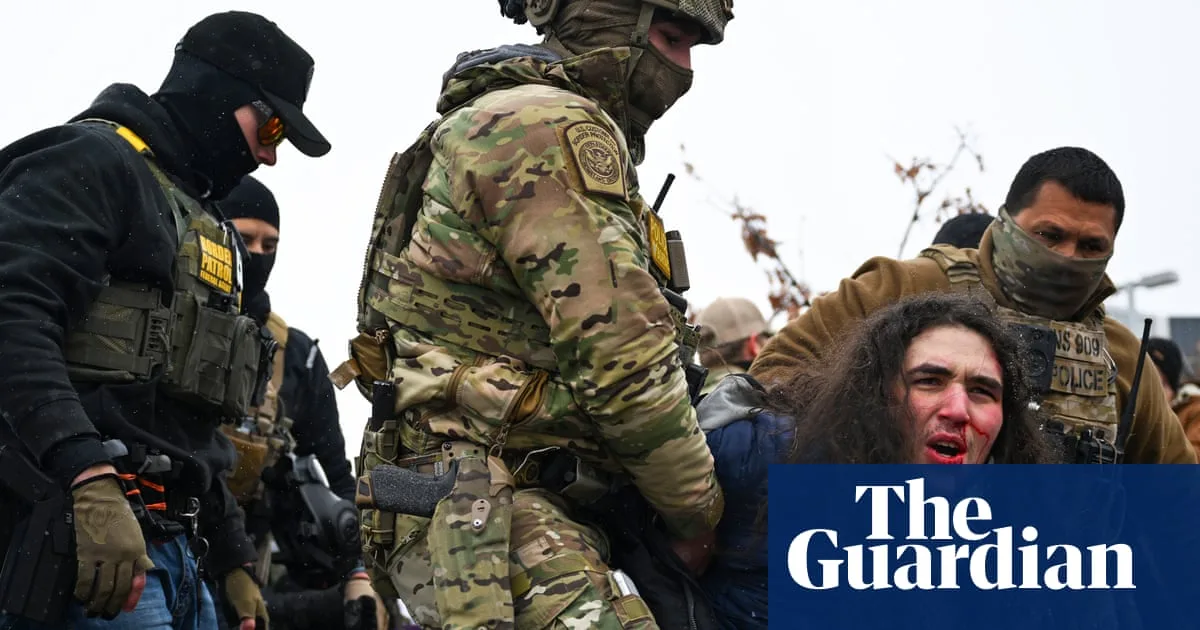
The deployment of more than 3,000 federal immigration officers to Minnesota has transformed daily life in Minneapolis and St Paul, with residents reporting clashes, carrying identification documents at all times, and staying home as much as possible. Many described the atmosphere as 'tense' and said they felt their cities were 'occupied' or 'under siege'.
Dan O’Kane, a 69-year-old resident, said he had never witnessed anything like it after seeing Immigration and Customs Enforcement (ICE) officers fighting with students and throwing a teacher to the ground at Roosevelt High School, three blocks from his home. Marcus Kessler said his wife now carries her tribal identification card everywhere due to concerns about racial profiling by immigration officers.
A 57-year-old Latina resident of St Paul, who spoke on condition of anonymity, said she and her friends were taking precautions such as carrying passports and informing others of their whereabouts. A pregnant mother expressed fear of being teargassed or pepper-sprayed, while a teacher reported shrinking class sizes and pupils asking when they could safely play outside again.
Schools have begun offering online instruction as attendance drops, and a physician noted that emergency departments and children's hospitals were unusually quiet because families were too scared to bring in ill children. Some residents are considering leaving Minnesota, with one man sending his wife and baby daughter to stay with relatives in another state.
Despite the tension, many Minnesotans expressed pride in their community’s response, drawing parallels to the George Floyd protests. Organising networks established during that time have been reactivated to support marginalised groups, with residents mobilising to protect their neighbours.




