

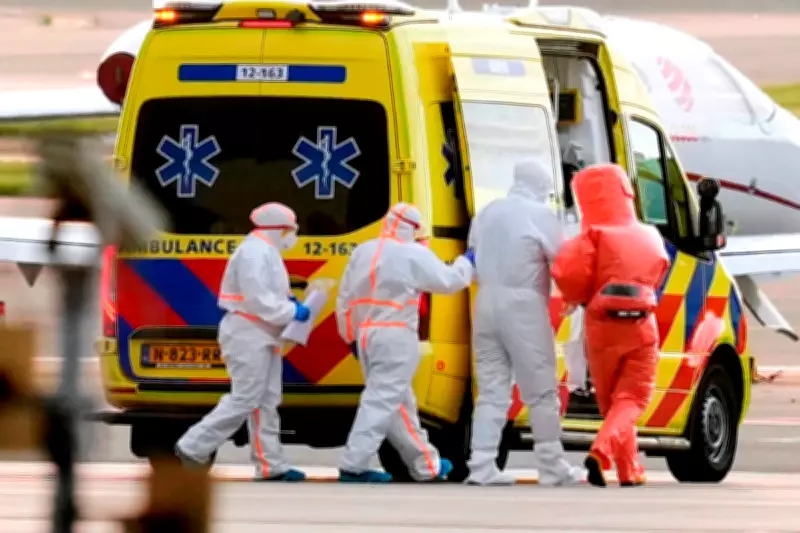
A suspected hantavirus outbreak aboard the MV Hondius cruise ship has resulted in three fatalities, with five confirmed and three suspected cases, including two individuals who returned to the United Kingdom and a British man hospitalised in the Netherlands. Several passengers and crew members are currently in isolation as health authorities conduct investigations.
What is Hantavirus?
Hantavirus is primarily transmitted through contact with rodents or their urine, saliva, or droppings. Infection often occurs when contaminated materials become airborne and are inhaled, particularly during cleaning of enclosed spaces with poor ventilation. The virus has been present for centuries, with documented outbreaks across Asia and Europe. In the Eastern Hemisphere, it is associated with haemorrhagic fever and renal syndrome, while a distinct strain emerged in the southwestern United States in the early 1990s, causing hantavirus pulmonary syndrome (HPS).
Professor Robin May, chief scientific officer at the UK Health Security Agency (UKHSA), described hantavirus as a "severe disease" prompting global vaccine development efforts. The Andean strain is notably the only one with evidence of human-to-human transmission, making it a primary focus in the current outbreak.

Symptoms of Hantavirus
Initial symptoms resemble influenza and include fever, chills, muscle aches, and headache. As the disease progresses, patients may experience chest tightness due to fluid accumulation in the lungs. Hantavirus pulmonary syndrome symptoms typically appear one to eight weeks after exposure, while haemorrhagic fever with renal syndrome develops within one to two weeks. Death rates vary: HPS is fatal in nearly 40% of cases, whereas haemorrhagic fever with renal syndrome has a mortality rate of 1% to 15%.
Dr Sonja Bartolome of UT Southwestern Medical Center noted that early symptoms are indistinguishable from the flu. Dr Michelle Harkins, a pulmonologist at the University of New Mexico Health Sciences Center, highlighted that many aspects of the disease remain mysterious, including why some patients experience mild symptoms while others become severely ill.
Prevention and Treatment
There is no specific cure for hantavirus, but early medical intervention improves survival chances. Prevention focuses on minimising rodent contact and avoiding inhalation of contaminated dust. Public health experts recommend using protective gloves and a bleach solution for cleaning rodent droppings, and advise against sweeping or vacuuming, which can aerosolise the virus.
Current Outbreak Situation
Health authorities are tracing individuals from the MV Hondius and their contacts in South America. Several passengers and staff are isolating, including two Britons who returned to the UK before learning of the outbreak. Confirmed British cases include a 69-year-old man receiving care in Johannesburg and Martin Anstee, a 56-year-old expedition guide hospitalised in the Netherlands. A third suspected case involves a British national on Tristan da Cunha. The UKHSA has traced seven British nationals who disembarked at St Helena, with four remaining there. Isolation periods may last up to 45 days, though the risk to the general public remains very low. Contact tracing focuses on close contacts such as family members, roommates, and those seated nearby on long-haul flights, excluding transient interactions.






