

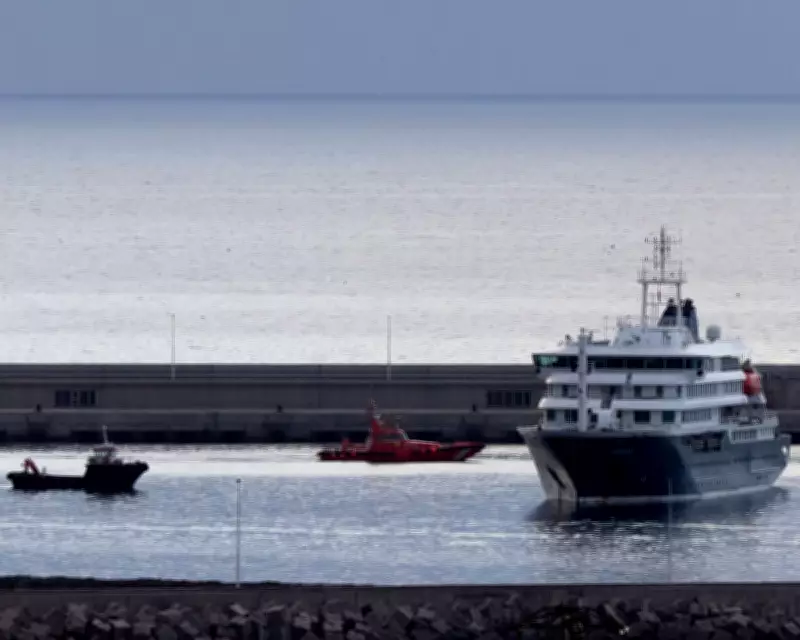
Spanish authorities launched a large-scale operation on Sunday to evacuate all passengers and part of the crew from the MV Hondius, a cruise ship hit by a hantavirus outbreak. The vessel, which had been anchored off the coast of Tenerife in the Canary Islands, became the focal point of an international public health response after a rare and deadly strain of the virus was detected among those on board.
Deadly Pathogen Aboard a Luxury Cruise
The MV Hondius departed Argentina on 1 April for an Atlantic journey to Cape Verde, visiting remote locations. Within days, passengers began showing symptoms including fever, gastrointestinal issues, pneumonia, and breathing difficulties. On 11 April, a 70-year-old Dutch man died on the ship, followed by his 69-year-old wife two weeks later in Johannesburg after she had travelled to South Africa. A third passenger, a German woman, died on 2 May. To date, at least nine probable or confirmed cases have been identified, including the ship's doctor and a guide. Three of those patients are British.
Containment and Evacuation
Once the outbreak was confirmed by the World Health Organization (WHO), authorities moved quickly to contain the virus. The ship was refused docking in Cape Verde and redirected to the Canary Islands. On Sunday, the first group of passengers disembarked under tightly controlled conditions. Among them were 22 British nationals – 19 passengers and three crew members – who were transferred to a Merseyside hospital for isolation. The remaining passengers, primarily from the United States and Australia, are scheduled to leave on Monday before the seas become too rough, after which the ship will return to the Netherlands.

Dr Charlotte Hammer, an infectious diseases epidemiologist at Cambridge University, explained that the specific strain involved is the Andes hantavirus, which can cause hantavirus pulmonary syndrome, a severe and often fatal lung disease. The virus is zoonotic, primarily transmitted from rodents to humans, but human-to-human transmission is possible with close contact.
Global Track-and-Trace Operation
One of the biggest challenges has been tracking down 29 passengers who disembarked before the outbreak was identified. These individuals, of 12 nationalities, including seven Britons, had already left the ship at earlier ports. Dr Hammer noted that the isolated nature of those locations and the global attention on the outbreak make it likely that all will come forward for monitoring. The WHO is coordinating the international response, with Dutch and Spanish authorities playing key roles.
Robyn Vinter, a reporter on the ground in Tenerife, described the scene as passengers were brought to shore wearing blue plastic ponchos and face coverings. Their body language suggested exhaustion and bewilderment. By early evening, flights had departed for several countries, including the UK.
Risk to the Public Remains Low
Despite the seriousness of the outbreak, experts stress that the risk to the general public is low. The Andes hantavirus requires significant close contact for transmission, and the onset of severe illness is rapid, making it easier to identify and isolate cases. Dr Hammer compared it to COVID-19, noting that if this virus had similar pre-symptomatic transmission, controlling it would be nearly impossible. The WHO has repeatedly stated that this is not the start of a pandemic, with the risk to public health rated as absolutely low.
However, the incident serves as a stark reminder of how easily a deadly pathogen can travel across borders and how fragile global preparedness remains. Dr Hammer warned that another pandemic is likely, probably originating from a zoonotic virus transmitted through human-animal contact and major transport hubs. She emphasised the need for a coordinated global response, noting that funding cuts for infectious disease research in the United States and Argentina, along with the US withdrawal from the WHO, are worrying signs.

As the evacuation continues, authorities remain vigilant. Overnight, two more passengers displayed symptoms, and another tested positive. A French national showed symptoms on a chartered flight to Paris, leading all five French nationals on board to be placed in strict isolation. US authorities reported that one of 17 returning Americans tested positive but has no symptoms, while another has mild symptoms; both travelled in biocontainment units.





