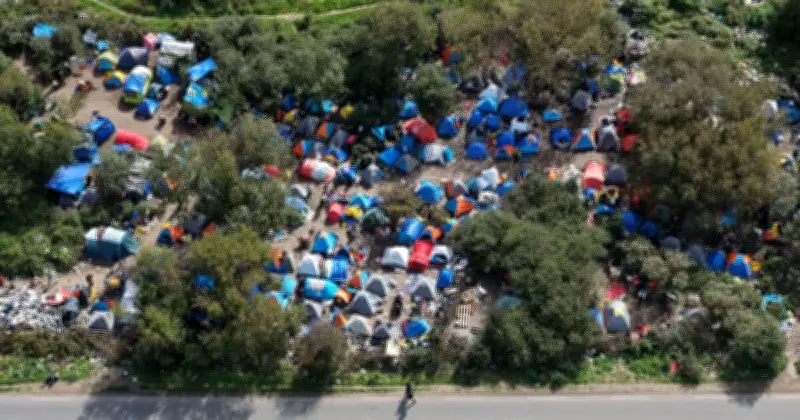
Aid workers have described harrowing conditions inside a makeshift migrant camp in northern France, where people are surviving on just one meal a day and diseases are spreading. The camp near Dunkirk emerged after the Calais 'Jungle' – which housed up to 10,000 migrants – was dismantled in 2016, with Loon-Plage becoming one of the largest settlements in the region.
Hunger and daily struggle
When aid association Salam arrived in October, crowds rushed to collect food. Claire Millot, a retired teacher and vice-president of Salam, told Le Monde: "They're hungry. They haven't eaten since lunchtime yesterday."
Aid workers prepare enough food for between 1,000 and 1,200 people, since numbers can vary depending on whether the weather has encouraged people to attempt the perilous journey across the English Channel.
Evictions and living conditions
Since the Calais camp was dismantled, French authorities have pursued a policy of preventing new settlements from taking hold, regularly confiscating migrants' tents and belongings. Evictions at Loon-Plage have been temporarily suspended since mid-September following a fatal case of diphtheria.
Conditions remain dire, according to reports. People sleep in tents or makeshift shelters, with overflowing rubbish bins and limited sanitation. A row of tents serves as informal shops selling essentials such as milk, coffee, socks and shampoo.
Risks faced by women and children
Women and children face particular difficulties attempting the Channel crossing. Fatma, from Somalia, has been waiting two and a half months to reach Britain with her 11-month-old baby after travelling through Italy. "The men make it across, but it's very hard for women," she said. "You have to walk a lot, run, with the children and the bags. And the sea is cold."
Medical charities have seen the impact of the conditions. Doctors of the World treated around 50 people at its mobile clinic in one day, including patients with respiratory problems, scabies and infected wounds. Diane Léon, the charity's regional coordinator, said: "Frankly, having witnessed the changes over the past 10 years, I think the situation for exiled people is worse, more precarious than during the time of the 'big jungle.'"
Smugglers and Channel deaths
Despite reports that only men cross the English Channel, Doctors Without Borders said the number of women in the Dunkirk area has doubled in less than a year. Its initial assessment found that 49% of women it supported had sought help following rape, both on the journey and in France. A midwife working with the charity said: "Care is the gateway to rehumanizing these women, whose bodies have survived so much and who have never spoken about it."
People in the camps are often extorted by smugglers who charge exorbitant sums to flee their home countries, with promises of a better life. Once in France, many are lured into crossing the Channel in inflatable boats, with little safety equipment. According to data compiled by the Migration Observatory at the University of Oxford, a total of 162 people died in the Channel between 2018 and 2025.