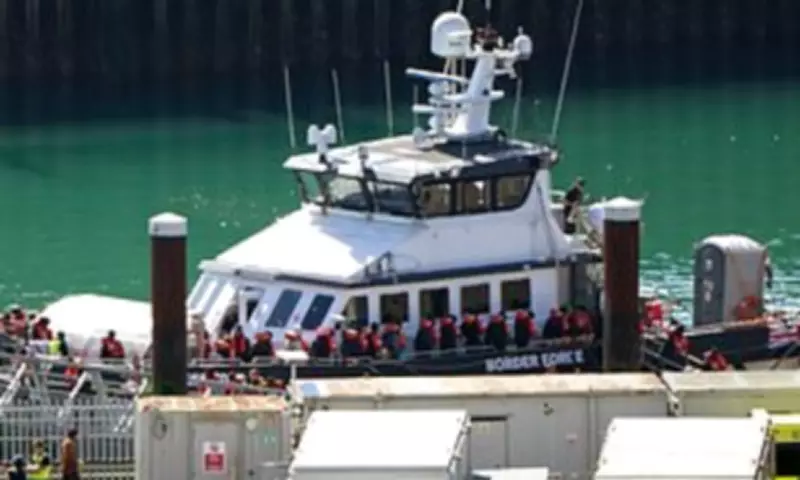
Small boat migrants have crossed the English Channel for the first time in nearly two weeks. People in lifejackets were seen being led from a Border Security Command vessel in Dover, Kent, on Friday, marking the first crossing since May 9. The break in recent poor weather allowed for several crossing attempts to be launched, as temperatures are expected to continue to soar over the bank holiday weekend.
The number of arrivals is down by 44 per cent compared to the same time last year, and 23 per cent down from the same point in 2024. Experts attribute this decline to a combination of factors including weather conditions, the supply of small boat parts, government policy, and the number of migrants entering Europe.
This development follows the revelation that UK net migration dropped to an estimated 171,000 last year, the lowest level since the start of the coronavirus pandemic. The figures for the 12 months to December represent a 48 per cent decrease compared to the previous year (331,000), according to the Office for National Statistics (ONS). This is the first time the estimate has fallen below 200,000 since the onset of Covid-19.

The figures could lead to renewed calls for Home Secretary Shabana Mahmood's immigration policies to be relaxed. Marley Morris from the Institute for Public Policy Research stated that the Government's progress 'should prompt a more measured debate'.
In April, Mahmood signed a three-year agreement to pay France £662 million to support beach patrols aimed at reducing the number of arrivals. The Home Office said the arrangement would see officers 'targeting and detaining' migrants on the French coast, with the goal of removing hundreds from beaches each year. Under this Labour deal, £501 million will cover five police units and enforcement activity on French beaches, with an additional £160 million contingent on the success of new tactics to curb Channel crossings. If efforts fail, the extra funding will cease after one year.
It was also confirmed for the first time that French authorities' new initiative to stop boats at sea will only apply to dinghies with fewer than 20 migrants aboard. British funding will pay for a new specialist vessel for interceptions, 20 extra trained maritime officers, two new helicopters for surveillance operations, and a 50-strong police riot squad trained in dispersing large groups.
On April 27, more than 100 small-boat migrants were rescued by the French coastguard after their dinghy broke down in the Channel. Several people encountered difficulties while attempting to board the boat, including a woman who lost consciousness and had to be evacuated by helicopter.