
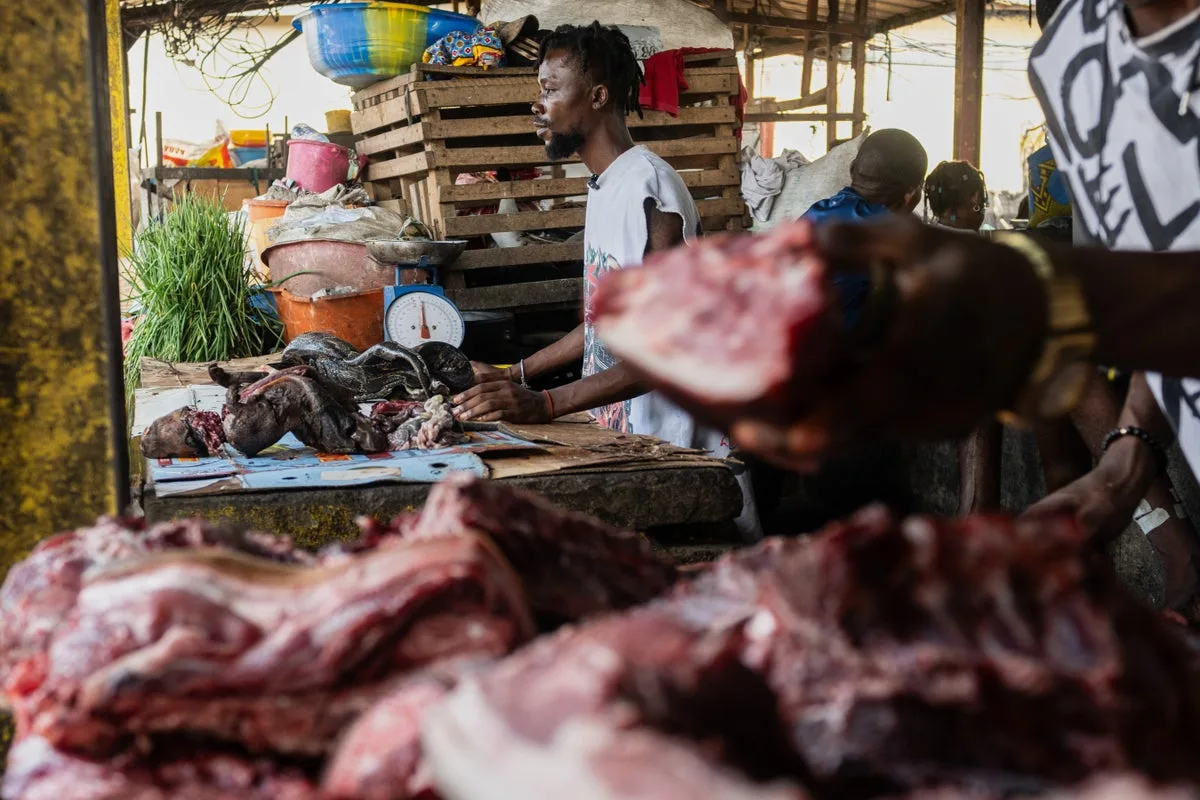
In the bustling Masina Market of Kinshasa, vendors of wild meat often keep their goods hidden, requiring customers to ask for items such as giant swamp rodents or antelope parts. Others sell openly, like women offering baskets of squirming caterpillars. For many in Congo and across Central and West Africa, wild meat is a cultural staple and a craving that persists despite the ongoing Ebola outbreak in eastern Congo, which has claimed over 220 lives since May.
The Congo Basin, rich in wildlife from great apes to snakes, is a source of both sustenance and risk. Hunting and butchering infected animals can expose people to zoonotic diseases like Ebola, according to the U.S. Centers for Disease Control and Prevention. Dr. Tolbert Geewleh Nyenswah of the Africa Centres for Disease Control and Prevention highlights the importance of a 'one health' approach, noting that frequent outbreaks occur at the human-animal-environment interface.
Ebola, first identified in 1976 near the Congo River, is believed to spill over from animals like fruit bats to humans through handling and eating wild meat. However, Dr. Misaki Wayengera, a microbiologist advising Uganda's health ministry, says sporadic outbreaks lead some to doubt the link, while others remain ignorant of the risks. Changing such deep-rooted practices is challenging, he adds.
The current outbreak, caused by the rare Bundibugyo virus, has no approved treatments or vaccines. It unfolds in a region plagued by armed violence and displacement. While Congo bans hunting endangered species like great apes, no blanket ban on wildlife trade exists, and illegal hunting persists. For many, wild meat is a primary protein source, with an estimated 4.5 million tons extracted yearly from the Congo Basin.




