

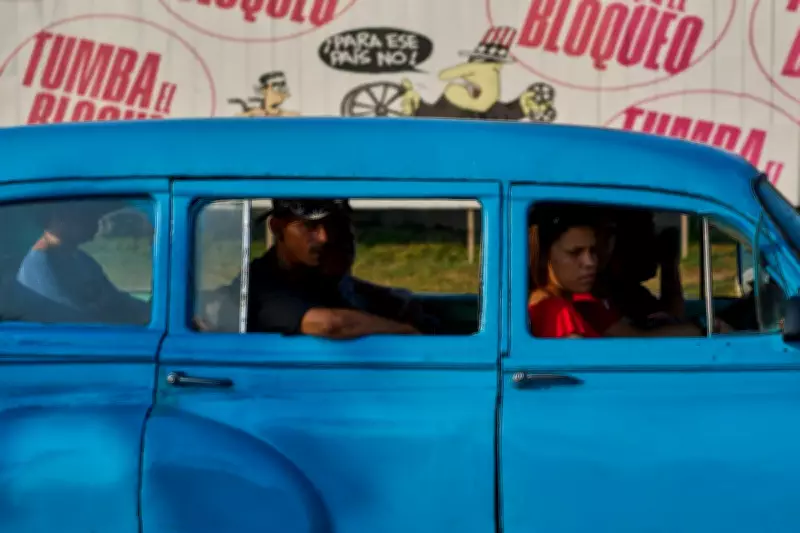
Cubans have been endorsing the socialist government’s latest move to defy the United States as tensions between the two countries escalate. Over the past month, residents hunched over tables to sign up for the 'My signature for the Homeland' movement, a campaign launched by President Miguel Díaz-Canel to support national sovereignty.
Mixed Reactions to the Initiative
The state initiative has drawn both support and criticism. Some question why people stood in line to sign when hunger and poverty are growing across the island. Supporters, however, argue it serves as a warning to the U.S. that civilians want peace but will not back down despite recent threats of invasion.
Rodolfo Ruiz, a 64-year-old Havana resident who sells sunglasses and other items from his home, said he signed last week because of President Donald Trump’s ongoing comments over Cuba. 'Anything for the revolution,' Ruiz said. 'So that he may hear and know that we are willing to defend our sovereignty. Watch out, Trump. Think before you invade Cuba, think carefully. The people are prepared.'

Escalating US-Cuba Tensions
In January, Trump signed an executive order asserting that the 'policies, practices, and actions of the Government of Cuba constitute an unusual and extraordinary threat,' a claim Cuban officials have repeatedly dismissed. Since then, Trump has referred to the island as a 'failing nation' and suggested a 'friendly takeover.' In mid-April, he said, 'We may stop by Cuba after we’re finished with this,' referring to the war in Iran.
U.S. Secretary of State Marco Rubio, the son of Cuban immigrants who fled before the revolution, has called for 'new people in charge' of Cuba. Díaz-Canel has said he does not want military aggression but noted that Cuba has a duty to prepare to avoid it, and if necessary, defeat it.
Cubans Voice Support and Defiance
Havana resident Delfina Hernández said she would stand shoulder-to-shoulder with Cubans to fight a U.S. energy blockade, a sharpening of longtime U.S. sanctions, and what many refer to as the 'imperialist threat.' For three days last week, the community center she runs with her husband received sheets of papers and opened its doors so people could sign them. Hernández was the first to do so.
'Cuba is something very sacred to us,' Hernández said. 'We are well-armed, and the people of Cuba will fight to the very end. We are going to hit them — and with everything we’ve got.'
Criticism and Counterpoints
Criticism was swift on social media, with opponents of the campaign asserting that the 'homeland' has not provided them with anything. Some said the government should allow people to sign in favor of things like the ability to choose their president.
The homeland initiative began on April 19 and coincides with Cuba’s celebration of the 65th anniversary of the Bay of Pigs victory over some 1,500 Cuban exiles backed by the CIA who failed in their attempt to overthrow Fidel Castro’s newly formed Communist government.
Alberto Olivera, a visual artist and Hernández’s husband, questioned how Cuba poses a threat to the U.S. 'If it’s a failed revolution, then leave us alone. What do they care?' he said. Olivera recognized that Cubans have unmet needs, adding that he has been hungry at times, but asserted that the 'pressure cooker' tactic by the U.S. would not work. 'If I’m a failed state, why are you seeking me out?' he asked.
Government Stance and Signature Drive
The Trump administration has demanded that Cuba release political prisoners, implement major economic reforms, and change its way of governance — all things Cuba has rejected, saying it is open to dialogue and cooperation in certain areas as it pushes for the end of a U.S. energy blockade that has deepened the island’s crises. Both countries have confirmed recent talks, although details remain secret.
As tensions persist, Cuba’s government is gathering signatures at workplaces and neighborhoods across the island of nearly 10 million people, remaining mum on how many it has collected. It said in a statement that the signatures are meant to condemn 'the U.S. blockade and economic war against Cuba,' which it called a 'genocidal act,' and to repudiate threats of military aggression while upholding 'the inalienable right of Cubans to live in peace.'






