Federal Appeals Court Halts California's ICE Agent Identification Mandate
A federal appeals court has issued a decisive injunction blocking a California law enacted in 2025 that would have required federal immigration agents to display badges or other forms of identification while on duty. The ruling, delivered on Wednesday, represents a significant legal setback for state legislators who argued the measure was essential for public transparency and safety.
Constitutional Clash Over State Regulation of Federal Operations
The legal battle stems from a lawsuit filed by the Trump administration in November, which contended that the California statute unconstitutionally sought to regulate the federal government. Justice Department lawyers emphasized that the law threatened the security of Immigration and Customs Enforcement (ICE) officers, exposing them to increased risks of harassment, doxing, and physical violence. They asserted that such state-level mandates violate the Supremacy Clause of the U.S. Constitution, which establishes federal authority over state laws.
In a detailed opinion authored by Judge Mark J. Bennett, a three-judge panel of the 9th U.S. Circuit Court of Appeals concurred with these arguments. The court determined that the legislation "attempts to directly regulate the United States in its performance of governmental functions," thereby overstepping state boundaries. This decision upholds a temporary administrative injunction previously granted to suspend the law's implementation, pending the outcome of the appeal.

Divergent Arguments on Public Safety and Legal Precedents
During a hearing on March 3, California's legal representatives defended the statute, arguing that it applied uniformly to all law enforcement personnel without singling out federal agents. They maintained that states possess the authority to enforce "generally applicable" laws on federal officials, particularly when addressing critical public safety issues. The state's attorneys highlighted that the identification requirement was designed to foster accountability and trust within communities, especially amid heightened tensions surrounding immigration enforcement.
However, the appeals court ultimately sided with federal prosecutors, emphasizing the potential dangers to officer safety and the constitutional impediments. The ruling underscores the ongoing tension between state initiatives and federal prerogatives, particularly in areas like immigration where jurisdictional lines are frequently contested.
Broader Context of California's Law Enforcement Legislation
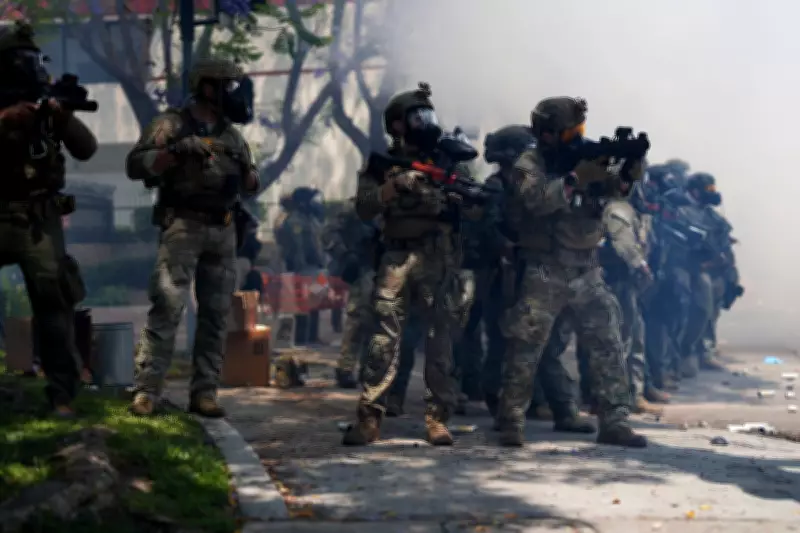
This case is part of a broader legal confrontation involving California's attempts to regulate law enforcement practices. The initial lawsuit also challenged another state measure, signed into law last year, that aimed to prohibit most officers from wearing masks, neck gaiters, and similar facial coverings. That provision was blocked by a federal judge in February, following arguments that it could compromise operational security and officer protection.
The facial covering ban included specific exemptions for undercover agents, protective equipment such as N95 respirators, tactical gear, and scenarios where mask removal might endanger an operation. Notably, it did not apply to state law enforcement personnel, further illustrating the complex interplay between state and federal regulatory frameworks.
As legal proceedings continue, this ruling sets a precedent for how states may—or may not—impose regulations on federal agents, with implications for future policymaking in immigration and beyond. The outcome reinforces the supremacy of federal law in governing its own operations, while leaving open questions about balancing transparency with officer safety in contentious enforcement contexts.