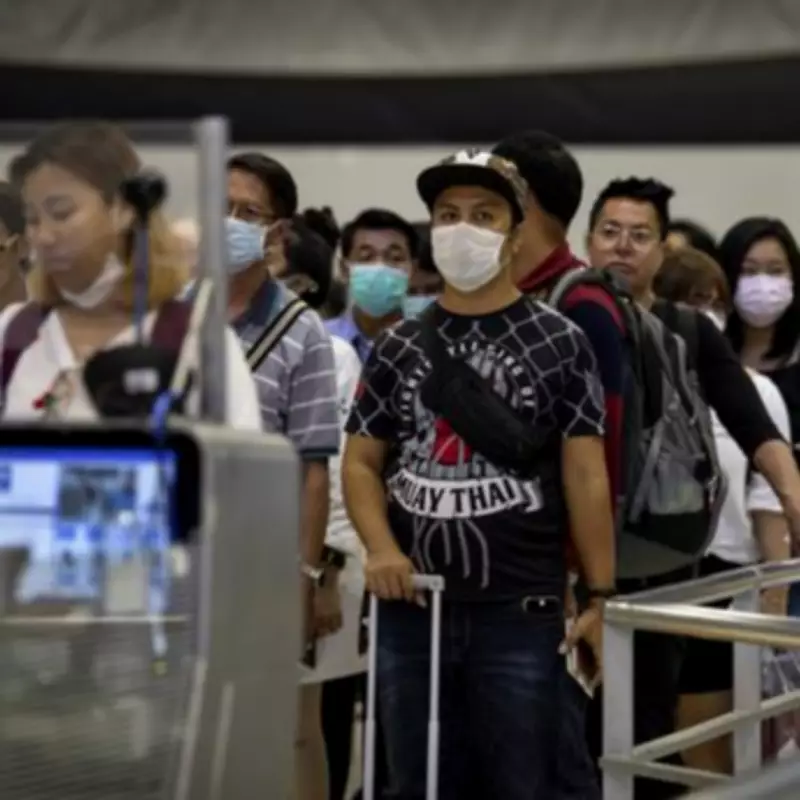
Health officials have initiated Ebola screening procedures at a major US airport following an outbreak of the highly contagious virus in parts of Africa. The US Centres for Disease Control and Prevention (CDC) began screening certain travellers at Chicago’s O’Hare International Airport on Wednesday, May 20, as part of a response to the escalating health crisis.
This development comes shortly after the CDC announced that any US passport holder who has visited the Democratic Republic of Congo, Uganda, or South Sudan within the past three weeks will be denied entry into the country. The travel restriction is set to last for at least 30 days, according to an order issued by the CDC on Monday.
Understanding Ebola
Ebola is a highly contagious disease transmitted through direct contact with bodily fluids. It frequently leads to fatal haemorrhagic fever, rapid multi-organ failure, and internal or external bleeding. The virus has a high mortality rate and poses significant challenges for healthcare systems.

Expert Concerns
"Ebola is one of the most infectious diseases out there. I'm not an alarmist, but I'm very concerned," said Dr Tyler Evans, CEO of Wellness Equity Alliance. His remarks reflect growing unease among health experts as cases continue to spread across East and Central Africa. The World Health Organization has declared the outbreak a public health emergency of international concern.
At least six Americans are reported to have been exposed to Ebola. An American doctor who contracted the virus in the Democratic Republic of Congo has been flown to Germany for treatment, accompanied by his wife and four children. The WHO has warned of the "scale and speed" of the outbreak.
Screening Measures at O'Hare
Federal health officials have stated that the screening process at O'Hare is intended to prevent the virus from entering the United States. Individuals who have travelled through Uganda, the Democratic Republic of Congo, or South Sudan within the last 21 days are being denied entry unless they are US citizens or permanent residents. Returning citizens and permanent residents arriving from these countries must undergo additional screening measures at the airport.
Officials are checking travellers' temperatures, enquiring about potential exposure, and collecting contact-tracing information. Those who show symptoms or have a fever will be taken to a quarantine station at the airport for a second evaluation. If cleared, the traveller will receive a care kit with instructions to monitor their temperature twice daily for the next three weeks.
Presidential Response
US President Donald Trump on Thursday expressed concern about the Ebola outbreak. When asked by a reporter about his concerns over the virus, Trump responded: "[I] certainly am. I think that it's been confined right now to Africa, but it's something that has had a breakout."